
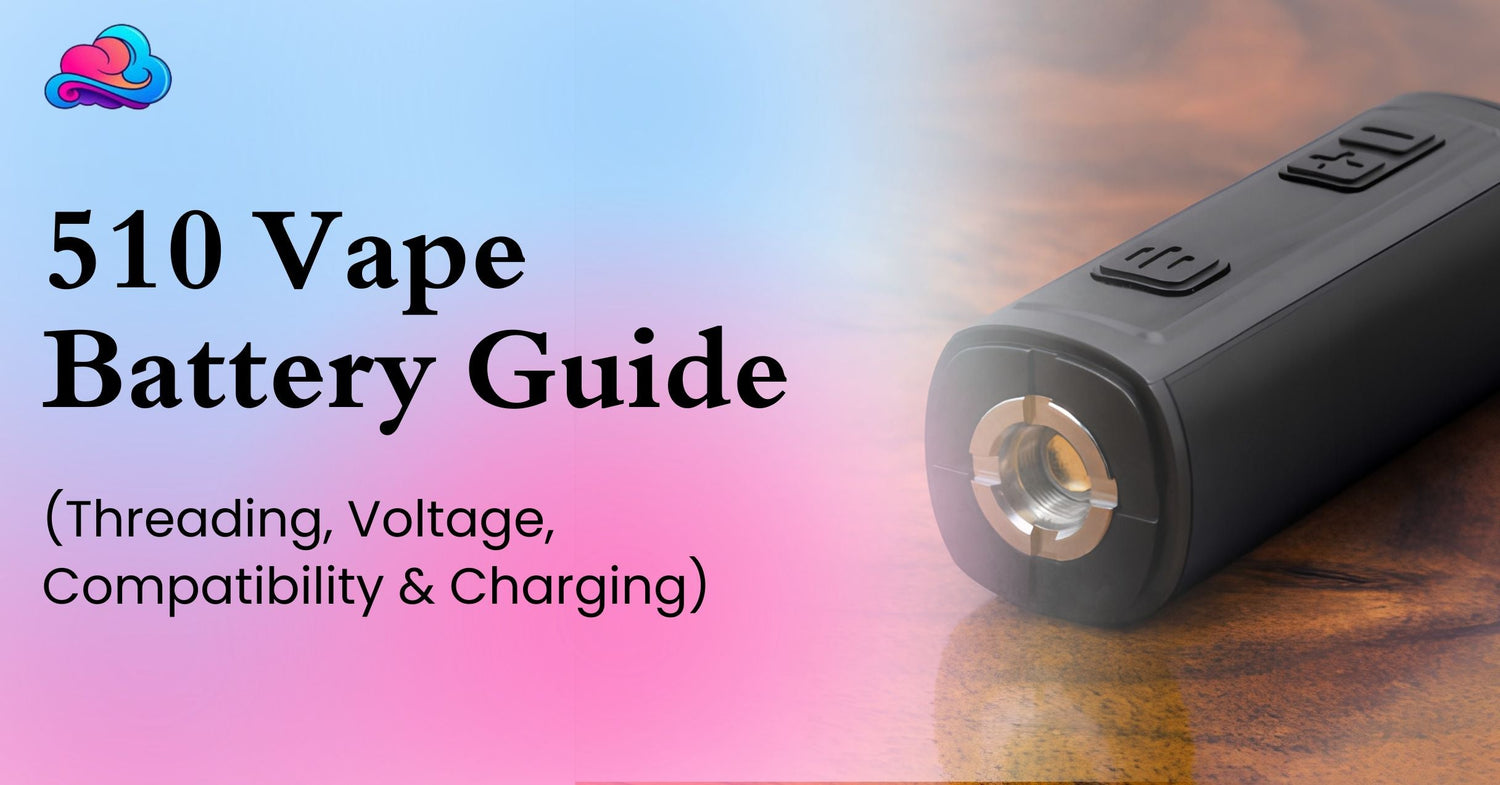
A 510 vape battery can look like a very small part of a vaping setup, yet it controls several details that matter before a cartridge is attached. The thread has to match. The cartridge has to sit correctly. The voltage needs to suit the battery and cartridge instructions. Charging also needs attention. When any of these points are skipped, an adult buyer can end up with a cartridge that will not connect, a setting that feels wrong, or a battery that is charged with the wrong accessory.
The confusion is understandable because many products look alike from a distance. A small battery and cartridge can seem interchangeable even when the product details say otherwise. The same care used when checking a product at a shop should also be used with a 510 setup. The gas station vape buying checks show why exact model, format, package condition, and compatibility details matter before payment.
This guide breaks the topic into threading, voltage, cartridge fit, charging, and real world checks. It is written for adults of legal vaping age. Nicotine is addictive, and vaping products should be kept away from children.
510 Vape Battery Meaning?
A 510 vape battery is a battery made to connect with a compatible 510 threaded cartridge. The term 510 refers to the connection format. It does not tell you the battery capacity, the voltage setting, the cartridge contents, or the life of the full setup.
The 510 thread battery format is widely used because many cartridge and battery products are built around that connection. Current manufacturer information from CCELL and Yocan shows 510 based batteries designed around threaded cartridge connections.
For an adult buyer, the practical meaning is easy to keep in mind. First check the thread type. Then check the rest of the product details. A matching thread is an important starting point, but it should not replace the full vape battery compatibility check.
510 Thread Battery and Cartridge Connection?
A 510 thread battery uses a threaded contact point so a matching cartridge can attach to the battery. The cartridge should connect according to the directions for that model. It should not need force, bending, or improvised adapters unless the product instructions specifically call for an accessory.
A cartridge battery may look nearly identical to another battery, but appearance alone is not enough. The connection style, body shape, cartridge size, and power settings can vary by model. Some batteries expose most of the cartridge, while other designs place more of the cartridge inside a body or holder.
This is also a useful reason to separate threaded systems from closed pod or disposable formats. The Geek Bar product format guide gives wider context around complete devices and product identity. A complete disposable device should not be treated as a threaded cartridge setup just because both products contain a battery.
Are All 510 Cartridges Compatible?
Not every pairing should be assumed to work just because both products use 510 wording. Thread match is only the first check. The exact battery and cartridge directions should still be reviewed together before use.
Physical fit can matter. A battery with an enclosed or recessed cartridge area may have its own size limits. Power settings can matter as well. A cartridge may have a stated operating range, while a variable voltage 510 battery may offer several settings.
Manufacturer information shows why model specific checks matter. CCELL lists batteries designed for broad 510 cartridge compatibility, while individual battery models can publish their own voltage settings, holder design, and connection instructions.
So the safer buying habit is not to rely on the words 510 alone. Read the battery page, read the cartridge page, and compare the stated connection and operating details.
Vape Battery Compatibility in 4 Checks
A good vape battery compatibility check can be kept to 4 points. These checks take very little time and can prevent a frustrating purchase.
-
Confirm that the battery and cartridge both state 510 connection compatibility.
-
Check the physical fit stated for the battery, especially if the cartridge sits inside a holder or body.
-
Check the cartridge operating guidance against the available battery voltage settings.
-
Check the charging method and accessory named for the battery.
Do not tighten a cartridge harder just because the electrical connection is not working. Yocan's LUX manual tells users to stop tightening when significant resistance is felt so the threaded connection is not damaged.
These steps are more useful than assuming every cartridge battery works with every threaded cartridge. A matching label is the start of the check, not the whole answer.
510 Battery Voltage and Device Settings?
510 battery voltage controls the electrical output supplied by the battery. Some batteries use a fixed output, while others let the adult user move between several settings. An adjustable battery gives more than 1 output option, but the exact range depends on the model.
There is no single voltage number that should be presented as correct for every 510 cartridge. Current manufacturer examples vary. Yocan lists some 510 batteries with ranges reaching from 1.8 volts to 4.2 volts, while CCELL lists models with settings such as 2.8, 3.2, and 3.6 volts.
That variation is the important point. Read the cartridge instructions first, then use a battery setting that stays inside the range supported by the cartridge and battery. If the cartridge maker gives a preferred setting, that product direction should take priority over a general internet number.
A battery display can also confuse people when a number appears and they are not sure whether it shows voltage, battery status, or another device reading. The Foger 188 display explanation shows why a screen number should be interpreted through the exact device rather than guessed from another product.
Variable Voltage 510 Battery: Starting Point?
When a variable voltage 510 battery offers several supported settings, begin with the lowest setting allowed by the cartridge instructions and move only within the stated range if adjustment is needed. This keeps the process tied to the actual cartridge rather than to a random number copied from another setup.
Higher and lower settings can change the way a battery powers a cartridge, so the cartridge instructions matter. A battery that offers more settings is not automatically a better match for every cartridge. The useful question is whether the supported settings and connection match the cartridge you intend to use.
Yocan and CCELL both publish model specific voltage information for their 510 products, and the numbers differ across models. That is another reason to treat 510 battery voltage as a product specific detail rather than a universal setting.
If no operating range is stated on the cartridge or battery information, avoid guessing. Check the manufacturer directions or seller information before using the pair.
Real World Example: A Cartridge Fits but the Setup Still Needs Checking
Picture an adult buyer with a new cartridge and an older battery. The cartridge screws onto the battery, so the buyer assumes the job is finished. The battery, however, has several voltage options and the buyer has not checked the cartridge instructions.
The better path is to stop at the connection step and review the details. The thread fit is already confirmed. Next comes cartridge size, supported voltage, battery condition, and charging method. Only after those details line up should the setup be treated as compatible.
This example shows the difference between physical fit and full vape battery compatibility. A cartridge can attach to a battery without answering every other question about the setup.
It also shows why the phrase cartridge battery should not be used as proof that every cartridge will work. The exact model information still controls the match.
Battery Life and Voltage Are Separate Details
Adult shoppers sometimes mix voltage output with battery life. They are different specifications. Voltage describes electrical output. Battery life is affected by the battery design, capacity, settings, and use pattern.
A higher advertised device life or puff estimate also does not tell you the correct voltage for a 510 cartridge. The guide to vape duration and puff estimates explains why duration claims need their own context instead of being used as a shortcut for battery or cartridge compatibility.
This matters when comparing a 510 thread battery with disposable devices. The products may use batteries in very different ways. Keep runtime, voltage, connection type, and cartridge format as separate lines in your comparison notes.
An adjustable battery can also use power differently across settings. That still does not create a universal answer for how long the battery will last because real use varies.
Charging a 510 Vape Battery Correctly?
Charging should follow the directions for the exact battery. Use the charging cable, adapter, or accessory specified by the manufacturer. A cable fitting into a port does not automatically mean the power source is right for the device.
Check the charging port and cable before connection. If the battery, port, or cable looks damaged, stop and refer to the manufacturer or seller directions. Keep the charging area dry and visible rather than treating charging as something that can be ignored once the cable is plugged in.
Travel creates a separate battery issue. The international checked luggage vape guide covers airline and luggage concerns separately, so travel rules should not be mixed with normal charging instructions.
Charging care matters because a battery is an electrical product, not just a small accessory. A correct 510 connection on top does not mean any charger at the other end is suitable.
Charging Guidance From the Supplied FDA Reference
The supplied FDA page is written for rechargeable medical devices rather than vape batteries, so it should not be presented as vape specific regulation. Its charging precautions still give a useful general battery principle: follow manufacturer directions, use the provided charging accessories, inspect equipment for damage, keep charging gear dry, charge where it can be seen, and unplug after charging is complete.
For the full wording, review the FDA charging safety guidance. The page also warns that a charging accessory meant for another device may supply different power than the original accessory.
For this battery, the device maker's own instructions remain the primary place for its charging method, input, and accessories. The FDA page should be treated as a broader charging reference, not as a specification sheet for a vape battery.
Errors That Often Cause Compatibility Problems
A frequent error is assuming that all 510 products are identical. The thread name can match while battery shape, voltage controls, cartridge size, or charging method differ.
Another error is forcing a cartridge into the connection. Threaded parts should follow the product directions. Resistance, crooked threading, or a poor fit should be treated as a reason to stop and inspect the parts.
A third error is copying someone else's voltage setting without checking the cartridge. A voltage that appears on another setup may belong to a different battery or cartridge design.
People also sometimes use the wrong charger because the connector fits. The correct charging accessory should come from the battery instructions. Physical fit alone is not enough for a charger or a cartridge.
Better Practices for Daily Use
Keep the battery model name and cartridge name together. This is especially useful when you own more than 1 battery or have several cartridges stored at home.
Check the connection area before attaching a cartridge. If there is visible damage, residue, or an uneven connection, refer to the product care directions before use. Do not scrape, bend, or force electrical contacts.
For an adjustable battery, keep the setting inside the cartridge and battery directions. If you switch cartridges, check the operating guidance again rather than carrying the old setting across automatically.
Buying method also matters for product records. The DoorDash vape ordering guide covers adult delivery and availability questions separately. Whether a battery comes from delivery, a store, or another allowed channel, keep the model information and receipt so compatibility questions are easier to trace.
The Bigger Battery and Device Strategy
This battery format is only 1 part of a larger device decision. The cartridge, liquid or material inside the cartridge, voltage support, charging method, and legal purchase context can all involve separate questions.
This article is meant to sit inside a complete vape battery and device guide. That wider pillar can connect battery types, device formats, cartridge systems, charging, travel rules, product checks, and adult buying topics without forcing every detail into a single page.
Some related subjects also need their own space. The THC vape testing window article covers testing questions rather than battery compatibility. The room odor duration guide deals with odor after vaping rather than threading or voltage.
Keeping these topics separate makes the battery article more useful. The goal here is to answer the setup questions that belong specifically to the battery and cartridge connection.
When More Support Makes Sense
More support makes sense when the cartridge attaches but the battery does not recognize it, when the physical fit looks wrong, when the voltage information is missing, or when the charging accessory cannot be confirmed.
Start with the exact battery and cartridge directions. If those details are incomplete, use the seller or manufacturer information tied to that product rather than a setting from an unrelated model.
Do not open or modify a battery to solve a connection issue. If the unit is damaged, unusually hot, swollen, or has a damaged charging port, stop using or charging it and follow the maker's support directions.
A little care here can prevent a compatibility problem from turning into a larger battery problem. Keeping model details, charging gear, and cartridge information together makes support much easier.
Conclusion
A 510 vape battery uses the 510 connection format to work with compatible cartridges, but the shared thread name does not answer every compatibility question. Physical fit, cartridge instructions, voltage support, and charging method still need their own checks.
A 510 thread battery may be fixed voltage or adjustable. A variable voltage 510 battery gives several output options, but there is no single correct 510 battery voltage for every cartridge. Use the product directions for the exact pair instead of relying on a universal number.
The best routine is to check the thread, physical fit, operating range, and charger before use. Keep those 4 details tied to the exact battery and cartridge model. That makes the full setup much easier to understand and reduces guesswork when parts or settings change.
FAQs
510 Vape Battery Meaning?
A 510 vape battery is built around a 510 threaded cartridge connection. The 510 label identifies the connection format rather than a universal voltage or battery capacity. The exact battery specifications still come from the product information.
Are All 510 Cartridges Compatible?
No universal pairing should be assumed from the thread label alone. Check the battery's stated cartridge fit and the cartridge operating guidance before use. The physical connection is only part of the compatibility check.
Which Voltage Setting Is Correct?
There is no single setting for every cartridge. Use a voltage that stays within the directions given for the exact battery and cartridge. Model specific guidance should come before a general voltage number.
Fixed and Variable Voltage Batteries: Main Difference?
A fixed battery uses its stated output setting. An adjustable battery lets the user move between supported voltage levels for that model. The cartridge directions still matter with either design.
Cartridge Battery Fit Needs More Than Threading?
Yes. Check the connection, physical space, voltage support, and model directions. Some battery bodies may hold cartridges differently, so matching thread wording alone is not the full check.
Charger Fit Prove Charger Compatibility?
No. A connector fitting the port does not confirm the charger is right for the battery. Use the charging method and accessory stated by the manufacturer.
Threaded Battery Safe to Force Tight?
No. Stop when the connection reaches normal resistance. Forcing threaded parts can damage the connection, so the product directions should control installation.
Battery Life Controlled Only by Voltage?
No. Runtime can also vary with battery design, capacity, settings, and use. Voltage and battery life should be compared as separate details.


Leave a comment
This site is protected by hCaptcha and the hCaptcha Privacy Policy and Terms of Service apply.