
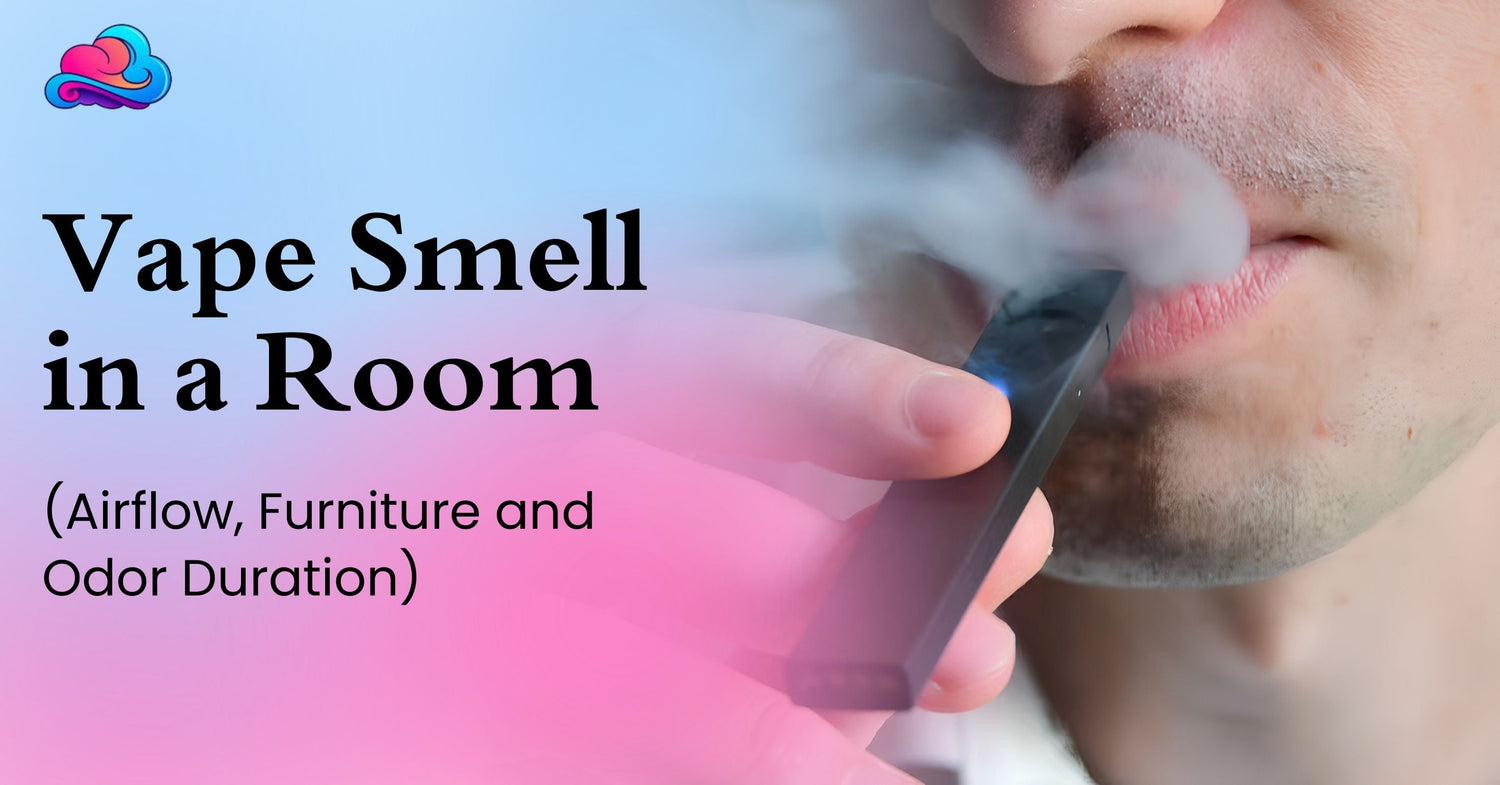
After 1 indoor vaping session, the odor may disappear fairly fast in a room with open windows and moving air, yet stay noticeable much longer in a closed space. There is no universal timer for how long does vape smell last in a room. Room size, ventilation, the amount of aerosol released, the flavor, temperature, and nearby fabrics can all change the result. EPA also says indoor persistence varies with the product, amount used, room size, ventilation, and surfaces.
This can be frustrating when a room looks clear but still has a sweet or fruity smell. A vape smell in bedroom can remain after the visible cloud is gone, and vape odor after vaping indoors should not be judged only by whether you can still see aerosol. EPA states that ventilation and filtration may reduce secondhand electronic cigarette aerosol indoors, but they are not likely to remove it completely.
The practical response is straightforward. If you want to remove vape smell from room air, stop the indoor source first, bring in cleaner outdoor air when conditions allow, and use filtration as added support rather than treating fragrance or an air purifier as a complete fix.
Direct Answer for One Indoor Session
For how long does vape smell last in a room, there is no evidence based single number that applies to every bedroom, office, or living room. In an open room with good air exchange, the noticeable odor may fade sooner. In a small closed bedroom with little air movement and many soft surfaces, it can stay noticeable for much longer.
EPA says the time smoke or aerosol related chemicals may remain indoors depends on the product, amount used, duration of use, room size, ventilation, and surfaces in the room. EPA also warns that not seeing or smelling the source does not mean related chemicals are no longer present.
A lingering sweet vape smell can also be noticed differently from person to person. The point when 1 person stops noticing an aroma should not be treated as an exact indoor air measurement.
Closed Bedrooms Can Hold Odor Longer
A vape smell in bedroom can feel more noticeable because bedrooms may be small, doors may stay closed, and bedding, curtains, rugs, and clothing add many surfaces. EPA notes that vaping related chemicals can build up on hard surfaces and become embedded in soft materials such as clothing, upholstery, drapes, bedding, and carpets.
The answer to how long does vape smell last in a room therefore changes when a bedroom has little outdoor air exchange. The visible cloud may disperse, but odor and deposited material can still affect the space after that cloud is no longer obvious.
If the room contains other people who do not want secondhand exposure, avoiding indoor vaping is the stronger practice. EPA states that stopping vaping inside enclosed spaces is the only way to eliminate secondhand electronic cigarette aerosol exposure from that indoor source.
Curtains, Carpets and Furniture Can Hold Residue
A vape smell in furniture is possible because chemicals released during vaping can settle onto indoor surfaces and become embedded in soft materials. EPA specifically includes upholstery, drapes, bedding, clothing, and carpets among surfaces that can retain material after smoking or vaping.
That does not mean every sofa or carpet will smell for the same amount of time. The amount used in the room, ventilation, fabric type, flavor, and cleaning history can all change the result.
If vape smell in furniture remains after the air improves, washing washable fabrics, laundering bedding, and caring for upholstery according to its normal instructions can reduce an odor source. Avoid soaking electrical items or using products that may damage furniture.
Visible Vapor and Odor Are Not the Same
The visible cloud from a vape is aerosol rather than ordinary water vapor. EPA describes electronic cigarette aerosol as tiny particles and droplets in the air and notes that it can contain nicotine and other potentially harmful substances. The amount released varies with the device, liquid, and way the device is used.
A room can stop looking cloudy before a person stops noticing vape odor after vaping indoors. The reverse can also happen. A person may stop smelling the flavor even though that does not prove every aerosol related substance or surface deposit is gone. EPA directly warns that lack of visible or noticeable odor does not establish that all related chemicals have left the space.
For that reason, smell should not be used as an exposure meter. Source control and vape aerosol ventilation are more meaningful than waiting until your nose says the room is clear.
Ventilation Is the First Practical Step
Good vape aerosol ventilation means replacing indoor air with cleaner outdoor air when outdoor conditions allow. EPA states that reducing pollution at the source and ventilating with clean outdoor air are among the strongest ways to improve indoor air quality.
Air movement within a sealed bedroom is not the same as outdoor air exchange. A fan blowing from 1 side of a closed room to another can move the odor around, but it does not remove the source by itself.
If you need to remove vape smell from room air, stop vaping there first. Then increase outdoor air exchange where practical rather than adding stronger scented sprays that mainly cover the smell.
Can an Air Purifier Reduce the Smell?
An air purifier can reduce part of the indoor pollution load, but it is not a complete answer. EPA says portable air cleaners and HVAC filters can reduce indoor air pollution but cannot remove every pollutant. Source control and clean outdoor air remain important.
Particle filters can reduce airborne particles. Air cleaners that also use suitable gas or odor filtration may address additional parts of an indoor smell. The performance still depends on the cleaner, room size, filter, and use conditions.
For vape aerosol ventilation, an air purifier works better as an extra layer beside air exchange. It should not be treated as permission to keep producing aerosol indoors around other people.
Sweet Flavors Can Seem More Noticeable
A lingering sweet vape smell may feel stronger to some people because fruit, candy, or dessert aromas can be easy to notice. That does not prove every sweet flavor stays indoors longer than mint or another profile.
The liquid formula, amount used, air exchange, nearby surfaces, and personal odor sensitivity can all affect the experience. There is no sound reason to give every flavor category an exact room clearance time.
If a lingering sweet vape smell stays noticeable after the visible cloud is gone, ventilation and source removal are stronger responses than spraying another fragrance over it. Adding perfume can change the room aroma without proving the original source has been removed.
Device Size Cannot Give an Exact Odor Timer
Different vape formats can hold different amounts of liquid and operate in different ways. A product such as the Clio Platinum pod represents 1 pod format, but a product page cannot predict the exact time an odor will remain in a particular bedroom.
The same applies to a higher capacity product such as the RAZ LTX 25000. Device capacity is not a room ventilation measurement.
A replacement product such as Foger Switch Pro pods also cannot provide a fixed vape odor after vaping indoors duration. Room conditions and the amount actually used still matter.
A 7 Step Room Clearing Process
Use this order if you need to remove vape smell from room air after an indoor session:
-
Stop vaping in the room.
-
Open a window or door to cleaner outdoor air when conditions allow.
-
Use existing ventilation to move indoor air out instead of only around the room.
-
Run a suitable air cleaner if one is available.
-
Wash bedding or other washable fabrics if they continue to hold odor.
-
Clean normal hard surfaces that may have received residue.
-
Keep the room free from new vape aerosol while the air and surfaces clear.
EPA supports source control, ventilation, and filtration as the main indoor air approaches, while noting that ventilation and filtration do not eliminate every exposure.
The goal is source control first, followed by air exchange, filtration, and surface care. Covering the odor with perfume, candles, or sprays does not prove aerosol related material has been removed.
A Real Bedroom Example
Consider an adult named Ryan who vapes once in a small bedroom with the door and window closed. The visible cloud fades, but a vape smell in bedroom remains and seems strongest near the curtains and bedding.
Ryan stops vaping indoors, opens the window when outdoor air conditions are suitable, leaves the door open to improve air exchange, and runs an air cleaner. He later launders the bedding because the sweet aroma is still noticeable there.
His room does not follow a fixed 20 minute rule. The odor drops as the air is replaced and soft surfaces are dealt with. This is a more realistic way to think about how long does vape smell last in a room.
Furniture and Fabric Need Their Own Attention
If the room air feels better but a vape smell in furniture remains, focus on the surfaces rather than adding more fragrance to the air. EPA notes that vaping related chemicals can become embedded in upholstery, drapes, bedding, clothing, and carpet.
For washable items, follow the care label. For upholstered furniture, follow its normal cleaning instructions. Do not use liquid cleaners on electronics or materials that are not designed to get wet.
Repeated indoor vaping can also add more deposited material over time. A room exposed regularly can therefore behave differently from a room exposed to only 1 short session.
Travel and Room Odor Are Separate Problems
Indoor odor should not be mixed with battery packing rules. If a vape was accidentally put in a checked bag, the issue is airline handling and battery rules rather than bedroom odor.
Likewise, international checked luggage vape rules deal with air travel requirements. A mild smell or small device body does not turn room odor guidance into travel guidance.
This separation matters because indoor aerosol ventilation is an indoor air issue. Airline transport and battery storage require their own checks.
Device Duration Is Separate From Room Duration
The RAZ device duration guide deals with the period a vape may remain usable based on model, mode, and use. That is different from odor remaining in a room.
A high puff device does not automatically make 1 indoor session smell longer than another device. The amount actually released during that session and the room conditions matter more than the total advertised capacity inside the product.
This distinction keeps how long does vape smell last in a room focused on indoor air instead of product lifespan.
Purchase Location Cannot Predict Indoor Odor
Buying from a delivery service or a retail store does not change the basic indoor air issue. The guide on DoorDash vape availability covers adult ordering and delivery limits.
The article on vapes at gas stations covers a different retail question. Neither sales route can tell you the exact bedroom vape odor duration after use.
Indoor odor still depends on the amount used, ventilation, room size, surfaces, and personal odor perception.
Device Type Can Affect Aerosol Without Creating a Fixed Room Time
The guide on Geek Bar device basics covers a specific vape family and its device format. Different products can produce different amounts of aerosol depending on their design and the way they are used. EPA also notes that device type, operation, use, and liquid can affect aerosol emissions.
Even so, no device name creates a universal room odor deadline. A few draws in a ventilated room and repeated use inside a closed bedroom represent very different indoor conditions.
That is another reason vape odor after vaping indoors should be judged through room conditions rather than a brand name alone.
Errors That Often Keep the Odor Around
The first error is shutting the room and only running a fan inside it. Moving the same air around can change the place where odor is noticed without providing the same benefit as clean outdoor air exchange.
The second error is spraying perfume over a lingering sweet vape smell. This may cover the aroma for a while, but it adds another scent instead of addressing the original source.
Another error is ignoring curtains, carpet, bedding, or upholstery when vape smell in furniture or fabric remains. The last error is assuming no smell means zero aerosol related exposure. EPA specifically warns that not seeing or smelling the source does not mean related chemicals are no longer in the air or space.
Better Practices for Indoor Air
The strongest practice is source control. EPA states that prohibiting vaping indoors is the only way to eliminate secondhand exposure from indoor electronic cigarette aerosol.
When an indoor session has already happened, use vape aerosol ventilation, cleaner outdoor air, suitable filtration, and normal surface care. Keep new aerosol out of the room while the air and surfaces clear.
If you need to remove vape smell from room fabrics, deal with those fabrics directly instead of relying only on an air purifier. Air cleaning and surface care address different parts of the room.
Connection With the Wider Indoor Vape Strategy
The topic how long does vape smell last in a room belongs inside a complete indoor vape odor and aerosol guide. A wider pillar can cover bedroom odor, ventilation, aerosol, secondhand exposure, furniture, fabrics, air cleaners, flavor smells, and repeated indoor use.
This article supports that wider guide by separating visible aerosol, noticeable odor, and material deposited on surfaces. Those 3 things should not be assumed to disappear at the same moment.
The wider strategy should keep the central point clear: reducing the indoor source is stronger than repeatedly trying to cover its smell afterward.
EPA Indoor Air Guidance Adds Important Context
The supplied EPA indoor air quality guidance provides wider information about indoor pollution, source control, ventilation, and filtration.
EPA says some chemicals from smoking and vaping can remain indoors and can build up on walls, tables, floors, upholstery, drapes, bedding, clothing, and carpets. It also states that ventilation, filtration, and air cleaning can reduce exposure but do not eliminate it.
EPA does not give 1 universal clearance time. Product type, amount used, room size, ventilation, and surfaces all affect indoor persistence. That supports a cautious answer instead of an invented room timer.
When Building or Health Support Makes More Sense
If odor repeatedly enters from another apartment or room, shared air movement or building pathways may need attention. A landlord, property manager, or building professional may be better placed to review the source.
If someone develops serious breathing trouble, chest pain, severe coughing, or another significant symptom after indoor aerosol exposure, seek appropriate medical care rather than relying only on ventilation or odor removal.
Air freshener, ventilation, and filtration are room management measures. They are not treatment for a medical problem.
Conclusion
There is no universal number for how long does vape smell last in a room after 1 session. A room with good outdoor air exchange may lose noticeable odor sooner, while a closed bedroom with curtains, carpet, bedding, upholstery, and little ventilation can hold odor and deposited material longer.
A vape smell in bedroom can remain after the visible cloud disappears. Air cleaners can reduce indoor pollution, but EPA says filtration cannot remove every pollutant. Curtains, rugs, bedding, and upholstery can also retain material released indoors.
Stop the indoor source first. Then use outdoor air exchange, suitable filtration, and surface care. Most importantly, do not use your nose as proof that all aerosol related material is gone.
FAQs
Can Vape Odor Stay for Hours in a Closed Bedroom?
It can remain noticeable for an extended period in some closed rooms. Room size, air exchange, amount used, flavor, and surfaces can all change the result.
Can Curtains and Carpet Hold Vape Odor?
Yes. EPA says vaping related chemicals can become embedded in drapes, bedding, clothing, upholstery, and carpets.
Can an Air Purifier Reduce Vape Odor?
It can reduce part of the indoor pollution load. EPA says air cleaning and filtration can reduce indoor pollution, but cannot remove every pollutant.
Can a Sweet Flavor Stay Noticeable Longer?
Some people may notice sweet aromas for longer, but there is no universal rule that every sweet flavor remains longer than every other flavor.
Can Aerosol Related Material Remain After the Smell Is Gone?
Yes. EPA says lack of visible or noticeable odor does not prove that all related chemicals are gone from the room.
Can a Fan Clear the Room by Itself?
A fan can move air, but outdoor air exchange is more useful for reducing indoor pollutant concentration than only circulating the same closed room air.
Should Fabrics Be Cleaned After 1 Session?
Not always. If odor remains in bedding, curtains, rugs, or upholstery, normal fabric or surface care can address those materials directly.
Is There a Guaranteed Time When a Room Is Completely Clear?
No. EPA says persistence varies with the product, amount used, room size, ventilation, and surfaces, so a fixed universal deadline is not supported.

Leave a comment
This site is protected by hCaptcha and the hCaptcha Privacy Policy and Terms of Service apply.