
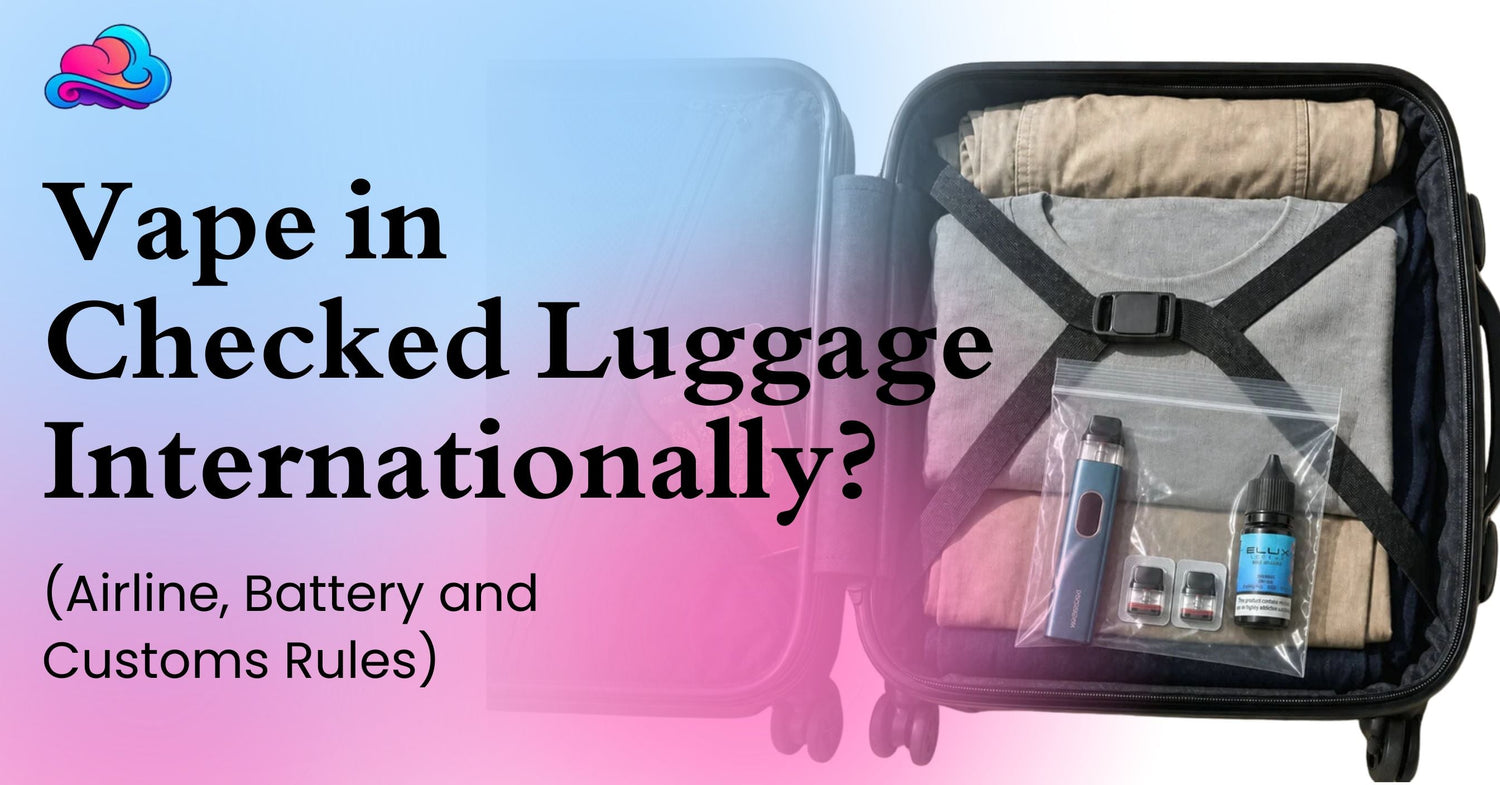
An international trip can become stressful the moment you remember that a vape is inside the suitcase already sent to the aircraft hold. A device such as the Geek Bar Pulse 2 25K disposable contains a rechargeable battery and heating part, so it is not treated like an ordinary toiletry. The direct answer to what happens if you put a vape in checked luggage international is that the bag may be stopped, opened, delayed, returned, or handled under the airline and airport process. Report the mistake immediately rather than waiting to see whether the bag travels.
International aviation guidance places electronic cigarettes and vapes in carry on baggage, not checked baggage. The device must be protected from damage and accidental activation, and charging during the flight is not allowed. Some airlines ban these devices completely, even when the general aviation rule would permit cabin carriage.
The international flight vape checked bag problem also has a second layer. A device may meet the airline battery rule but still be illegal at the transit point or destination. Customs, health, and tobacco laws can control import, possession, and use separately from baggage safety.
This article gives general travel information for adults. It does not replace instructions from the operating airline, airport security, customs authority, or destination regulator.
Direct International Answer
If you ask what happens if you put a vape in checked luggage international, the safest action is to tell the operating airline as soon as the mistake is noticed. Give the bag tag, flight number, suitcase color, device type, and its location inside the bag.
The airline may be able to intercept or return the suitcase before loading, but this is not guaranteed. The result depends on the bag location, available time, airport procedure, and airline staff decision.
A vape lithium battery luggage error should never be handled by entering a secure baggage area or opening a suitcase without permission. Stay with the airline representative and follow the process given.
Before the Suitcase Enters the Baggage System
When the suitcase is still at the counter, staff may be able to return it quickly. State that an electronic smoking device with a battery is inside.
Open the bag only in the area staff approves. Remove the device and place it in protected cabin storage only when the airline and destination allow possession.
An international flight vape checked bag issue is much easier to correct before security screening and loading. Keep the baggage receipt until the bag is accepted again.
After Check In but Before Security
Return to the airline desk immediately. Do not wait until the boarding gate, since the suitcase may move farther through the airport during that time.
Ask whether baggage operations can locate the bag. Use clear words such as electronic vape with a battery rather than only saying there is a smoking item inside.
If staff return the bag, protect the device against activation. Do not test, charge, or use it inside the terminal while resolving the vape lithium battery luggage problem.
After Security but Before Boarding
Go to the airline service desk or gate agent. Show the baggage tag and explain that a vape was packed in the checked suitcase.
Staff may contact baggage operations, hold the suitcase, remove it from the flight, or give another instruction. The traveler cannot demand a certain result because operational limits differ by airport.
Early reporting gives the airline more time. Staying silent can turn a correctable packing error into a later baggage or safety problem.
After Boarding but Before Takeoff
Tell a flight attendant immediately. Give the bag tag, suitcase description, and device details.
The cabin crew can pass the report to the captain and ground team. The aircraft may remain at the gate while staff review the bag, but no outcome is guaranteed.
Do not leave the aircraft or open cabin doors unless the crew directs it. The airline controls the response to an airport vape mistake at this stage.
After the Aircraft Is Airborne
Tell a flight attendant as soon as the mistake is remembered. The checked suitcase cannot be accessed by the passenger during flight.
The crew may record the report and contact destination operations. Follow every instruction and do not wait until baggage claim to disclose it.
The answer to what happens if you put a vape in checked luggage international after takeoff is mainly that the airline manages the risk while the passenger remains available for questions. Any action at landing may involve baggage staff, airport security, or customs.
Can an Airline Remove the Device?
An airline may be able to retrieve the suitcase before departure and arrange removal, but retrieval depends on timing and airport operations. It is better to ask than to assume the bag is already beyond reach.
Staff may return the whole bag, supervise access, remove the bag from the flight, or hold it for later travel. A delay is possible because the suitcase may need another screening step.
A request for device removal should stay calm and factual. The traveler should not offer to enter a controlled area or ask staff to ignore the battery rule.
Could the Suitcase Be Opened or Delayed?
Yes. Security personnel may inspect a checked suitcase when screening identifies an item of concern. The bag can also miss the planned flight if it must be intercepted or reviewed.
A vape confiscation checked baggage result is possible, but it is not the only result. The device might be removed, the whole suitcase might be held, or staff might return the bag before departure.
Do not promise yourself that a vape will only be taken out and nothing else will happen. Airline, airport, transit, and customs procedures all affect the final result.
Disposable Devices Follow the Battery Rule
A disposable vape still has a battery and heating part. It is covered by the cabin rule even when the battery cannot be removed.
The IATA 2026 passenger guidance states that electronic cigarettes and other personal vaporizers containing batteries must remain in carry on baggage. It also requires protection from damage and accidental activation.
The word disposable does not create an exception for vape lithium battery luggage. A device that appears empty or dead should still be reported because the cell remains inside.
Pod Systems Need Part by Part Checks
A pod system may contain a battery in the base, the pod, or both parts. The RAZ Vue 50K kit includes a reusable power bank base and a prefilled pod with its own built in cell. Both battery parts need cabin handling when the airline permits them.
The RAZ Vue 50K replacement pod also contains a built in cell. It should not be treated as an ordinary liquid cartridge just because it looks like a pod.
By contrast, some pods may contain liquid without a battery. Those parts still face cabin liquid limits, leak protection, airline rules, and customs vape rules at every relevant country.
E Liquid and Pods Are Separate From the Device Rule
The battery rule decides where the powered device can be packed. Security liquid limits decide how much liquid may enter the cabin and how it must be presented.
A sealed pod can also leak because of pressure changes, heat, or damage. Place permitted pods and liquid bottles in leak resistant packing and follow the departure airport’s current liquid instructions.
The Foger Switch Pro replacement pods are sealed prefilled components for a matching system. Their product format does not remove airline, liquid, nicotine, or destination checks.
Transit Airports Can Change the Result
A connecting airport may apply its own security rules, even when the passenger does not plan to leave the terminal. A bag can also be rescreened or transferred under local procedures.
The international airport vape policy should be checked for every connection, not only the first departure point. The operating airline may also change on a codeshare or separate ticket.
A device allowed on the first flight might be restricted by the next airline or transit country. Keep written policy pages or official screenshots available before travel.
Destination Bans Can Affect Possession
Some countries prohibit import, purchase, possession, or use of vapes. Singapore, for example, prohibits purchase, possession, use, import, sale, and distribution of vaporisers. A traveler carrying one can face confiscation and penalties under local law.
This means customs vape rules can be stricter than the airline rule. Cabin carriage permission is not permission to enter the country with the product.
Before packing, check the destination customs or health authority. Also check the transit country when baggage must be collected, rechecked, or presented to customs during the connection.
Confiscation at a Connection Airport
A vape confiscation checked baggage event can occur when security or customs encounters a prohibited device. The result depends on the authority involved and the law being applied.
Airport security may act because of the battery location. Customs or another regulator may act because import or possession is restricted. These are separate reasons for seizure.
Do not argue that another airline allowed the device. Airline vape restrictions and national law can both apply, and the stricter rule may control the trip.
A Safe Response Process
Use this order after noticing the mistake:
-
Locate the baggage receipt.
-
Note the flight number and current airport area.
-
Contact the operating airline immediately.
-
State that a vape with a battery is inside.
-
Give the suitcase color, size, and tag number.
-
Give the device type and its location in the bag.
-
Follow staff directions about retrieval or inspection.
-
Move the device to cabin baggage only when permitted.
-
Protect it from damage and accidental activation.
-
Check transit and destination law before continuing.
This process cannot guarantee that the flight or suitcase will remain on schedule. It gives airline staff the best chance to manage the issue safely.
A Real International Travel Example
Consider an adult named Adam flying from the United States with a connection before reaching another country. He remembers at the gate that a disposable vape is in his checked suitcase.
Adam reports the international flight vape checked bag issue to the gate agent and gives the bag tag. Baggage staff locate the suitcase before loading and return it for supervised access.
Before placing the device in his carry on, Adam checks the next airline and destination authority. He discovers that possession is restricted at the destination, so he does not continue the trip with it.
The example shows that correcting the battery location is only the first step. Customs vape rules still control entry and possession.
Damaged Devices Should Not Travel
A vape that is swollen, cracked, leaking heavily, smoking, or unusually hot should not be placed in checked or cabin baggage. Tell airline or airport staff about the damaged battery device.
The safe RAZ screen and reset checks stress outer inspection and stopping after battery warning signs. Airport travel is not the place to keep testing a faulty sealed device.
Do not charge a device before boarding merely to confirm that it works. IATA guidance says allowed vapes must not be charged during the flight, and some airlines do not permit them at all.
Blinking Pods Need a Stop Check
A blinking light does not make a pod system safe for baggage. It can point toward charging, contact, battery, or device trouble.
The STIIIZY pod connection and battery checks cover dry outer inspection and stop signs. Those checks should be completed before the travel day, not at the boarding gate.
A blinking, leaking, or warm device should be reported to airline staff if it is already at the airport. Do not open the pod or battery to inspect internal parts.
Airflow Faults Still Follow the Rule
A vape with no airflow or no vapor still contains a battery. It remains covered by airline vape restrictions.
The safe vape airflow checks cover visible seals, mouthpiece residue, and outer controls. They do not turn a damaged device into approved checked baggage.
Never test a blocked vape inside an aircraft, airport restroom, or restricted terminal area. Use and charging are separate from packing permission.
Ingredient Records Are a Different Travel Issue
A product label or laboratory report can describe ingredients, but it cannot replace the battery packing rule or destination law.
The Foger claims and testing guide separates product claims from evidence. In the same way, an ingredient statement does not confirm that customs will allow the product.
Travelers need both product identification and legal checks. Customs may care about nicotine, cannabis, CBD, medicine claims, quantity, packaging, or complete bans.
Issues That Often Make the Situation Worse
The first issue is staying silent because the traveler feels embarrassed. Early reporting gives the airline more options.
The second issue is assuming that an empty disposable has no battery risk. The cell remains inside after liquid or coil performance ends.
Another issue is checking only the departure airline. International airport vape policy and destination law can change at a connection.
The last issue is moving pods into checked baggage while keeping only the battery base in the cabin. A pod with its own cell can create the same battery problem.
Better International Packing Practices
Pack allowed vapes on your person or in cabin baggage, protected from accidental activation. Keep spare batteries and battery powered pods away from metal objects that could cause a short circuit.
Review the full route before leaving home. Check every operating airline, departure airport, transit airport, destination customs authority, and destination health or tobacco regulator. Airline vape restrictions can differ even on flights sold under the same trip booking.
Keep liquids within the departure airport limit and use leak resistant packing. Never use or charge a vape onboard.
Connection With the Wider Travel Strategy
The phrase what happens if you put a vape in checked luggage international belongs inside a complete international vape travel and customs guide. The wider pillar can cover cabin batteries, liquids, pods, gate checked bags, transit airports, destination bans, customs declarations, and damaged devices.
This article supports that pillar by separating battery safety from import and possession law. It also shows that an airport vape mistake can continue across more than 1 country.
The pillar should be reviewed before each trip. International airport vape policy, airline conditions, and national rules can change after an earlier journey.
Which Authority Comes First?
Before travel, check the destination customs or health regulator first to confirm that possession and import are lawful. Next, check every operating airline and each transit airport.
After a checked bag mistake at the airport, contact the operating airline first because it controls the bag movement. Airport security or customs should be contacted when airline staff directs you or when a local rule requires a declaration.
For broad battery guidance, IATA states that vapes belong in carry on baggage and notes that some airlines prohibit them entirely. That makes the airline policy the final packing check before departure.
Conclusion
The answer to what happens if you put a vape in checked luggage international depends on when the mistake is noticed and which rules apply. The bag may be intercepted, opened, delayed, removed from the flight, or handled by security or customs.
Tell the operating airline immediately. A disposable, battery powered pod, or rechargeable device should not remain in checked baggage under current international aviation guidance.
Correcting the bag location does not settle the legal question. Check every airline, transit point, and destination authority because bans can lead to refusal, vape confiscation checked baggage, or penalties.
FAQs
Can an International Airline Remove a Vape From Checked Baggage?
It may be able to intercept or return the suitcase before loading. Retrieval depends on timing, bag location, and airport operations.
Could a Connection Airport Confiscate the Device?
Yes. Security or customs may act when the battery is packed incorrectly or local law prohibits the product.
Can a Destination Ban Affect Personal Possession?
Yes. Some countries prohibit import and possession even when the device is only for personal use.
Are Disposable Vapes Covered by the Same Rule?
Yes. A disposable contains a battery and heating part, so it belongs in permitted cabin storage rather than checked baggage.
Are Pods and E Liquid Treated Separately?
Yes. Battery powered pods follow battery rules, while all pods and liquids can also face security, leak, nicotine, and customs limits.
Can the Device Be Charged During the Flight?
No. Current international guidance does not permit charging electronic cigarettes or their batteries onboard.
Which Authority Should a Traveler Check First?
Before travel, check destination law, then every operating airline and transit airport. After a bag mistake, contact the airline first.
Can the Bag Be Delayed After Reporting the Vape?
Yes. Retrieval, inspection, removal, or rescreening can cause the suitcase to miss its planned flight.



Leave a comment
This site is protected by hCaptcha and the hCaptcha Privacy Policy and Terms of Service apply.