
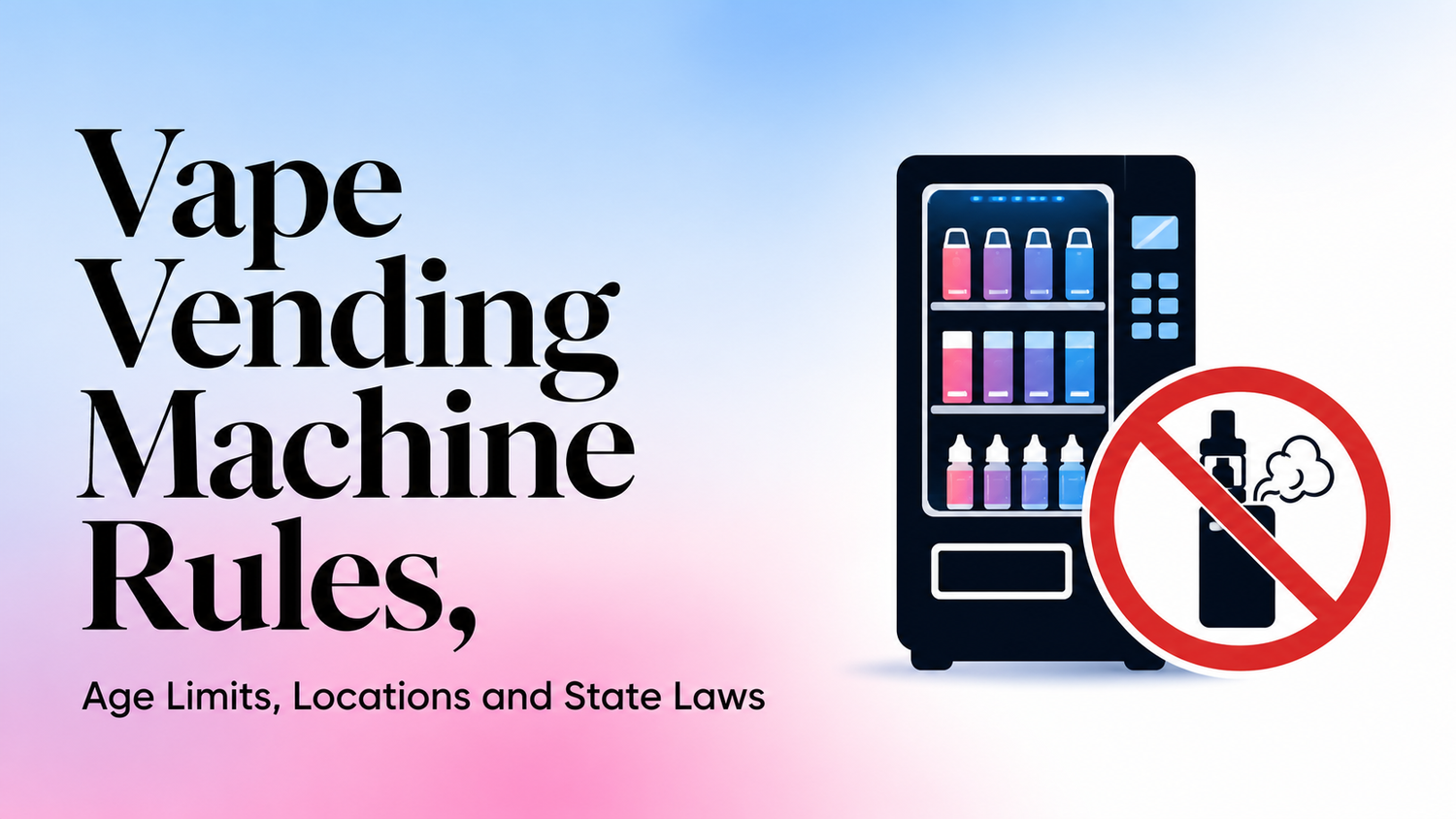
A vape vending machine may look like an ordinary automated retail unit, but selling e cigarettes through a machine comes with strict federal age and location rules. The biggest issue is not only the age of the buyer. The type of building, who is permitted to enter, state law, local law, and the products inside the machine all matter.
Under current federal rules, retailers cannot sell tobacco products, including e cigarettes and other covered electronic nicotine delivery systems, to anyone younger than 21. Retailers must also check photo identification for anyone under 30 who attempts to buy these products. A vape vending machine cannot be used for tobacco product sales in a facility if people under 21 are present or allowed to enter at any time.
That means vape vending machine laws are more restrictive than simply putting an age warning on the machine. An operator needs to consider the federal vape vending machine age limit, access to the location, applicable state rules, and any local requirements before treating a machine as compliant.
The same age related questions can appear with other retail channels. The article about vapes at gas stations covers another retail setting, while this article stays focused on automated vending.
Are Vape Vending Machines Legal in the United States?
A vape vending machine is not automatically prohibited everywhere in the United States under federal law. Federal rules focus heavily on age and the type of facility in which the machine operates.
FDA states that tobacco products cannot be sold through a vending machine in facilities in which people under 21 are present or permitted to enter at any time. This rule applies to e cigarettes, e liquids, and other electronic nicotine delivery systems.
An adult only vape vending machine may therefore fit the federal location rule when the facility truly excludes anyone under 21 at all times. That does not settle every legal issue because state and local governments may impose stricter restrictions. FDA specifically tells retailers to follow state and local tobacco laws even when those rules are more restrictive than federal requirements.
So the legal answer depends on both federal FDA vape vending rules and the laws applying at the exact machine location.
Can a Machine Be Placed in a Regular Convenience Store?
Usually not if people younger than 21 are allowed inside. Federal rules prohibit tobacco product vending machine sales in facilities in which individuals under 21 are present or permitted to enter at any time.
A normal convenience store often serves customers across many age groups. If minors can lawfully enter that store, placing an e-cigarette vending machine there would conflict with the federal location restriction.
This point is important because vape machine age verification technology does not automatically remove the facility restriction. Even if a machine has an age related control, the federal rule still addresses whether people under 21 are allowed inside the facility.
The same principle applies to a nicotine vending machine containing covered tobacco products. Location access must be considered before the machine itself.
Can Vape Machines Operate Inside Adult Only Venues?
Federal rules allow a different situation when people under 21 are neither present nor permitted to enter the facility at any time. FDA defines an adult only facility around that access standard.
That can make a strictly 21+ venue different from a convenience store, restaurant, or other mixed age location.
Still, an adult only vape vending machine is not automatically legal merely because a business calls itself an adult venue. Actual entry rules matter, and state or local vape vending machine laws may impose additional limits.
A bar or similar venue should therefore consider both federal access requirements and its own state and local rules before installing an e-cigarette vending machine.
Is the Federal Vape Vending Machine Age Limit 21?
Yes. Federal law makes it illegal for retailers to sell tobacco products, including e cigarettes, to anyone younger than 21. The minimum federal sales age applies across retail establishments and sellers.
The vape vending machine age limit therefore cannot be treated separately from Tobacco 21. A vending format does not create an exception allowing someone younger than 21 to purchase an e cigarette.
Since September 30, 2024, retailers must check photo identification for anyone under 30 attempting to buy cigarettes, smokeless tobacco, or covered tobacco products. E cigarettes and other ENDS are covered tobacco products under the FDA retail framework.
A nicotine vending machine operator therefore has to think beyond a sign saying “21+.” The overall retail setup must satisfy current federal age requirements.
Is Built In Vape Machine Age Verification Required?
Federal rules establish age related sales duties, but the FDA material reviewed here does not require one named scanner, facial recognition system, or other specific technology to be installed inside every machine.
Instead, current rules require retailers to check photo ID for people under 30 attempting a tobacco product purchase, prohibit sales to anyone under 21, and limit vending machine sales to facilities that exclude people under 21.
This distinction matters when discussing vape machine age verification. A machine manufacturer may offer technical age controls, but having technology on the machine should not be mistaken for complete legal compliance.
An adult only vape vending machine still has to operate inside the allowed federal environment and comply with state and local requirements.
Are Disposable Vapes Covered by the Federal Rule?
Federal vending restrictions cover e cigarettes, e liquids, and other electronic nicotine delivery systems. FDA lists e cigarettes, e liquids, vape pens, e hookahs, e cigars, personal vaporizers, and electronic pipes within the ENDS category.
A disposable vape that falls within the e cigarette or ENDS category is therefore covered by the same federal retail and vending restrictions.
This means putting disposable devices inside a vape vending machine does not create a separate exception from the federal vape vending machine age limit.
Adults researching device terminology can read the article about Geek Bar device basics. Device information and vending legality remain separate questions.
Can State Vape Vending Machine Laws Be Stricter?
Yes. FDA specifically states that retailers must comply with state and local tobacco laws even if those laws are more restrictive than federal rules.
This is one of the most important parts of vape vending machine laws. Federal compliance creates a baseline, not a guarantee that a machine can legally operate in every state, county, or city.
A state or locality may regulate tobacco retail activity differently. An operator should therefore review current rules for the exact location rather than assuming federal compliance settles the entire issue.
This also means an adult only vape vending machine that fits the federal facility rule may still face additional restrictions under state or local law.
Are Separate State Permits Required?
There is no single answer for every state. Permit and licensing requirements can depend on state and local law, the business, the product category, and the location.
The federal FDA pages reviewed here set age, ID, product, and vending location requirements. They do not create one universal state vending permit that applies identically across all 50 states.
For that reason, a business considering an e-cigarette vending machine should check the tobacco retail licensing rules in the state and locality in which the machine will physically operate.
A tobacco vending machine law at state level may also address areas that go beyond the federal facility rule.
A Practical Compliance Review Before Installing a Machine
Start by checking the venue. Ask whether anyone under 21 can enter at any time. If the answer is yes, the federal vending rule creates a major problem for selling covered tobacco products through the machine.
Next, confirm the product category. E cigarettes, e liquids, and other ENDS fall within current FDA retail rules.
Then review age controls. The federal sales age is 21, and photo identification must be checked for customers under 30 attempting covered tobacco product purchases.
After that, review state and local vape vending machine laws. A state or city can have stricter rules than the federal baseline.
Finally, review business licensing and permit requirements for the specific jurisdiction. Keep those requirements separate from the federal FDA vape vending rules because they may come from different authorities.
Real World Compliance Example
Consider a business that wants to place a vape vending machine inside a convenience store that admits customers of every age.
Adding an ID scanner to the machine might seem like the answer. Yet federal rules prohibit tobacco vending machine sales in facilities in which people under 21 are present or allowed to enter at any time. The scanner alone would not change that location issue.
Now consider a facility that strictly permits entry only to people age 21 and older. The federal vending location restriction is different there because under 21 visitors are not permitted.
Even then, the operator still needs to consider state and local tobacco vending machine law, licensing rules, age compliance, and other applicable retail requirements.
This example shows the difference between vape machine age verification and facility eligibility. They are connected, but they are not the same compliance question.
Issues That Often Cause Compliance Problems
One major error is assuming that an ID scanner makes every location acceptable. Federal rules also restrict the facility in which an e-cigarette vending machine can operate.
Another issue is treating 21+ labeling as enough. The federal vape vending machine age limit is backed by sales and ID requirements, not just signage.
A third problem is checking only federal law. State and local vape vending machine laws can be more restrictive, and FDA directly tells retailers to comply with those additional requirements.
Businesses can also mix product information with legal status. An article about which vape lasts longer addresses device duration, not whether that product can legally be distributed from a vending machine.
Better Compliance Practices for Machine Operators
Treat the location as the first compliance check. If under 21 visitors can enter, do not assume technology will overcome the federal facility restriction.
Keep records of current state and local requirements. Vape vending machine laws may change, and a compliance setup based on old information can become outdated.
Review the exact products inside the machine as well. The federal rule applies to e cigarettes, e liquids, and other covered ENDS products, so product format matters.
Businesses should also keep retail delivery channels separate. An article covering vape delivery through DoorDash addresses another sales channel and should not be treated as guidance for vending machines.
These practices create a clearer separation between product information, machine technology, venue access, and legal requirements.
Travel Rules Are a Separate Topic
A nicotine vending machine rule answers questions about retail distribution from an automated machine. It does not determine whether an electronic cigarette can be placed in airline baggage.
For adults researching that separate issue, the article on vapes in checked luggage during international travel addresses travel related considerations.
The same separation applies to device display codes. Information about the 188 display on a Foger has no effect on federal FDA vape vending rules.
Keeping these topics apart makes the compliance article easier to follow and prevents unrelated device information from being treated as legal guidance.
Connection to the Wider Retail Compliance Topic
A vape vending machine is only one part of a larger adult tobacco retail compliance system. Age limits, photo ID checks, venue access, product classification, retail licensing, and state law can overlap.
A broader pillar guide can place vending rules beside other adult retail channels such as convenience stores, online transactions, and delivery services.
No pillar URL was provided in the supplied link list. A URL should not be created or guessed, so no pillar hyperlink has been inserted into this article.
Once the correct pillar page is available, the phrase adult vape retail compliance guide can connect this article with that wider topic.
When Regulatory Guidance May Be Needed
Professional regulatory or legal guidance can be useful when a business is uncertain about a state permit, local vending restriction, venue classification, or the products it intends to place inside a machine.
This matters because federal FDA vape vending rules are only part of the compliance picture. FDA itself notes that state and local laws may impose stricter requirements.
Operators should also avoid assuming that rules applying in one city automatically apply in another location.
No contact or service URL was provided in the brief, so no service link has been inserted.
Federal Age Rules Remain the Starting Point
The current FDA Tobacco 21 requirements state that retailers may not sell tobacco products, including e cigarettes, to anyone younger than 21. Retailers must check photo ID for people under 30 attempting covered purchases.
The same FDA guidance states that cigarettes, smokeless tobacco, and covered tobacco products cannot be sold with the assistance of a vending machine in facilities in which people under 21 are present or permitted to enter at any time.
This federal baseline is central to tobacco vending machine law, vape machine age verification, and the operation of an adult only vape vending machine.
State and local compliance must then be reviewed on top of that federal baseline.
Conclusion
A vape vending machine can face strict federal restrictions based on the age of buyers and the type of facility in which it operates.
Federal law prohibits tobacco product sales to anyone under 21 and requires photo ID checks for purchasers under 30. FDA also prohibits vending machine tobacco sales in facilities in which individuals under 21 are present or permitted to enter at any time.
An e-cigarette vending machine in a strictly adult only setting may fit the federal location rule, but state and local vape vending machine laws can be stricter. Operators also need to review applicable licensing and permit requirements.
The strongest compliance approach is to treat the vape vending machine age limit, venue access, vape machine age verification, product category, state law, and local law as separate checks rather than assuming one feature makes the entire setup compliant.
FAQ
Are Vape Vending Machines Legal in the United States?
They are not subject to a blanket federal ban, but federal rules restrict them to facilities in which people under 21 are neither present nor permitted to enter. State and local rules may be stricter.
Can a Vape Vending Machine Be Placed in a Convenience Store?
Not if people under 21 are present or permitted to enter the facility. Federal rules prohibit covered tobacco product vending machine sales in that situation.
Is the Vape Vending Machine Age Limit 21?
Yes. Federal law prohibits retailers from selling tobacco products, including e cigarettes, to anyone under 21.
Is Age Verification Required for Vape Sales?
Yes. Retailers must check photo ID for anyone under 30 attempting to purchase tobacco products. Federal law also prohibits sales to anyone under 21.
Can a Machine Operate Inside a 21 Plus Bar?
The federal vending restriction can permit vending in a facility in which people under 21 are neither present nor allowed to enter. State and local rules may impose additional restrictions.
Are Disposable Vapes Covered by Vending Restrictions?
A disposable product that falls within the e cigarette or ENDS category is covered by the federal retail rules applying to e cigarettes and other ENDS.
Can State Vape Vending Machine Laws Be Stricter?
Yes. FDA states that retailers must follow state and local tobacco laws even when they are more restrictive than federal requirements.
Is a Separate Permit Needed for Every Vape Vending Machine?
There is no single nationwide answer. State and local licensing requirements can differ, so operators need to review the rules applying to the exact location.
Is an ID Scanner Enough to Make a Machine Legal?
Not by itself. The federal rule also limits vending machine sales based on whether people under 21 can enter the facility. State and local requirements can add further restrictions.

Leave a comment
This site is protected by hCaptcha and the hCaptcha Privacy Policy and Terms of Service apply.