
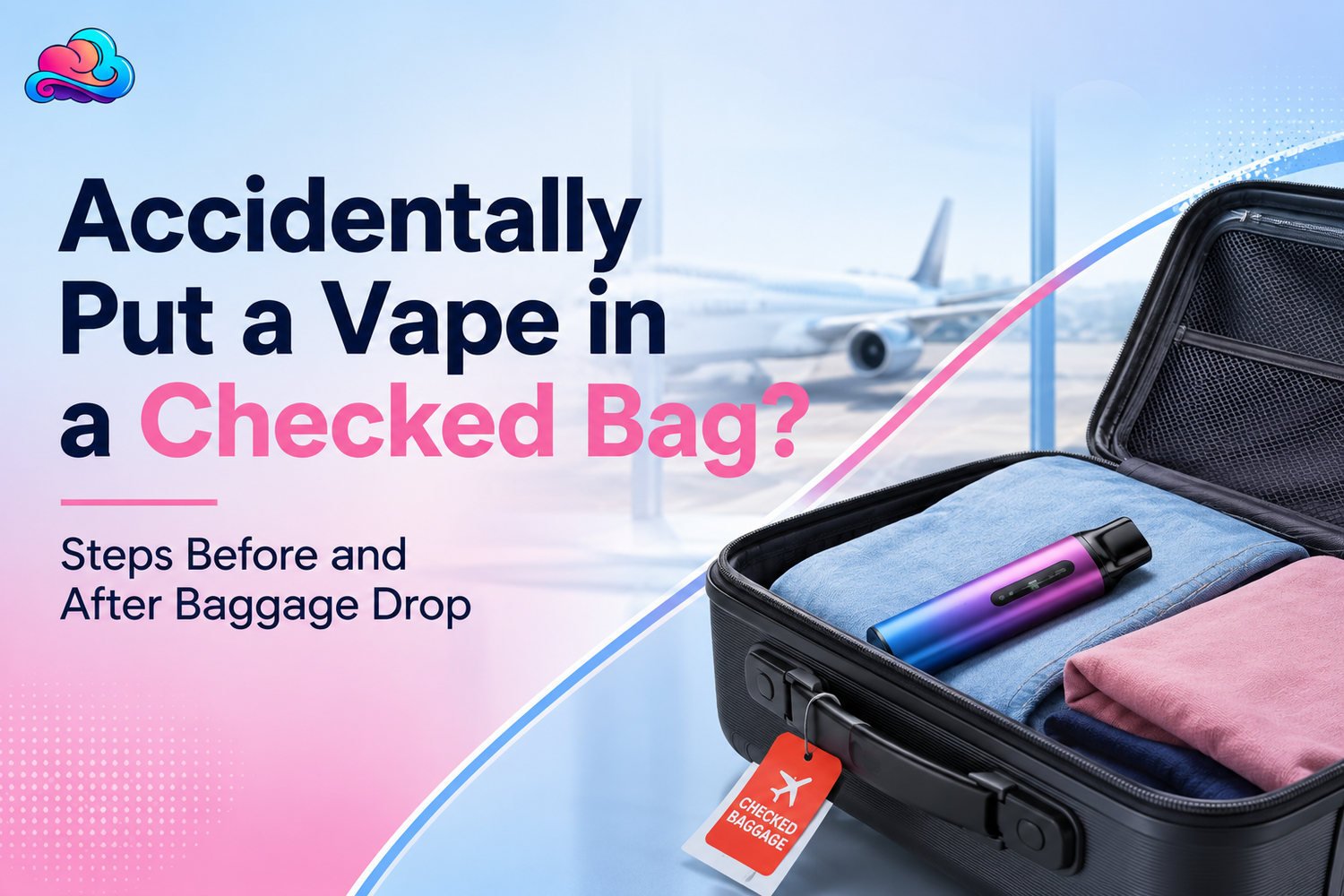
Realizing that you packed a vape after handing over your suitcase can cause instant stress. An adult may be carrying a device from the Geek Bar vape range, remember it at the ticket counter, and fear that the trip is already ruined. If you search accidentally put vape in checked bag, act quickly and speak with airline staff. A vape left in checked luggage is a battery safety issue, not something to ignore and hope will pass.
Current United States air travel rules require electronic smoking devices to stay on the passenger or inside carry on baggage. They are prohibited in checked baggage because their lithium batteries and heating parts can create smoke, fire, or extreme heat. The device must also be protected against accidental activation, and it cannot be used or charged on the aircraft.
Travelers often type tell airline vape checked bag because they are unsure which worker to approach. Go to the airline ticket counter, baggage service desk, gate agent, or flight attendant, depending on the stage of travel. This airport vape mistake may be corrected before loading when staff receive the bag tag and flight details quickly.
This article covers battery packing rules for adult travelers. It does not give permission to possess a vape at the destination, and it does not replace airline instructions.
Immediate Answer
If you accidentally put vape in checked bag, notify the airline immediately. Give the bag tag number, flight number, suitcase color, and a clear description of the device. Ask whether staff can stop the bag or arrange retrieval.
The phrase lithium battery checked baggage matters because electronic smoking devices are treated more strictly than many ordinary electronics. Vapes, e cigarettes, disposable vapes, and spare lithium batteries belong in the cabin, not the aircraft hold.
Do not enter a restricted baggage area or try to follow the suitcase. Airline and airport staff control access and will decide which safe action is available.
Before the Bag Reaches Loading
A vape left in checked luggage is easiest to address while the suitcase is still near the ticket counter. Stay close to the airline desk and show the baggage receipt.
Ask staff to remove vape from checked bag before it enters the secured baggage system. The airline may return the suitcase, escort it for an approved opening, or direct you to baggage services. The exact process depends on the airport, airline, and current location of the bag.
Open the suitcase only in the place staff names. Remove the vape, protect it from activation, and place it in your carry on bag or on your person. Do not charge or test it inside the terminal.
After Bag Drop but Before Security
If you remember a vape in suitcase after check-in, return to the operating airline’s ticket counter at once. Do not wait until boarding begins.
Use the bag tag and say clearly that an electronic smoking device with a lithium battery is inside. Travelers using the search phrase tell airline vape checked bag should give facts rather than a long story. State the device type, bag description, and time of baggage drop.
When you accidentally put vape in checked bag at this stage, retrieval may still be possible, but it is not guaranteed. The bag may already be moving through screening or toward the aircraft.
After Security but Before Boarding
Go to the airline gate or customer service desk. Tell the agent that the checked suitcase contains a vape and provide the bag tag.
Do not leave the secure area unless staff directs you. Leaving may create a second security screening and could cause a missed flight.
The airline can contact baggage operations and decide whether the suitcase can be intercepted. Act as soon as you remember because each minute can change the bag’s location.
Can Airline Staff Retrieve the Bag?
Airline staff may be able to remove vape from checked bag when the suitcase can still be located and safely returned or intercepted. No passenger should expect automatic retrieval.
A vape in suitcase after check-in may already be inside the screening or loading system. Staff may retrieve the whole suitcase, hold it for inspection, remove it from the flight, or give another instruction. These are possible outcomes, not promises.
The safest request is direct: “My checked bag contains an electronic vape with a lithium battery.” Give the bag tag and remain available for questions.
Will the Bag Be Delayed or Searched?
It may be. TSA screens checked baggage and sometimes opens a suitcase for physical inspection. An item that creates a concern may lead to added screening, and a notice may be placed inside after a physical inspection.
The bag may travel later than the passenger if airline staff must remove it from the flight or hold it for review. It might also be returned before departure when operations allow. There is no single result for every airport.
Do not assume silence means the device was accepted. Report the issue and keep the baggage receipt until the suitcase is returned.
After Boarding but Before Takeoff
Tell a flight attendant immediately. Do not wait for the doors to close or for the aircraft to start moving.
Give the flight attendant your seat number, bag tag, suitcase description, and device type. The crew can pass the report to ground operations and the captain under airline procedures.
A quick report gives staff more options than a late report. Remain calm and follow crew instructions even if the flight is delayed.
After Takeoff
If you remember a vape left in checked luggage after the aircraft is airborne, tell a flight attendant at once. The passenger cannot access the cargo hold during flight.
The crew will decide the response and may notify operations or destination staff. Do not hide the issue, and do not wait until baggage claim to mention it.
If any battery device on your person or in your carry on becomes hot, swells, smokes, or burns, alert the crew immediately. FAA guidance tells passengers to report overheating lithium battery devices without delay.
Disposable and Pod Devices Follow the Same Rule
Disposable products still contain a battery and heating part. FAA guidance specifically includes disposables, vape pens, e cigarettes, atomizers, and other electronic smoking devices in the cabin only rule.
A lithium battery checked baggage restriction does not disappear because the device has no refill opening or removable cell. A sealed disposable must be carried in the cabin and protected from accidental activation.
A pod system may contain more than 1 battery part. The Geek Bar Clio Platinum kit has a reusable base and a detachable pod with its own cell, so both parts need careful cabin packing.
Battery Parts That Need Cabin Storage
A replacement component may look like a liquid pod but still hold a battery. The RAZ Vue 50K replacement pod is listed with a built in cell, which means it should not be treated like an ordinary plastic cartridge.
Keep battery powered pods, reusable bases, disposables, and spare batteries with you in the cabin. Protect loose battery terminals from contact with coins, keys, or other metal items.
This is another reason the phrase lithium battery checked baggage needs product level care. Look at every part before packing rather than judging only by size.
Gate Checked Carry On Bags
A carry on bag may be checked at the gate when overhead space is limited. Before handing it over, remove vape from checked bag along with spare lithium batteries and power banks.
FAA guidance states that electronic cigarettes and spare batteries must be taken out of a carry on that is checked at the gate or planeside. Keep those items accessible in the cabin.
Do not bury the vape under clothes at the bottom of a carry on. Pack it in a protected place that can be reached quickly when gate staff asks for the bag.
A Step by Step Airport Response
Use this order after searching accidentally put vape in checked bag:
-
Stop and note your current airport location.
-
Get the baggage receipt and flight details.
-
Go to the airline counter, service desk, gate, or cabin crew.
-
State that a vape with a lithium battery is in the suitcase.
-
Give the bag color, size, and tag number.
-
Follow staff directions about retrieval or inspection.
-
Place the removed device in protected cabin storage.
-
Keep it switched off or protected from activation.
-
Never use or charge it on the aircraft.
-
Keep the baggage record until the trip is complete.
The search phrase tell airline vape checked bag should lead to immediate disclosure, not an attempt to solve the problem inside a restricted area.
A Real Airport Example
Consider an adult traveler named Sam. After dropping a suitcase, he remembers a vape in suitcase after check-in and searches accidentally put vape in checked bag on his phone.
Sam returns to the airline desk with his bag tag. He says the suitcase contains a disposable vape, gives its location inside the bag, and waits while staff contact baggage operations.
The bag has not reached the aircraft, so staff arrange a controlled return. Sam removes the device, places it in protected carry on storage, and passes through security. The airport vape mistake causes a delay, but early reporting gives staff time to act.
Another traveler may receive a different result because the bag may already be loaded. The correct first move remains the same: notify the airline.
Device Condition Before Cabin Packing
Do not take a damaged battery device into checked or carry on baggage. FAA guidance says damaged, defective, or recalled lithium batteries and devices should not be transported because they may overheat or catch fire.
A device with a frozen screen, leak, swelling, strong heat, or burnt smell should not be reset at the airport. The safe RAZ reset checks belong in a suitable place before travel, not beside the gate.
If a pod system is blinking or failing, do not open it inside the terminal. The STIIIZY pod connection checks also stress dry outer care and stop signs rather than internal repair.
Airflow Checks Belong Before Travel
A blocked mouthpiece can tempt a passenger to test the device inside an airport. Do not vape in the terminal unless a clearly permitted area exists, and never use the device on the aircraft.
The vape airflow safety checks cover outer seals, mouthpiece residue, sliders, and damage. Complete those checks before packing.
Airflow trouble does not change the battery rule. A device that gives no vapor still contains a lithium battery and must remain out of checked baggage.
Issues That Often Make the Situation Worse
The first issue is staying silent because the traveler fears embarrassment. An airport vape mistake is better reported early than hidden.
The second issue is opening a suitcase without staff permission in a controlled area. Follow airline and airport directions about the place and time for bag access.
Another issue is placing the device in a pocket without protecting it from activation. Use its lock function, protective cover, or case when available. FAA rules require effective steps against accidental heating.
The last issue is charging the vape on the plane. FAA rules do not permit recharging electronic smoking devices or their batteries onboard.
Better Travel Preparation
Create a small cabin battery check before leaving home. Put vapes, spare batteries, and power banks in 1 protected carry on area.
Review each device part. A detachable pod, magnetic base, disposable, or spare cell may all need cabin storage when they contain batteries.
This preparation lowers the chance of another airport vape mistake. It also makes gate checked bag changes much easier because restricted items are already within reach.
For international travel, review the airline and destination rules as well. The battery packing rule follows international aviation standards, but liquid and possession restrictions can vary by destination.
Connection With the Wider Air Travel Strategy
The phrase accidentally put vape in checked bag belongs inside a complete vape air travel and baggage guide. A wider pillar page can cover cabin packing, battery protection, liquid limits, gate checked bags, destination law, airport use, and action after a packing error.
This article supports that pillar by separating the ticket counter, security, gate, boarding, and airborne stages. It also explains why the response becomes more limited as the suitcase moves closer to the aircraft.
The same process applies when a passenger notices another prohibited battery item. Report it, give clear bag details, and follow airline instructions.
When Airline or Safety Support Is Needed
Airline support is needed as soon as the error is noticed. Staff need the bag tag, flight, suitcase description, and device type.
TSA or airport security may become involved when the bag is in screening or when staff direct the passenger to them. Do not argue over access to a secured baggage area.
Emergency support is needed if a battery device overheats, smokes, expands, or catches fire. Move away from the item when safe and alert airport or cabin staff immediately.
Rules and airline limits can change, so review the official TSA What Can I Bring tool near the travel date. Search for electronic smoking devices and compare the carry on and checked bag columns. Then review the operating airline’s own device limits and any destination restrictions. The current federal packing rule keeps vapes in the cabin and requires protection against accidental activation.
Conclusion
If you accidentally put vape in checked bag, report it immediately. The best point for correction is before the suitcase enters screening or loading, but staff still need to know when the error is noticed later.
Vapes and electronic smoking devices belong on the passenger or in carry on baggage. The rule applies to disposables, pod systems, and spare lithium batteries. They must be protected from activation and must not be used or charged onboard.
Keep the bag tag, speak clearly, and follow the airline’s decision. Early honesty gives staff the best chance to handle the situation safely.
FAQs
Can Airline Staff Remove a Vape Before Loading?
They may retrieve or intercept the bag when operations allow. Give the bag tag and report the battery device immediately.
Can a Bag Be Opened During Screening?
Yes. Checked baggage may receive a physical inspection when screening requires it.
Will the Suitcase Be Delayed?
It may be delayed, returned, held, or placed on a later flight. The result depends on the bag’s location and airline procedure.
Should a Disposable Vape Stay in Carry On Baggage?
Yes. Disposable vapes contain batteries and follow the cabin only rule for electronic smoking devices.
Can a Vape Be Charged on the Plane?
No. Electronic smoking devices and their batteries must not be charged onboard.
Is a Dead Vape Allowed in Checked Baggage?
No. A device that appears dead still contains a battery and remains covered by the same rule.
Can a Gate Checked Carry On Keep the Vape Inside?
No. Remove the vape, spare batteries, and power banks before handing over the bag.
Which Details Should Be Given to the Airline?
Give the bag tag, flight number, suitcase color, device type, and its location inside the bag.
Which Step Applies After Takeoff?
Tell a flight attendant immediately. The crew will follow airline procedures and may notify ground staff.



Leave a comment
This site is protected by hCaptcha and the hCaptcha Privacy Policy and Terms of Service apply.