
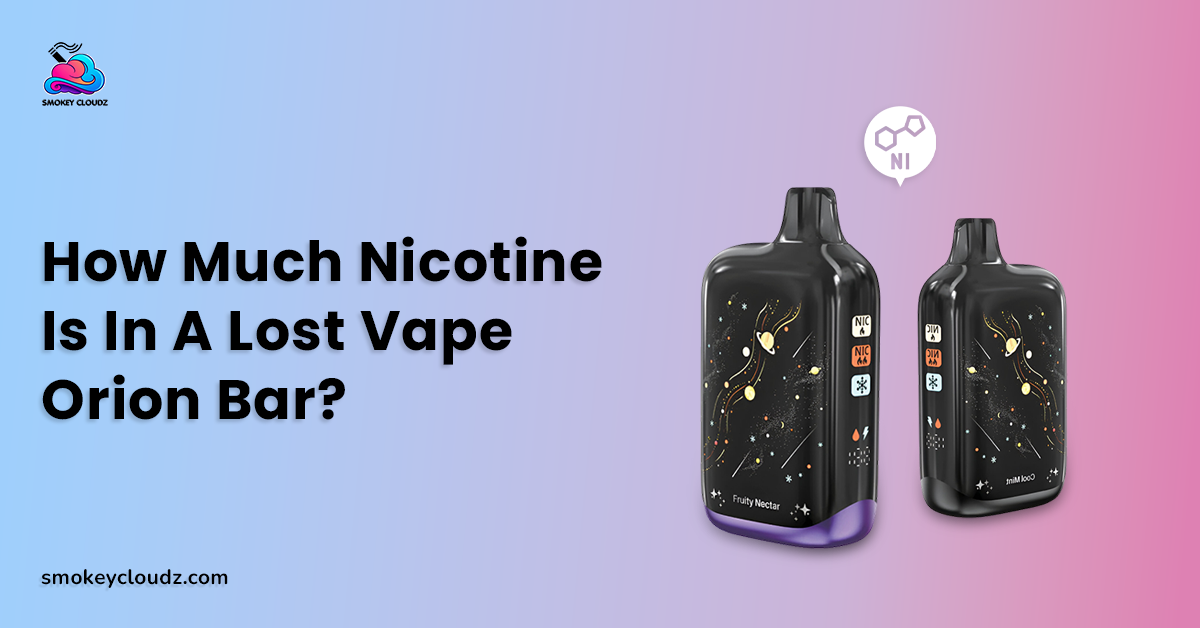
Nicotine strength is easy to overlook when a disposable has a large screen, flavor controls, and a very high advertised puff count. For adults comparing products in the disposable vape collection, the more important health question is not only device size. It is the nicotine concentration in the liquid and the way repeated use can add up. For the model described in the supplied material, how much nicotine is in a lost Vape Orion Bar has a direct label answer: the Orion Bar 50K is listed at 5% nicotine, or 50mg per mL, with 28mL of prefilled liquid.
Using those listed figures, 50mg per mL multiplied by 28mL gives a nominal 1,400mg of nicotine in the full liquid supply before use. That number describes nicotine contained in the liquid, not the amount absorbed by 1 person. The absorbed amount cannot be calculated from the reservoir total because device output, puff duration, and user behavior can change nicotine delivery. Research on e cigarettes shows wide variation in nicotine emissions across devices and liquids.
This article also corrects a conflict in the older content. The Orion Bar 50K is listed at up to 50,000 puffs, not 7,500 puffs. Puff claims are advertised estimates rather than a personal dose or guaranteed device life.
Is the Listed Nicotine Strength 5%?
Yes. The Orion Bar 50K information reviewed for this article lists 5% nicotine, which is the same concentration as 50mg of nicotine per mL of e liquid.
When someone asks how much nicotine is in a lost Vape Orion Bar, this 50mg per mL figure is the clearest product specification. It tells you the concentration in the liquid, but it does not tell you the exact nicotine absorbed from 1 puff.
The distinction matters because concentration, device capacity, and personal intake are 3 different numbers. Treating them as the same can create a false idea of daily nicotine exposure.
Can the Full Liquid Capacity Be Converted Into Total Nicotine?
Yes, as a label based calculation. The supplied specifications list 28mL of liquid and 50mg per mL nicotine, so the full liquid reservoir contains a nominal 1,400mg of nicotine before use.
That figure should never be read as a dose that enters the body. The amount emitted and absorbed can vary with the device, liquid, puff duration, and use pattern.
The practical value of this calculation is product comparison. It shows that a large reservoir paired with concentrated nicotine liquid can contain a substantial total amount even though exposure happens across many sessions.
Can Nicotine Per Puff Be Stated as One Fixed Number?
No. A product label may state nicotine concentration, but a fixed mg per puff number requires testing under defined conditions. Device power, liquid concentration, puff duration, and other operating factors can change nicotine emission.
The guide on nicotine in one vape puff covers that calculation problem in more detail. For this product, there is no reliable basis in the supplied material for turning 50mg per mL into a guaranteed nicotine amount for each draw.
This is also why how much nicotine is in a lost Vape Orion Bar should be answered with concentration first, then with the limits of per puff estimates.
Can a 50,000 Puff Claim Tell You Nicotine Intake?
No. Up to 50,000 puffs is a device capacity claim, not a medical dose measurement. The actual number of draws can vary, and it does not show how much nicotine enters the bloodstream during each draw.
The 2 gram vape puff guide gives broader context on why advertised puff totals and real use can differ. Puff duration and device behavior can change the amount of aerosol produced.
A person taking fewer long draws and another person taking many short draws may use the same product very differently. The printed puff count cannot turn those patterns into the same nicotine exposure.
Can NIC Control Create an Exact Nicotine Dose?
The supplied Orion Bar material describes NIC control as an adjustable output feature. It does not provide validated mg per puff values for each control position.
That means a lower or higher setting should not be treated like a medical dosing dial. The liquid itself is still listed at 5% nicotine, and changes in device output can affect aerosol generation without giving the user an exact absorbed dose.
If intake matters, rely on the labeled concentration and your actual use pattern rather than assuming the screen can measure nicotine entering the body.
Nicotine Can Create Dependence
Nicotine is highly addictive. CDC says repeated nicotine use can make the brain adapt to having nicotine, leading to cravings, difficulty stopping, and tolerance.
This is one of the main health issues behind how much nicotine is in a lost Vape Orion Bar. A high capacity device can remain available across many sessions, so the user may have repeated access to nicotine for an extended period.
Tolerance can also change behavior. CDC describes tolerance as needing more nicotine to feel the same effect, while withdrawal can include cravings, irritability, restlessness, anxiety, sleep problems, and trouble concentrating.
Can Nicotine Affect Anxiety and Mood?
Nicotine addiction and withdrawal can interact with mood and stress. CDC notes that withdrawal may include anxiety, irritability, restlessness, and difficulty concentrating, and that nicotine addiction can itself become a source of stress.
The vaping and anxiety guide covers that topic separately. It is important not to treat a temporary feeling after nicotine as proof that vaping improves mental health.
For someone already dependent on nicotine, using nicotine can temporarily reduce withdrawal discomfort. That is different from treating the product as a therapy for anxiety or mood.
Can Too Much Nicotine Cause Dizziness or Nausea?
Yes. Excess nicotine exposure can cause nausea, vomiting, dizziness, sweating, tremors, and changes in heart rate. Severe nicotine poisoning can include seizures and other serious symptoms.
If a person becomes dizzy, sick, shaky, confused, or otherwise unwell after vaping, stop using the product. Severe symptoms such as a seizure, loss of consciousness, or serious breathing problems need urgent medical attention.
The article on vaping and seizure concerns covers that issue in more depth. A seizure should never be treated as a normal reaction to a strong nicotine product.
Can Nicotine Change Heart Rate?
Nicotine affects the cardiovascular system and can alter heart rate and blood pressure. Current FDA guidance states that nicotine is highly addictive and that e cigarettes are not risk free, even though noncombustible products generally carry lower risk than cigarettes for adults who already smoke.
A controlled study also found that 5% nicotine salt aerosol changed measures of autonomic cardiovascular activity, including heart rate.
That does not mean every adult will feel the same response after the same number of puffs. Medical history, nicotine tolerance, device use, and other factors can change the experience.
Is Vaping Free From Other Health Risks?
No. Nicotine is only 1 part of the health picture. CDC says e cigarette aerosol can contain harmful or potentially harmful substances, including tiny particles, volatile organic compounds, heavy metals, and some cancer causing chemicals.
The vaping and cancer evidence guide covers that wider aerosol question. Current evidence does not support describing vaping as harmless.
For adults who smoke cigarettes, FDA says switching completely to e cigarettes may reduce exposure to many harmful chemicals from cigarette smoke, but e cigarette use is still not risk free. Adults who do not use tobacco should not start.
Is the Orion Bar a Smoking Cessation Product?
The supplied product information describes a disposable nicotine vape, not an FDA approved smoking cessation medicine. FDA says approved nicotine replacement medicines such as patches, gums, and lozenges are established cessation products, while e cigarettes are not risk free.
It would therefore be inaccurate to promise that an Orion Bar will make quitting cigarettes easier or guarantee craving control. Those outcomes depend on the person and should not be marketed as a medical benefit without evidence.
If quitting nicotine or cigarettes is the goal, a health professional can discuss established treatment options and personal medical factors.
Can Nicotine Free Products Remove Nicotine Exposure?
A true nicotine free product removes nicotine from that particular exposure, but it does not make vaping harmless. The nicotine free vape guide covers that distinction.
For the Orion Bar 50K described here, the listed strength is 5% nicotine. That is a very different product question from a zero nicotine vape.
Nicotine free status should also be separated from aerosol safety. CDC says e cigarette aerosol can contain substances of concern beyond nicotine.
A 6 Point Nicotine Check Before Purchase
An adult comparing a high capacity disposable can use the following process:
-
Read the nicotine concentration on the product information.
-
Check the liquid capacity separately from the puff claim.
-
Treat puff count as an estimate rather than a dose.
-
Do not assume NIC controls provide a measured medical dose.
-
Consider current nicotine use and whether dependence is already present.
-
Avoid starting nicotine use if you do not already use tobacco products.
This keeps the answer to how much nicotine is in a lost Vape Orion Bar tied to the information that can actually be measured. The concentration and liquid volume are known product figures, while exact personal absorption is not.
The goal is not to chase a stronger or weaker sensation. It is to understand the label before repeated use turns into a pattern that is harder to change.
A Real Adult Use Example
Consider an adult named Daniel who sees “5%” on an Orion Bar but assumes that means only 5mg of nicotine in the whole device. That mistake makes the product sound far less concentrated than it really is.
Daniel checks the specification and sees that 5% corresponds to 50mg per mL. With 28mL listed in the device, the nominal nicotine content in the full liquid supply is 1,400mg before use. He also understands that this total is not what his body absorbs.
He then reads the cost and vape buying guide separately rather than treating price, puff count, and nicotine dose as the same buying question.
Charging and Cleaning Leave Nicotine Concentration Unchanged
The Orion Bar 50K is listed with a 920mAh rechargeable battery and USB C charging. Charging restores battery power but does not lower the 5% nicotine concentration in the liquid.
The vape charging guide covers battery care, while the vape device cleaning guide deals with outer maintenance.
These hardware actions belong to device care. They should not be presented as ways to control, dilute, or remove nicotine from a sealed prefilled disposable.
Errors That Often Cause Nicotine Confusion
The first error is reading 5% as 5mg in the whole device. For the model in this article, the label means 50mg per mL.
The second error is multiplying an advertised puff count by a guessed mg per puff number. Nicotine delivery can vary with device and use conditions, so that approach can create a false total.
Another error is assuming experienced nicotine users cannot get too much nicotine. Tolerance does not remove poisoning risk. A final error is calling a noncombustible nicotine product safe because it lacks cigarette smoke. FDA says e cigarettes may be lower risk than cigarettes for adults who smoke, but they are not risk free.
Better Practices for Nicotine Awareness
Read concentration and liquid volume as separate facts. With the Orion Bar 50K, those figures are 50mg per mL and 28mL. The advertised capacity is up to 50,000 puffs.
Do not use puff count as a daily target. If nicotine causes dizziness, nausea, tremors, unusual sweating, or other concerning symptoms, stop using the product.
For someone who does not use tobacco, current FDA guidance is to remain tobacco free rather than starting an e cigarette.
Connection With the Wider Nicotine Strategy
The topic how much nicotine is in a lost Vape Orion Bar belongs inside a complete disposable vape nicotine strength guide. A wider pillar can compare concentration, liquid capacity, per puff uncertainty, high capacity devices, nicotine free products, dependence, withdrawal, and signs of excess exposure.
This article supports that wider guide by separating the 3 numbers people most often mix together: nicotine concentration, total liquid volume, and advertised puff capacity.
The wider strategy should also keep health risk separate from hardware features. A larger screen, rechargeable battery, cooling control, or high puff rating does not reduce the addictive nature of nicotine.
Nicotine Background Near the End of the Decision
The supplied nicotine background page gives general context on nicotine as a naturally occurring stimulant and addictive substance. For current health guidance, CDC and FDA information should carry more weight because those agencies publish direct public health guidance on nicotine and e cigarette use.
This distinction matters when reading product marketing. Nicotine can produce noticeable short term effects, but those effects should not be turned into claims of better focus, improved mood, or health benefits.
Repeated exposure can lead to dependence and withdrawal. That is the main reason nicotine concentration deserves attention before purchase.
When Medical Support Makes More Sense
If nicotine use is causing repeated dizziness, nausea, vomiting, tremors, palpitations, or other concerning symptoms, stop use and seek medical guidance. Severe poisoning can involve seizures, breathing problems, fainting, or loss of consciousness.
Medical support is also appropriate when nicotine dependence feels difficult to control or when attempts to stop lead to strong withdrawal symptoms. CDC lists cravings, anxiety, restlessness, sleep problems, and difficulty concentrating among possible withdrawal symptoms.
A retailer can explain product specifications, but a retailer should not replace medical advice about symptoms, dependence, heart conditions, or quitting treatment.
Conclusion
For the Orion Bar 50K described in the supplied material, how much nicotine is in a lost Vape Orion Bar is answered by a 5% concentration, equal to 50mg per mL, in a listed 28mL liquid supply. That works out to a nominal 1,400mg of nicotine in the full liquid before use, but it is not the amount absorbed by the user.
The device is listed at up to 50,000 puffs with a 920mAh rechargeable battery. The old 7,500 puff statement should not be applied to this 50K model.
Nicotine is highly addictive, repeated use can create dependence and withdrawal, and excess exposure can cause symptoms such as nausea, dizziness, vomiting, tremors, and changes in heart rate. Read the concentration as a product fact, not as a promise of satisfaction or a fixed dose per puff.
FAQs
Nicotine Level in the Orion Bar 50K
It is listed at 5% nicotine, equal to 50mg per mL of e liquid.
Can the Whole Device Contain 1,400mg of Nicotine?
Using the listed 28mL and 50mg per mL figures gives a nominal 1,400mg in the full liquid supply. That is not the amount absorbed by a person.
Can Nicotine Per Puff Be Calculated Exactly?
Not from the label alone. Device output and puff behavior can change nicotine delivery.
Is 50,000 Puffs a Nicotine Dose?
No. It is an advertised device capacity estimate, not a medical measure of nicotine exposure.
Can Nicotine Cause Dependence?
Yes. CDC states that nicotine is highly addictive and repeated use can lead to cravings, tolerance, and withdrawal.
Can Too Much Nicotine Cause Dizziness or Nausea?
Yes. Excess nicotine exposure can cause dizziness, nausea, vomiting, tremors, sweating, and other symptoms.
Is Vaping the Same as Smoking Cigarettes?
No. FDA says e cigarettes can generally carry lower risk than combustible cigarettes for adults who smoke, but they are not risk free.
Can a Nicotine Free Vape Remove Nicotine Exposure?
A true nicotine free product removes nicotine from that product, but it does not make aerosol harmless. CDC says e cigarette aerosol can contain substances of concern beyond nicotine.

Leave a comment
This site is protected by hCaptcha and the hCaptcha Privacy Policy and Terms of Service apply.