
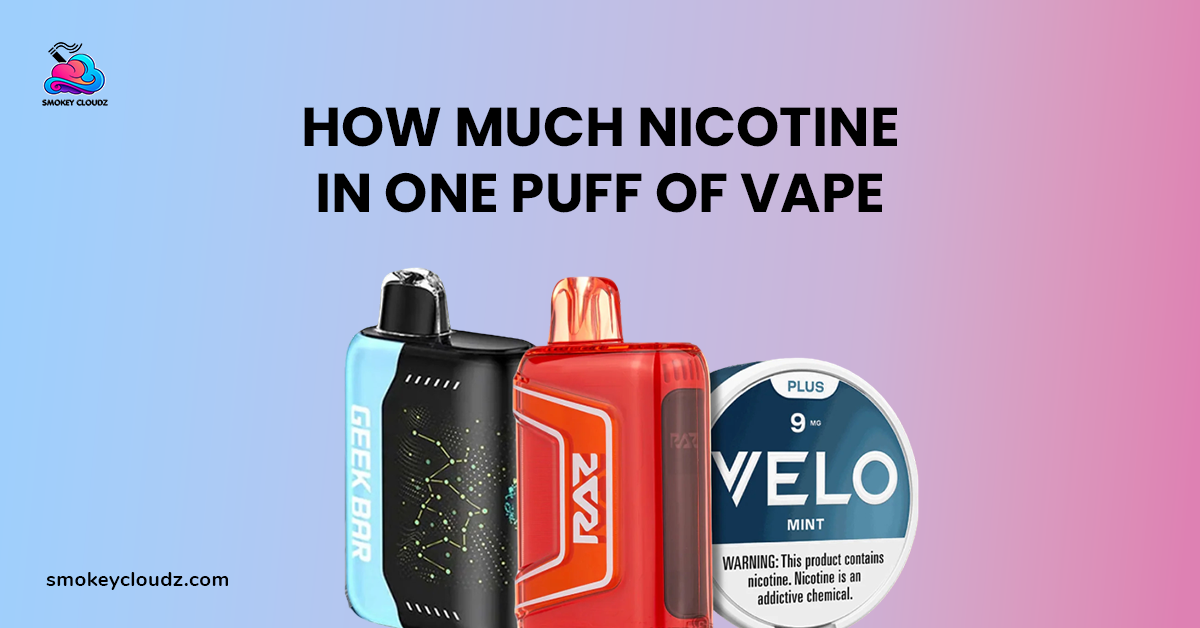
Many adults ask how much nicotine in one puff of vape because they want a better idea of how much nicotine they are using each day. The answer is not the same for everyone. It depends on the nicotine strength, the vape device, the length of each puff, and your own vaping style. Devices such as the Airfuze Smart Vape 30K can include a puff counter, which may make it easier to estimate daily use, but it still cannot tell you the exact amount your body absorbs.
Many people assume every puff contains the same amount of nicotine.
That is not always true.
Two people can use the same vape and still take in different amounts because everyone puffs differently.
Understanding these differences can help you avoid taking more nicotine than you planned.
A Quick Answer About Nicotine Per Puff
There is no single number that fits every vape.
In many disposable and pod devices, one puff may deliver roughly 0.5 mg to 1 mg of nicotine, but this is only an estimate.
The actual amount changes because of:
-
Nicotine strength
-
Device power
-
Coil design
-
Puff length
-
Puff speed
-
Airflow settings
-
The amount of e liquid turned into vapor
This is why two vapes with the same nicotine percentage may not feel exactly the same.
Nicotine Strength Changes the Result
Nicotine strength is normally shown in milligrams per milliliter or as a percentage.
A higher strength usually means more nicotine is available in every puff.
For example:
-
20 mg/ml contains less nicotine than 50 mg/ml.
-
A 5% nicotine vape normally contains more nicotine than a 2% version.
That still does not mean every puff delivers the same amount.
Your vaping style plays a big part.
Puff Length Matters
Longer puffs usually produce more vapor.
More vapor often means more nicotine enters the mouth and lungs.
Someone taking a 1 second puff may receive much less nicotine than someone taking a 4 second puff.
This is one reason nicotine intake is difficult to measure exactly.
Short puffs, long puffs, and repeated puffs all change the total amount.
Device Power Can Affect Nicotine Delivery
Different devices heat e liquid at different speeds.
Higher powered devices often turn more liquid into vapor during each puff.
That may increase nicotine delivery.
A device such as the RAZ DC25000 Disposable Vape may perform differently from another vape because of its design, airflow, and heating system.
The printed nicotine strength is only one part of the picture.
Coil Resistance Plays a Role
The heating coil affects how much vapor is produced.
Lower resistance coils often create:
-
More vapor
-
Warmer vapor
-
Faster liquid use
Higher resistance coils usually create:
-
Less vapor
-
Cooler vapor
-
Slower liquid use
These differences may also change nicotine delivery.
Nicotine Salt and Freebase Nicotine
Most disposable vapes use nicotine salts.
Nicotine salts usually allow higher nicotine strengths while keeping the throat hit smoother.
Freebase nicotine is often used in lower strength e liquids.
Some adults notice that nicotine salts feel smoother even though they contain more nicotine.
That smoother feeling can sometimes make it easier to take repeated puffs without noticing how much nicotine has been used.
A Practical Way to Estimate Nicotine Per Puff
You can make a rough estimate by using the nicotine strength together with the amount of e liquid used in one puff.
A basic example looks like this:
-
Check the nicotine strength on the bottle or package.
-
Estimate the amount of e liquid used in one puff.
-
Multiply those numbers together.
For example:
20 mg/ml × 0.015 ml = about 0.3 mg per puff.
50 mg/ml × 0.015 ml = about 0.75 mg per puff.
These numbers are only estimates.
Real world results often change because every person uses the device differently.
Cigarettes and Vapes Are Not Measured the Same Way
Many people try to compare one cigarette with one vape.
That comparison is difficult because cigarettes and vapes deliver nicotine differently.
A cigarette contains much more nicotine than the body actually absorbs.
Vaping works differently because nicotine delivery changes with each puff.
Some adults may take only a few long puffs.
Others may take many short ones.
That is why counting puffs alone cannot tell the whole story.
A Real Life Example
Imagine an adult named Alex.
Alex buys a disposable vape with a higher nicotine strength.
During the first few days, he takes quick puffs every few minutes without paying much attention.
By evening he notices dizziness and a mild headache.
After checking the nicotine strength, Alex starts taking fewer puffs and waits longer between sessions.
His symptoms become much less noticeable.
The device did not change.
His vaping pattern did.
Signs You May Be Taking Too Much Nicotine
Using more nicotine than your body can comfortably handle may lead to:
-
Dizziness
-
Nausea
-
Headache
-
Fast heartbeat
-
Sweating
-
Restlessness
-
Throat irritation
If symptoms become severe or do not improve, stop using the vape and seek medical advice.
Mistakes That Affect Nicotine Intake
Taking repeated puffs without a break
The body has less time to respond between sessions.
Ignoring nicotine strength
Many people only look at flavor and forget to check the nicotine level.
Comparing devices by puff count only
A higher puff count does not always mean more nicotine in each puff.
Taking extra long puffs
Long puffs usually increase vapor and nicotine intake.
Copying another person's routine
Every person reacts to nicotine differently.
Puff Count Is Not the Same as Nicotine Intake
Many disposable vapes display an estimated puff count.
That number tells you roughly how long the device may last.
It does not tell you exactly how much nicotine enters your body.
Adults comparing different devices can also read what is the best disposable vape to understand how battery size, nicotine strength, and device design work together before making a decision.
Better Ways to Track Daily Nicotine Use
Exact nicotine absorption is hard to measure at home, but you can still track your habits.
Start by writing down:
-
The nicotine strength
-
The time you begin vaping
-
The number of puffs
-
The length of each session
-
Any symptoms afterward
-
The time the device lasts
A puff counter may support this process, but it is still only a guide.
Some puffs are longer than others.
Battery level, airflow, and device mode can also change the amount of vapor produced.
A Daily Intake Example
Suppose a person uses a 50 mg/ml device.
They estimate that each puff uses around 0.015 ml of liquid.
The rough calculation would be:
50 mg/ml × 0.015 ml = 0.75 mg of nicotine in the vapor produced.
If that person takes 20 similar puffs, the liquid may contain around 15 mg of nicotine in total.
The body will not always absorb every milligram.
Some nicotine may stay in the device, remain in the vapor, or leave the body during exhaling.
This is why these calculations should be treated as rough estimates rather than exact medical measurements.
Nicotine Absorption Changes Between People
The amount your body absorbs can depend on:
-
Breathing style
-
Lung and mouth exposure
-
Puff depth
-
Time between puffs
-
Past nicotine use
-
Personal metabolism
A regular nicotine user may also react differently from someone with little or no tolerance.
A small amount may feel strong to a new user, while a daily user may barely notice the same amount.
Tolerance can lead some people to take longer or more frequent puffs over time.
Health Effects Linked With Too Much Nicotine
Nicotine affects the brain, heart, and nervous system.
Short term effects may include:
-
Faster heart rate
-
Higher blood pressure
-
Dizziness
-
Nausea
-
Headache
-
Shaking
-
Trouble sleeping
-
Nervous feelings
Frequent use may also build dependence.
This means the body starts expecting nicotine at regular times.
When nicotine levels fall, a person may feel irritated, restless, or unable to focus.
Using the vape again can ease those feelings for a short time, which keeps the cycle going.
Young People Face Greater Risk
Nicotine products are not meant for children or teenagers.
The brain continues developing into early adulthood.
Nicotine exposure during this period may affect attention, mood, memory, and control over impulses.
Smokey Cloudz products are for adults aged 21 and older only.
Anyone under 21 should not buy, use, or read product guidance as encouragement to begin vaping.
Product Care Also Matters
A poorly maintained or damaged device can behave differently from normal.
Blocked airflow may cause a person to pull harder.
A weak battery may reduce vapor at first, then perform differently after charging.
Residue around the mouthpiece can also affect airflow.
If you use a reusable device, regular care may support more consistent performance.
Safety is also important because damaged batteries and improper charging can create serious risks. The article about whether vapes can explode covers battery heat, charging errors, and signs that a device should no longer be used.
Never continue using a vape that is swollen, leaking, unusually hot, or physically damaged.
Practical Habits for More Control
Check the label before use
Read the nicotine strength and product information.
Do not rely only on the flavor name or puff count.
Avoid chain vaping
Taking many puffs without a pause may deliver more nicotine before your body has time to react.
Wait between sessions and pay attention to physical signs.
Keep puff length steady
Very long puffs can turn more liquid into vapor.
A steady routine makes daily use easier to estimate.
Stop when symptoms appear
Do not push through nausea, dizziness, shaking, or a racing heartbeat.
Put the device down and move to fresh air.
Keep nicotine away from children
Store every device and e liquid in a secure place.
Nicotine liquid can be dangerous if swallowed or exposed to skin in large amounts.
Device Features May Support Tracking
Some adults prefer devices with screens or puff counters because the information is easier to see.
The Foger Switch Pro 30K includes features that may make daily use easier to monitor.
Still, a counter cannot measure blood nicotine levels.
It only records device activity.
Your puff length and breathing style still affect the real amount received.
Vaping Before Medical Care
Nicotine can affect heart rate, blood pressure, circulation, and recovery.
People preparing for a procedure should tell their medical team about vaping rather than hiding it.
The guide about vaping before surgery explains why medical staff may ask patients to stop before anesthesia or treatment.
Never use a puff estimate as proof that your nicotine intake is safe before an operation.
Your doctor needs accurate information about your routine.
Travel Rules Still Apply
Tracking nicotine does not remove rules about where a device can be used.
Hotels may treat vaping the same as smoking, even when the vapor seems light or the device is small.
Travelers can read the guide about vaping in a hotel room before using a device during a stay.
A nicotine calculation only tells you about possible intake.
It does not give permission to vape in restricted places.
Connection With the Main Disposable Vape Guide
Nicotine strength is only one part of buying and using a disposable vape.
Battery life, airflow, puff count, flavor, device size, and safety features also matter.
The phrase best disposable vape for your daily routine should connect this article to the main pillar guide.
That main guide can cover product comparisons, while this article gives deeper information about nicotine in each puff.
Times to Speak With a Health Professional
Medical advice is important when:
-
You feel chest pain.
-
Your heartbeat remains very fast.
-
You faint or feel close to fainting.
-
You have serious breathing trouble.
-
Nausea or vomiting continues.
-
You want to reduce nicotine but cannot.
-
Withdrawal is affecting daily life.
-
You are pregnant or preparing for surgery.
Nicotine affects people differently.
A healthcare professional can give advice based on your health, medicines, and level of use.
Final Thoughts
So, how much nicotine in one puff of vape?
A single puff may deliver roughly 0.5 mg to 1 mg in some devices, but there is no fixed amount for every user.
Nicotine strength, device power, coil design, liquid use, puff length, and personal breathing style can all change the result.
The best way to avoid taking more than intended is to check the nicotine label, track your routine, leave time between puffs, and stop when uncomfortable symptoms appear.
For more background on nicotine strengths and the way vape intake can vary, Innokin also discusses nicotine amounts in vape products as part of its device guidance.
FAQs
1. Can every vape puff contain the same nicotine amount?
No. Puff length, device power, airflow, coil design, and nicotine strength can change the amount.
2. Is 5% nicotine strong?
Yes. A 5% vape usually contains about 50 mg/ml, which is considered a high nicotine strength.
3. Can long puffs increase nicotine intake?
Yes. Longer puffs usually turn more e liquid into vapor, which may increase nicotine intake.
4. Can a puff counter measure absorbed nicotine?
No. It records puffs but cannot measure the exact nicotine absorbed by your body.
5. Which signs may mean too much nicotine?
Dizziness, nausea, headache, sweating, shaking, and a fast heartbeat may appear after high intake.

Leave a comment
This site is protected by hCaptcha and the hCaptcha Privacy Policy and Terms of Service apply.