
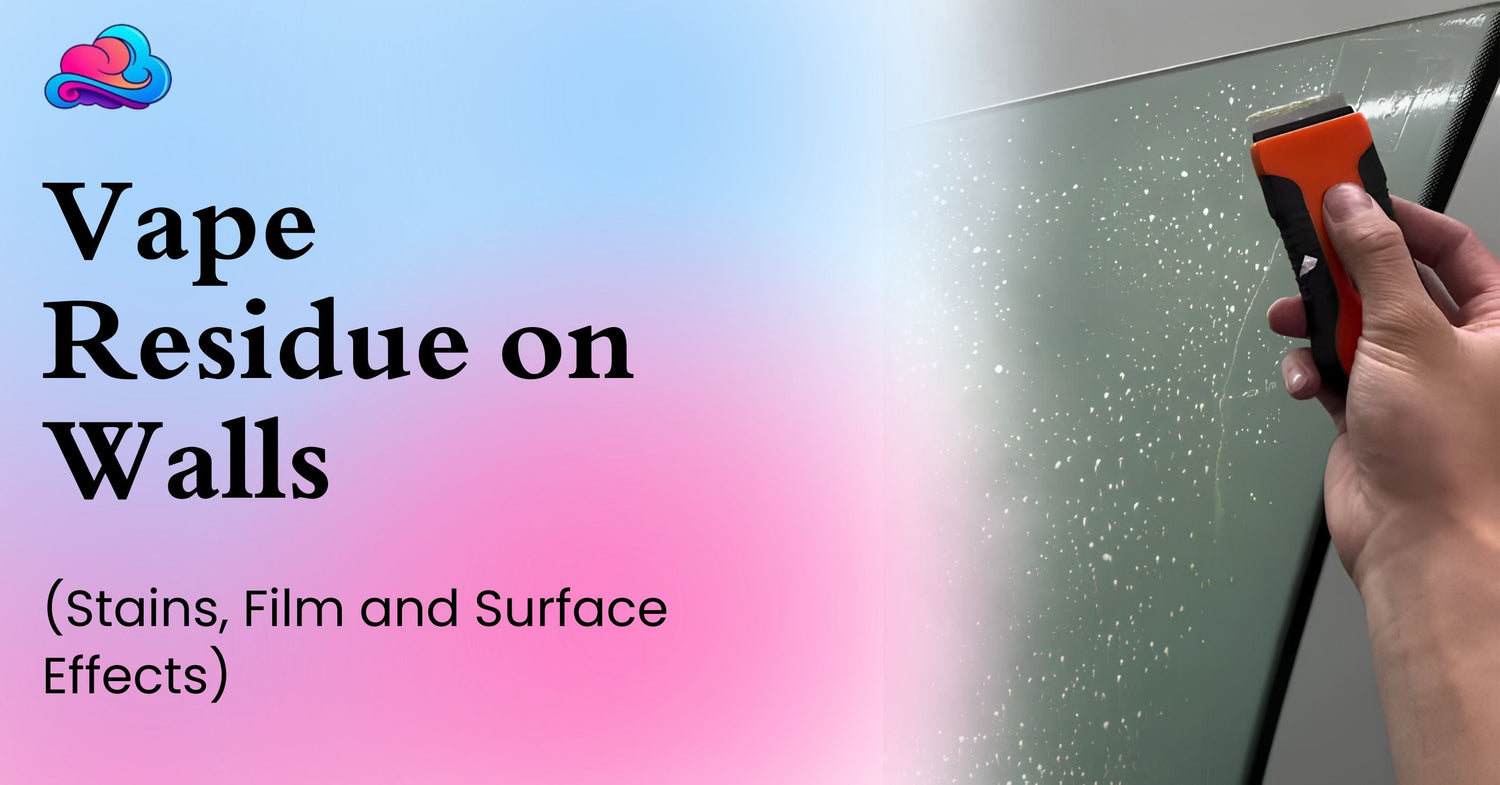
A wall can look clean for a long time even when vaping has happened indoors. That is one reason people ask does vaping stain walls after noticing a faint film, sticky dust, or a change in paint near the place where aerosol is often exhaled. Research shows that e cigarette aerosol can deposit nicotine and other material on indoor surfaces. It does not mean every room will develop obvious yellow walls, and the amount of visible change can vary with use, ventilation, surface type, liquid contents, and cleaning.
The main issue is wider than appearance. vape residue on walls can be part of surface contamination left after aerosol settles. With nicotine containing products, a nicotine film from vape can be measured even when the surface does not look yellow. Researchers have recovered nicotine from walls, windows, floors, wood, metal, and other indoor surfaces after e cigarette aerosol exposure.
Adults browsing products such as the Geek Bar vape collection should keep product selection separate from indoor surface care. A device may differ in puff count, power, or flavor, but none of those features makes indoor aerosol disappear after exhalation.
Direct Answer on Wall Staining
The short answer to does vaping stain walls is yes, vaping can leave material on walls and other indoor surfaces, but visible staining is not automatic. Studies support surface deposition from e cigarette aerosol, including nicotine deposition when nicotine is present. Controlled staining research also found less visible staining from tested e cigarette aerosols than from cigarette smoke, so the appearance should not be treated as identical to tobacco smoke staining.
This is important when someone sees vaping yellow walls and assumes vaping must always be the cause. Yellowing can have more than 1 indoor cause, and vape residue itself may be clear, faint, sticky, or not easily visible.
The safer conclusion is that surface residue can occur even without a dramatic color change. A clean looking wall does not prove that no aerosol material has settled there.
Can Vape Aerosol Leave a Film on Painted Walls?
Yes. Research on thirdhand e cigarette exposure has measured nicotine deposited onto indoor surfaces after aerosol release. A study also reported that the amount deposited differed by surface type, which means paint, glass, floors, and other materials may not collect the same amount.
This supports the idea of vape aerosol on paint without claiming that every painted wall will become visibly stained. Repeated indoor use can give aerosol more chances to contact nearby walls and furnishings.
With nicotine products, nicotine film from vape is a more accurate phrase than assuming a thick yellow coating. Surface nicotine can exist even when it cannot be clearly seen with the eye.
Is the Residue Always Yellow?
No. vaping yellow walls should not be treated as the only sign of indoor deposition. Visible yellow or brown staining is strongly associated with combustible cigarette smoke, and controlled material testing found cigarette smoke caused much greater staining than the tested e cigarette aerosols.
E cigarette aerosol can still leave surface material without producing the same color. That residue may be difficult to notice until dust sticks to it, light catches the surface differently, or repeated indoor use builds contamination.
So does vaping stain walls should be answered in 2 parts. Vaping can leave deposits, but those deposits are not guaranteed to create obvious yellow staining.
Can Zero Nicotine Vape Still Leave Surface Residue?
Yes. Zero nicotine aerosol can still contain non nicotine material that may settle on surfaces. Recent research has examined thirdhand residues from both nicotine and non nicotine vaping, which means the surface issue is not limited only to nicotine containing products.
The phrase nicotine film from vape applies only when nicotine is present. A zero nicotine product cannot leave nicotine that was never in the liquid, but other aerosol components can still contribute to residue.
That means vape residue on walls and nicotine residue are related but not identical ideas. Surface deposits can exist without nicotine, while nicotine containing aerosol adds another measurable component.
Which Indoor Surfaces Collect More Aerosol?
Surface collection varies. Studies have measured e cigarette related residue on windows, walls, floors, wood, metal, cloth, and other materials. Research has also found differences in nicotine deposition between surfaces, showing that material type matters.
Soft materials can also hold deposited material. Curtains, upholstery, carpet, bedding, and clothing provide more surface area and may retain residue differently from smooth painted walls.
This is where thirdhand vape exposure becomes relevant. The term covers exposure to residue that remains on surfaces after vaping rather than only the aerosol present during active use. Research continues to examine the amount and health meaning of that residue.
Can Painted Walls Hold Nicotine Film?
Yes. Studies on indoor e cigarette use have recovered nicotine from walls and other indoor surfaces. That supports concern about nicotine film from vape when nicotine aerosol is repeatedly released indoors.
Paint finish can matter during cleaning. A washable surface may tolerate routine wiping differently from flat or delicate paint. The safest cleaning method should follow the paint maker or property care instructions rather than assuming every wall can handle the same cleaner.
The presence of vape aerosol on paint also does not tell you exactly how much nicotine is there by appearance alone. Laboratory measurement and visible staining are very different things.
A 7 Step Surface Check and Cleaning Process
If you want to clean vape residue, begin with the least aggressive method that is suitable for the wall finish. Do not start with strong solvents because they can damage paint or create a larger mark than the original buildup.
-
Stop indoor vaping in the room before cleaning.
-
Increase outdoor air exchange when conditions allow.
-
Check the paint care instructions or test a hidden area.
-
Remove loose dust with a clean dry cloth.
-
Wipe only with a wall safe method suited to that paint.
-
Launder washable curtains or fabrics that also hold residue.
-
Let the surface dry fully before deciding whether another cleaning step is needed.
The goal when you clean vape residue is to remove surface material without stripping or discoloring the paint. If a rented property has delicate finishes or widespread staining, property maintenance advice can be safer than repeated scrubbing.
Can Repainting Cover Persistent Residue?
Paint can cover discoloration visually, but repainting should not be treated as proof that surface contamination has been removed. This is a reasonable inference from research showing that e cigarette aerosol residue can remain on indoor surfaces.
If vape aerosol on paint has produced a persistent film or mark, cleaning and proper surface preparation should come before repainting according to the paint system being used. Painting directly over a dirty or oily surface can also create ordinary paint adhesion problems.
For heavy contamination, damaged paint, or a rental property, a painter or property professional can advise on preparation. Repainting may improve appearance, but it should not be described as a tested method for eliminating thirdhand vape exposure.
A Real Room Example
Consider an adult named Ryan who vapes near the same bedroom wall for several months. He notices that dust seems to stick more easily around the area beside his desk, but the wall is not strongly yellow.
Ryan wonders does vaping stain walls and first assumes that no yellow color means no residue. He stops vaping in the room, improves ventilation, checks the paint care instructions, and wipes a small hidden section before cleaning the wider area.
The cloth picks up light grime. This does not tell Ryan the exact chemical content of the wall, but it shows why appearance alone is a weak test for vape residue on walls.
Flavor Color and Wall Color Are Different Questions
A bold flavor name or sweet taste does not prove that an aerosol will stain a wall a matching color. The Cactus Jack RAZ flavor profile can describe taste and cooling, but flavor information is not a wall staining test.
Likewise, a sweet smell is not proof of yellow residue. vaping yellow walls can develop for several indoor reasons, and visible color should be assessed separately from flavor names.
A flavored aerosol can still contribute to indoor deposits, but there is no sound basis for saying that a particular flavor name automatically causes more wall discoloration.
Device Capacity Is Not a Wall Residue Rating
Large capacity devices may be used for longer periods, but the product puff rating does not tell you the amount deposited on a wall during a specific room session. The Luna 50K specifications guide covers device features, not indoor surface deposition.
The same applies to current RAZ vape options. Device size or puff capacity cannot guarantee that vape aerosol on paint will be absent.
Indoor use pattern, exhaled aerosol, air exchange, distance from surfaces, and repeated exposure matter more for the room question than a headline puff count.
Product Cost Cannot Predict Surface Buildup
A higher or lower device price does not determine whether aerosol can settle indoors. The Foger price and replacement cost guide is useful for shopping decisions, but price is not a measure of surface residue.
The same principle applies to a product page such as CLR. Product details belong to purchasing decisions, while vape residue on walls belongs to indoor air and surface care.
If keeping walls and furniture free from new residue is the goal, reducing the indoor source matters more than paying more for a particular device.
Facility Rules Can Be Stricter Than Home Preferences
Indoor vaping rules vary by property and facility. The guide on vaping inside hospital facilities covers a setting in which property rules and health considerations may be much stricter than in a private home.
This matters because thirdhand vape exposure is not only a wall appearance issue. Research shows that e cigarette residue can remain on surfaces after active vaping ends.
A property rule should be followed even if the room has strong ventilation or no visible staining.
Errors That Often Make the Problem Worse
The first error is waiting for obvious yellow paint before taking residue seriously. vaping yellow walls are not required for surface deposition to occur.
The second error is using harsh chemicals without checking the paint. Trying to clean vape residue with an unsuitable product can damage the wall finish or create a visible patch.
Another error is painting over a greasy or dirty wall without surface preparation. The last error is assuming zero nicotine aerosol leaves nothing behind. Research on non nicotine thirdhand vaping shows that the residue question is wider than nicotine alone.
Better Practices for Indoor Surfaces
The strongest way to reduce new residue is to avoid producing vape aerosol inside enclosed rooms. Cleaning becomes less effective as a long term strategy if new aerosol continues settling on the same wall.
If indoor residue already exists, use suitable ventilation and surface care. Wipe washable hard surfaces with methods appropriate for the material and deal with curtains or washable fabrics separately.
Avoid guessing with aggressive chemicals. Protecting the wall finish matters, especially in rented homes or rooms with delicate paint.
Connection With the Wider Indoor Vape Strategy
The question does vaping stain walls belongs inside a complete indoor vape residue and surface care guide. A wider pillar can cover wall deposits, furniture, curtains, ventilation, odor, cleaning, repeated indoor use, and thirdhand vape exposure.
This article supports that pillar by separating visible discoloration from invisible or faint surface residue. A wall does not have to turn yellow before indoor aerosol deposition becomes relevant.
The wider guide should also keep nicotine residue and non nicotine residue separate. They overlap as indoor surface issues, but they are not the same chemical exposure.
Indoor Aerosol Research Gives the Key Context
Studies of e cigarette use have shown that nicotine and other aerosol related chemicals can accumulate on indoor surfaces. Researchers have measured nicotine on walls and other materials, while newer research has also examined residue from non nicotine vaping.
The supplied EPA HERO page was reviewed for this article, but it is a 2012 paper about aerosol deposition in the human respiratory tract rather than walls, paint, furniture, or indoor surface residue. For that reason, it is not used as the wall evidence here.
That distinction matters for trust. A source about particles depositing in the lung cannot by itself answer whether vaping leaves residue on painted walls.
When Property Support Makes More Sense
Professional support may be useful when residue covers a large area, paint is already peeling, a rental agreement is involved, or repeated cleaning changes the wall finish.
A painter can advise on washing, primer, and repaint preparation for the exact coating. A property manager can also clarify which cleaning methods are allowed in a rental unit.
If other people share the room, reducing new indoor aerosol at the source is more dependable than waiting for visible stains.
Conclusion
So, does vaping stain walls? Vaping can leave aerosol residue on painted walls and other indoor surfaces. Research has measured nicotine deposits after e cigarette use, including on walls and several other materials.
That does not mean every vape user will see dark or yellow walls. Controlled testing suggests the visible staining from tested e cigarette aerosols can be much lower than cigarette smoke staining. Visible yellowing should therefore not be treated as an automatic result of vaping.
Nicotine products can leave nicotine residue, while non nicotine aerosol can still leave other material. If buildup is present, stop adding new indoor aerosol, use ventilation, and follow a wall safe cleaning method before considering repainting.
FAQs
Can Nicotine Vape Leave Film on Painted Walls?
Yes. Research has measured nicotine deposited on walls and other indoor surfaces after e cigarette aerosol exposure.
Is Vape Residue Always Yellow?
No. Surface material can be present without obvious yellow discoloration. Visible cigarette smoke staining was much greater than tested e cigarette aerosol staining in controlled material research.
Can Zero Nicotine Vapes Leave Residue?
Yes. Non nicotine aerosol can still leave non nicotine material on surfaces, so zero nicotine does not mean zero surface residue.
Which Surfaces Can Collect Vape Aerosol?
Studies have reported residue on walls, windows, floors, wood, metal, cloth, and other materials. The amount can differ by material.
Can an Air Purifier Stop Wall Residue?
An air cleaner may reduce part of airborne aerosol, but it should not be treated as a guarantee that no material will reach surfaces. Reducing indoor aerosol at the source is more dependable.
Can Painted Walls Be Cleaned?
Many painted surfaces can be wiped, but the safe method depends on the paint finish. Test a hidden area and follow the coating care instructions.
Can Repainting Cover a Persistent Mark?
It can cover discoloration visually, but the wall should be prepared properly first. A new paint layer does not prove old residue was removed.
Is Thirdhand Residue the Same as a Visible Stain?
No. Thirdhand residue refers to material left on surfaces after vaping, while a visible stain is only an appearance change. Residue may be present without a clear stain.

Leave a comment
This site is protected by hCaptcha and the hCaptcha Privacy Policy and Terms of Service apply.