
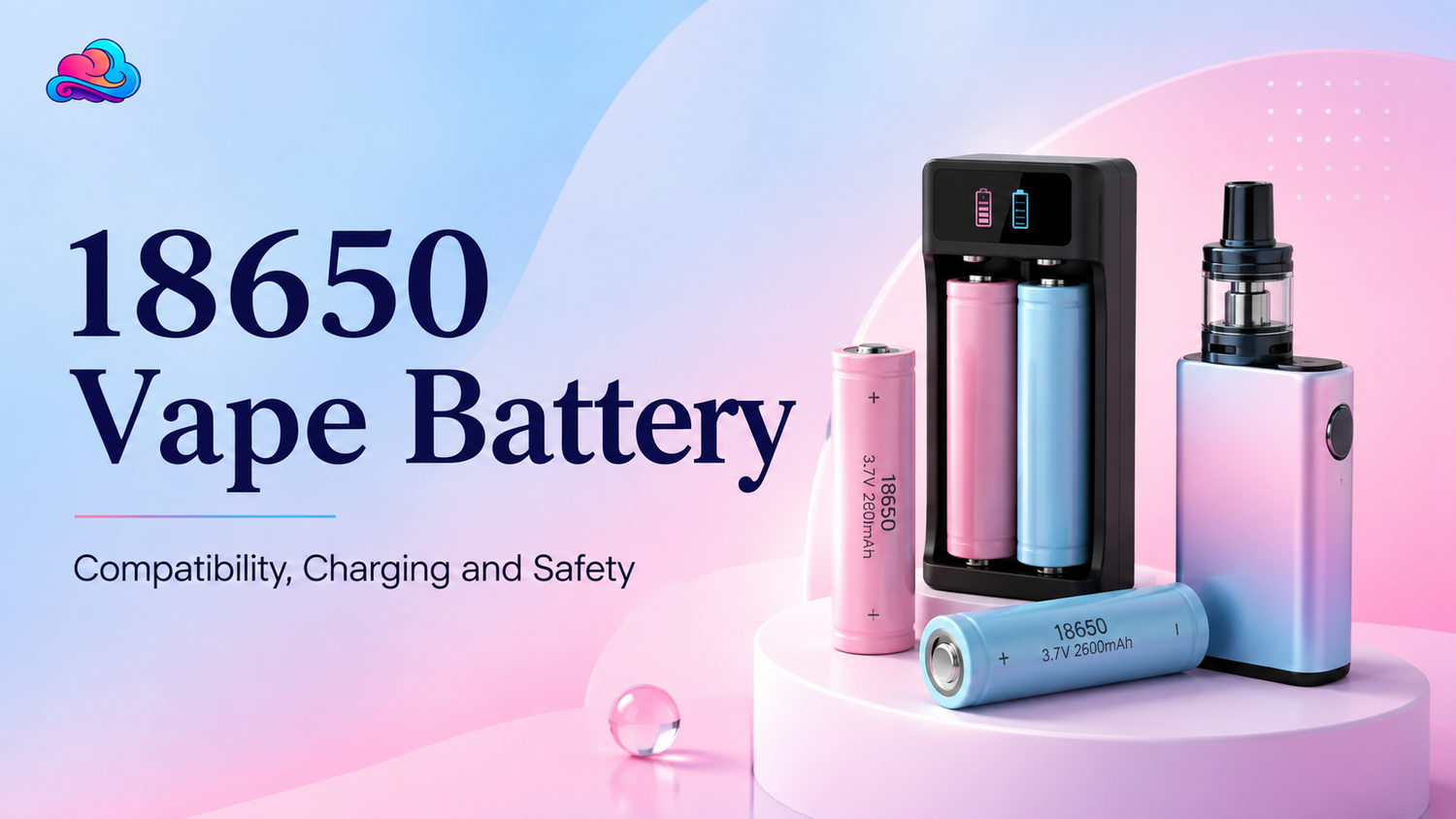
A removable battery can make a vape mod easier to keep in service, but it also puts more responsibility on the adult using it. An 18650 vape battery is not the same thing as the sealed battery inside every disposable. The exact vape has to be built for that removable cell size, and the cell has to meet the requirements stated by the device maker. A battery that physically fits is not automatically suitable.
That distinction matters because some modern products use built in rechargeable packs instead. The Geek Bar Pulse 2 25000 lists an 800mAh rechargeable USB C battery inside a sealed disposable format rather than a user removable 18650 cell. A guide on Geek Bar device types also shows that current vape products can use very different battery layouts.
The main rule for an 18650 battery for vape use is to follow the exact mod manual. Do not rely on color, brand name, size alone, or a recommendation meant for another device. CPSC warns that loose 18650 cells separated from battery packs can short, overheat, enter thermal runaway, and cause fire, explosion, serious injury, or death.
Is an 18650 Cell the Same as Every Vape Battery?
No. The 18650 name refers to a cylindrical lithium ion cell format, but that does not mean every rechargeable vape uses one. Many disposables and pod systems have built in cells that the user is not meant to remove.
A vape mod 18650 battery is relevant only when the exact mod is designed for removable 18650 cells. If the battery is sealed inside the device, do not open the body to reach it.
This difference also affects vape battery compatibility. FDA advises adults to use only batteries recommended for their device and to follow the manufacturer's use and care instructions.
Can Every 18650 Cell Go Into a Vape Mod?
No. An 18650 battery for vape use must match the requirements of the exact device. Physical size is only 1 part of the decision. Battery count, orientation, condition, and electrical requirements also matter.
The battery amp rating vape requirement matters because the cell has to meet the electrical needs stated for the device. A higher number printed on an unfamiliar wrap should not be treated as proof that the battery is a better match.
Strong 18650 battery safety starts with refusing to guess. FDA recommends using only batteries intended for the exact device and contacting the manufacturer when instructions are missing or unclear.
Can the Device Manual Confirm Compatibility?
Yes. The best place to check vape battery compatibility is the exact device manual and manufacturer specification. Read the supported battery size, number of cells, polarity markings, and charging instructions before inserting a battery.
If a device needs 2 cells, pay close attention to pairing requirements. FDA says not to mix different battery brands, batteries with different charge levels, or old and new batteries together.
This is also the right place to confirm the battery amp rating vape requirement. Battery selection should start with the device requirement rather than the largest number printed on a seller label.
Are Battery Wraps Only Cosmetic?
No. vape battery wraps act as insulation around much of a removable cell. Damage can expose conductive metal and increase the chance of an unwanted electrical contact.
A damaged 18650 battery should not be put back into a vape mod for another session. FDA battery guidance advises replacing vape batteries that become damaged or wet.
Inspect vape battery wraps before installing a removable cell. If the wrap is badly torn, the cell is dented, the terminal area is damaged, or the battery has another serious physical problem, keep it out of service.
Is a Loose Battery Safe in a Pocket?
No. CPSC specifically warns that exposed terminals on loose cells can short when they touch metal objects such as keys or loose change. A shorted cell can overheat and enter thermal runaway.
This is a central part of 18650 battery safety. Never carry a removable cell loose with coins, keys, tools, jewelry, or other conductive objects. FDA guidance also recommends keeping loose vape batteries in a case and away from metal items.
An 18650 battery for vape use should be treated as an energy storage component, not as a spare item that can roll around freely in a pocket or bag.
Can an Inappropriate Charger Damage the Cell?
Yes. CPSC warns that thermal runaway can occur when loose cells are placed in inappropriate chargers that allow charging beyond the cell's specifications. That makes 18650 battery charging a compatibility issue as well as a convenience issue.
Use only the charging method stated by the device and battery maker. If an external charger is required, it should be intended for that cell type and used within the stated limits.
A rechargeable vape battery that becomes swollen, unusually hot, dented, wet, leaking, or otherwise damaged should not be put through another charging cycle merely to see whether it still works. FDA advises replacing damaged or wet vape batteries.
Can the Mod Charge the Battery Internally?
That depends on the exact mod. Some removable battery devices may support charging through the device, while another product may have different instructions. The exact manual should settle the 18650 battery charging method.
Do not copy charging instructions from a sealed disposable. The Geek Bar CLR, for example, lists a built in 900mAh rechargeable USB C battery. Its charging path belongs to that sealed device rather than a removable cell mod.
A rechargeable vape battery needs the charging method intended for its hardware. FDA also advises charging vapes on a clean, flat surface that can be watched rather than on a couch or pillow.
Should 2 Batteries Be Mixed in a Dual Cell Mod?
Different cells should not be mixed casually. FDA says not to mix different battery brands, different charge levels, or old and new batteries in a vape.
A vape mod 18650 battery setup that uses 2 cells should be checked against the manual before either battery is installed. Keep the required set together if that is the manufacturer's instruction.
This is also a cell pairing issue. When a device calls for paired cells, random batteries that merely fit the compartment are not an appropriate substitute.
Can Amp Rating Be Judged From the Wrap Alone?
No. A printed claim should not replace the requirements in the mod manual or trustworthy battery documentation. The battery amp rating vape decision needs to start with the limits stated for the exact device.
CPSC warns that some loose 18650 cells have been separated from battery packs, rewrapped, and sold as new consumer batteries. That means a fresh looking outer covering does not prove the battery's history.
This warning is important for 18650 battery safety. If the cell's identity, source, or condition is doubtful, keeping it out of the device is safer than testing it under load.
Can a Damaged Cell Be Used for a Short Time?
No. A damaged 18650 battery should be removed from service rather than used until a replacement arrives. Serious dents, crushed areas, leaking, swelling, strong heat, burned sections, or major wrap damage are reasons to stop.
FDA advises replacing batteries that become damaged or wet. It also recommends protecting vape batteries from extreme temperatures.
Do not test a questionable cell by repeatedly firing the mod or charging the battery again. The fact that a screen still turns on does not prove the battery is in acceptable physical condition.
A 9 Point Battery Check Before Use
Use this routine before putting an 18650 vape battery into a compatible mod:
-
Confirm that the exact mod supports removable 18650 cells.
-
Read the device battery specification.
-
Check the required battery count and polarity.
-
Confirm the required electrical rating.
-
Inspect the cell body and terminals.
-
Inspect the wrap for cuts, tears, or peeling.
-
Keep mixed or questionable cells out of multi cell devices.
-
Use only the stated charging method.
-
Keep removable cells protected from metal objects during storage and transport.
This routine connects 18650 battery charging, cell condition, storage, and compatibility before power is applied. FDA and CPSC both stress following manufacturer guidance and preventing battery contact or charging conditions that can create a short or overheating risk.
A Real Adult Battery Example
Consider an adult named Daniel who buys a regulated mod that accepts removable cells. He already owns 2 batteries marked 18650, so he assumes either one can go into the new device.
Daniel checks the mod instructions first. One cell has a torn wrap near the end, while the other is a different model and has been used for much longer. FDA advises against mixing different brands, charge levels, and old and new batteries, so Daniel keeps the questionable cells out of the setup.
In this case, 18650 vape battery care is about catching a damaged 18650 battery, a pairing concern, and uncertain compatibility before the batteries are placed under load.
Built In Battery Devices Need Different Care
A sealed rechargeable disposable is not a vape mod 18650 battery system. The battery is part of the finished product and should not be opened merely to reach the cell.
The RAZ Vue 50K kit uses a rechargeable 900mAh power bank section plus a pod with its own 420mAh built in battery. The supplied page describes USB C charging rather than a user removable 18650 cell.
That difference prevents an important hardware error. A reusable or rechargeable battery section does not automatically mean a product accepts removable cylindrical cells.
Screen Errors Are Not Proof of Battery Failure
A display code can come from another part of a vape system. The guide on Foger 188 screen checks describes a pod and dock communication symptom rather than a removable 18650 issue.
That example matters because replacing a battery is not the right response to every screen problem. Device architecture has to be checked first.
For a removable cell mod, use the maker's own error instructions. For sealed systems, keep the battery body closed rather than trying to convert the product into a removable battery setup.
Longer Device Life Is Not the Same as Better Battery Safety
The guide on vapes with long advertised life compares liquid capacity, battery support, modes, and system life. Those factors are useful for device duration but do not replace careful removable battery checks.
A high capacity vape can still use a sealed internal battery. A removable battery mod can also have a different operating time depending on its design and use.
Do not select a cell only because you want the longest time between charges. Safe compatibility comes before runtime.
Storage Needs More Attention Than Many Adults Expect
Storage is part of 18650 battery safety because the terminals can be exposed while the cell is outside a device. CPSC warns about shorts from contact with keys and loose change, while FDA recommends keeping loose vape batteries in a case and away from metal objects.
Good vape battery wraps should remain intact during storage. If a battery comes out of storage with new cuts, dents, peeling, or moisture exposure, inspect its condition before use.
A rechargeable vape battery should also be protected from extreme temperatures. FDA specifically advises against leaving vape batteries in direct sun or in very hot or freezing vehicles.
Delivery and Purchase Cannot Prove Compatibility
An adult may receive a vape product through a legal retailer or delivery route, but the sales method does not confirm battery suitability. The guide on DoorDash vape delivery rules covers age checks and delivery rather than removable battery specifications.
For a removable mod, compatibility still needs the exact device documentation after purchase. FDA recommends using only batteries recommended for the device.
Keep packaging and battery identification information while checking the setup. If the specifications do not match the mod requirements, keep the cell out of the device.
Battery Hardware Is Separate From THC Testing
The guide on THC detection after vape use deals with biological testing rather than electrical hardware. Battery behavior does not set a THC testing period.
The same separation matters with removable cells. A battery should be evaluated through device compatibility, physical condition, charging requirements, and manufacturer instructions.
Keeping unrelated topics apart prevents electrical safety advice from being mixed with drug testing, puff totals, or delivery rules.
Errors That Often Cause Battery Problems
The first error is assuming every cell marked 18650 is suitable for every mod. Size alone does not establish cell suitability. FDA says to use only batteries recommended for the specific vape.
The second error is ignoring a torn wrap because the battery still powers the device. A damaged 18650 battery should not go back into service simply because the mod turns on.
Another error is carrying loose cells with keys or coins. CPSC specifically warns that this can short the exposed terminals. The final major error is using an inappropriate charger that can push a cell beyond its charging specifications.
Better Battery Practices
Start with the mod instructions whenever you move to a different device. Check battery size, battery count, electrical requirements, polarity, and charging instructions before installation. FDA also advises reading and following the manufacturer's battery guidance.
Inspect vape battery wraps and the metal ends before each installation. Keep questionable cells out of service and avoid mixing batteries with different brands, ages, or charge levels.
Treat battery amp rating vape information as a safety requirement rather than a performance contest. The battery needs to match the requirements of the exact mod rather than merely carrying an impressive label.
Connection With the Wider Battery Strategy
The 18650 vape battery topic belongs inside a complete vape battery compatibility and safety guide. A wider pillar can cover removable cells, built in batteries, charging, storage, damaged wraps, ratings, multi cell devices, transport, and end of life signs.
This article supports that wider guide by separating removable 18650 mods from sealed disposables and pod systems. It also keeps 18650 battery charging tied to the exact battery and device instructions rather than applying 1 charging routine to every vape.
The wider strategy should keep 1 point clear. Removable battery flexibility adds more responsibility for cell identity, physical condition, pairing, and charging.
CPSC Warning Adds Important Safety Context
The supplied CPSC loose 18650 battery warning says consumers should not buy or use loose 18650 cells that have been separated from battery packs and sold as standalone consumer batteries. It warns that exposed terminals can short against metal objects and inappropriate charging can contribute to thermal runaway, fire, explosion, serious injury, or death.
That warning should be taken seriously when considering an 18650 battery for vape use. It is not enough for a cell to fit inside a compartment. Source, condition, manufacturer requirements, and charging limits matter.
CPSC also notes that some cells have been separated from packs, rewrapped, and offered as new consumer batteries. A new looking outer covering therefore does not prove the cell's history.
When Store or Manufacturer Support Is Better
Contact the device maker or retailer when battery instructions are unclear, the battery door does not close normally, the mod becomes unusually hot, or the device reports repeated battery faults with otherwise undamaged cells.
Support also makes sense when the correct cell specification or charging method cannot be confirmed. FDA advises contacting the manufacturer when vape battery instructions are missing or unclear.
If a cell is dented, swollen, leaking, burned, wet, or has serious wrap damage, keep it out of the device rather than repeatedly testing it.
Conclusion
An 18650 vape battery needs more care than a sealed battery that stays inside a finished disposable. The exact mod must support removable 18650 cells, and the battery has to match the device requirements for battery type, count, electrical rating, polarity, and charging method.
Never carry a loose cell with keys, coins, or other metal objects. Do not use a torn, dented, swollen, leaking, wet, or otherwise compromised battery. FDA also advises against mixing battery brands, different charge levels, or old and new batteries in the same vape.
The safest buying decision starts with compatibility rather than capacity. If the source, condition, rating, or charging requirement cannot be confirmed, keep that battery out of the vape.
FAQs
Is an 18650 Cell a Removable Vape Battery?
It can power a vape mod when that exact device is designed for removable 18650 cells. Many current vapes use sealed built in batteries instead.
Can Every 18650 Cell Be Used in a Vape Mod?
No. The battery has to match the exact device requirements. Physical size alone is not enough.
Can the Mod Manual Confirm the Correct Battery?
Yes. Follow the device maker's battery size, count, electrical requirements, polarity, and charging instructions.
Is a Loose 18650 Safe in a Pocket?
No. CPSC warns that terminals can short against keys or coins, which can lead to overheating and thermal runaway.
Should a Cell With a Damaged Wrap Be Used?
No. Keep a battery with serious wrap damage, dents, swelling, leaking, burns, wetness, or other damage out of service.
Can Different Cells Be Mixed in a Dual Battery Vape?
FDA advises against mixing different brands, different charge levels, or old and new batteries.
Is Any Charger Suitable for a Removable 18650?
No. CPSC warns that inappropriate chargers can push cells beyond their charging specifications and contribute to thermal runaway.
Can a Higher Amp Label Make a Battery Better?
Not automatically. The battery needs to meet the actual device requirement, and its rating should come from reliable battery documentation.
Can a Built In USB C Vape Take an 18650 Cell?
Not unless the manufacturer specifically designed it for removable 18650 batteries. Never open a sealed vape body merely to install a loose cell.


Leave a comment
This site is protected by hCaptcha and the hCaptcha Privacy Policy and Terms of Service apply.