
Flavor names can sound clear while the chemical details remain hidden. An adult buyer may see cream, custard, caramel, fruit, or mint on a package and still have no direct answer about the compounds inside the flavor mixture. This is the central problem behind Diacetyl in vape discussions.
Diacetyl is a flavoring chemical linked with buttery aroma. It has also been studied beside related compounds such as 2,3 pentanedione and acetoin. The key concern is inhalation. A substance used in food does not automatically carry the same safety meaning when it is heated into aerosol and breathed into the lungs.
Product labels, store pages, manufacturer claims, and laboratory reports do not all provide the same level of evidence. This article separates those documents, explains the research limits, and gives adults a careful process for reviewing a product without guessing from its flavor name.
This content is for adults aged 21 and above. It provides product and evidence notes, not a diagnosis. Chest pain, severe breathing trouble, fainting, or symptoms that keep getting worse need medical care.
Direct Evidence Summary
Diacetyl in vape aerosol has been detected in published product testing, but detection has not been uniform across every device or flavor. A 2016 study tested 51 flavored electronic cigarette products and detected diacetyl in 39. The tested group included fruit, candy, and cocktail flavors, not only butter style products.
Another study of sweet flavored liquids reported diacetyl or acetyl propionyl in 74.2 percent of its samples. These studies show that flavor names alone cannot confirm chemical content. They also represent tested samples from a specific market period, not every current product or batch.
NIOSH evidence comes mainly from workplace exposure to flavoring chemicals. It links inhaled diacetyl exposure with severe respiratory impairment and obliterative bronchiolitis in exposed workers. That evidence supports concern about inhalation, but it does not provide an exact personal risk number for each vape user or product.
Diacetyl Sources Inside Flavor Mixtures
A diacetyl vape liquid may contain the chemical because it is part of a flavor concentrate used to create butter, cream, custard, caramel, or related notes. It may also appear within a larger flavor mixture that is described only through a broad label term.
Diacetyl is a prominent component of some butter flavorings. NIOSH has studied it beside 2,3 pentanedione because both chemicals have raised inhalation concerns in occupational settings.
The phrase vape flavoring chemicals covers many compounds, not just diacetyl. Acetoin and 2,3 pentanedione may appear in the same testing discussion. A claim that only addresses 1 compound may leave other related chemicals unaddressed.
A diacetyl vape liquid result also depends on the tested sample and method. Testing the bottle can show liquid content, while aerosol testing addresses material released during device operation. Those are connected questions, but they are not identical.
Butter, Custard and Sweet Flavor Names
Buttery vape flavors deserve careful review because diacetyl is associated with butter style aroma. Cream, custard, caramel, milk, pastry, and dessert names may also prompt an adult buyer to request more ingredient detail.
Still, sweet or creamy naming does not prove that diacetyl is present. A formula may use another flavor system. The opposite is also true. A fruit or candy name does not prove absence, since research has detected diacetyl across several flavor categories.
This means buttery vape flavors are not the only category worth checking. Product naming is marketing language, while chemical testing measures the sample itself.
A strong e-liquid ingredient disclosure should provide more than a broad phrase such as natural and artificial flavors. It should identify the scope of the information and direct the buyer to a matching batch document when one exists.
Can a Label Confirm Absence?
A package saying diacetyl-free vape is a claim, not a complete test record. The claim becomes more useful when it is connected to a current batch, an identified laboratory, a stated testing method, and a reported detection limit.
In the 51 product study, researchers noted that 2 companies had stated that their products did not contain diacetyl, yet testing detected it in their products. That result does not mean every absence claim is false. It shows that a written claim alone may not settle the question.
A diacetyl-free vape statement may also be narrow. It may not tell the buyer whether acetoin, 2,3 pentanedione, or other vape flavoring chemicals were tested.
For this reason, the label should be treated as the starting document. The batch report and test scope carry more weight when they are available.
Documents That Can Support Ingredient Review
The strongest document is usually a laboratory report tied to the exact lot or batch. It should show the product name, batch code, test date, laboratory identity, compounds tested, method, result, and detection or reporting limit.
A certificate of analysis may cover nicotine, cannabinoids, solvents, metals, or microbes without testing diacetyl. The title “COA” alone does not prove that the needed flavoring panel was included.
A safety data sheet serves a different purpose. It may summarize workplace handling hazards and may not list every ingredient in a proprietary mixture. It should not be treated as a complete e-liquid ingredient disclosure.
A manufacturer letter can support a diacetyl-free vape claim, but a batch matched laboratory report gives more detail. Adults should also check whether the report tested the liquid, the aerosol, or both.
Can Results Differ by Batch?
Yes. A test report covers the sample that reached the laboratory. It does not automatically cover every unit made before or after that batch.
Flavor suppliers, concentrate lots, production dates, and formula revisions can change. Even when the recipe stays the same, a newer report gives stronger current support than an old report for a different lot.
A diacetyl vape liquid claim should therefore include a batch number. The product package and report should carry matching identifiers.
For repeat purchases, keep the new package and compare its code with the new report. A past result should not be copied forward without checking the lot.
Liquid Testing Versus Aerosol Testing
Liquid testing measures compounds in the fluid before device use. Aerosol testing measures material produced after the liquid is heated through a specific device and operating pattern.
Aerosol results can depend on device power, coil condition, airflow, puff length, and test setup. This is why 1 bottle result does not describe every possible use condition.
Research has evaluated both electronic cigarette liquids and aerosol for diacetyl and related compounds. The presence in liquid can lead to aerosol exposure, but the measured amount depends on the product and test method.
A careful e-liquid ingredient disclosure should state which type of testing supports its claim. “Tested” without the sample type and method leaves an important gap.
Diacetyl Lung Evidence and Its Limits
The diacetyl lung risk concern comes from inhalation evidence, especially workers exposed during flavor production. NIOSH links workplace exposure to severe respiratory impairment and obliterative bronchiolitis, a serious small airway disease.
This evidence should not be stretched into a claim that every person who has used a flavored vape has that disease. Product concentration, frequency, duration, device output, and personal health differ.
It is also not accurate to say that food approval proves inhalation safety. The lungs and digestive system handle exposures differently. CDC makes the same broad point when discussing flavorings in electronic cigarette aerosol.
The responsible position is clear. Diacetyl lung risk is supported as an inhalation concern, while the exact risk from a specific consumer product requires product level exposure data that labels often do not provide.
Can Harsh Taste Prove Diacetyl?
No. A harsh, burnt, weak, or unusual puff cannot identify a chemical by taste. Low liquid, a dry wick, a worn coil, blocked airflow, battery trouble, overheating, or leaking can create similar discomfort.
The basic vape fault checks can support a technical review when a device stops producing normal vapor. Device troubleshooting cannot confirm Diacetyl in vape aerosol.
A newly opened device may also fail because of a protective plug, airflow sticker, low battery, or product fault. The new disposable device checks cover those issues without turning taste into a chemical test.
Stop using a device that causes strong irritation, heavy leaking, unusual heat, or a lasting burnt taste. A laboratory, not the user’s tongue, is needed to identify specific vape flavoring chemicals.
Product Pages and Disclosure Limits
A store page can show device format, flavor names, puff claims, battery details, and compatibility. It may not provide a batch specific flavoring analysis.
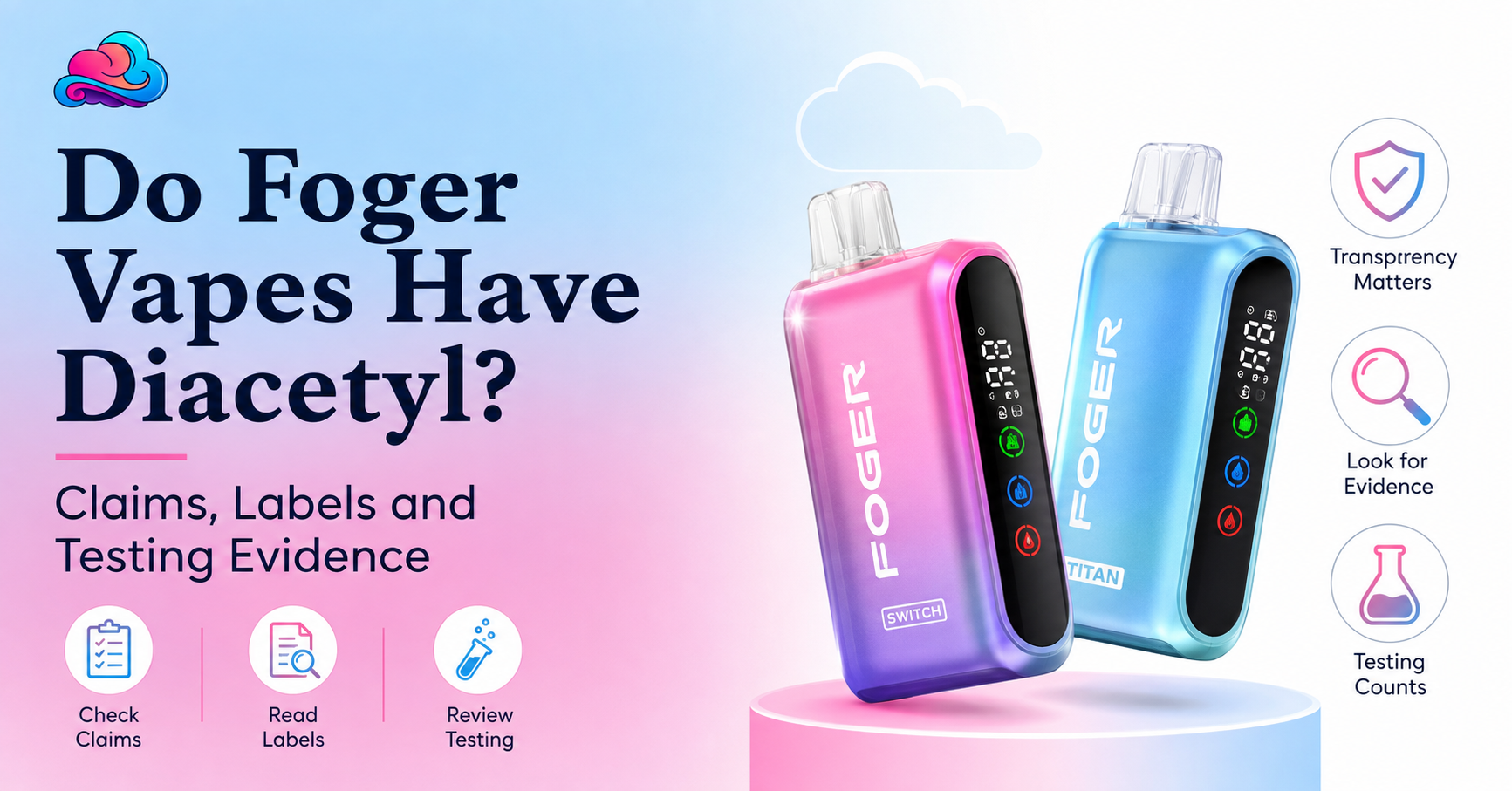
For example, the Foger vape range can support product comparison, while the page itself should not be treated as proof about diacetyl unless it supplies matching test evidence.
The Foger Switch Pro pods page can identify the pod format and listed flavors. Flavor names still cannot answer whether a certain batch contains diacetyl.
The same limit applies when browsing the RAZ vape range. A collection page and a batch laboratory report serve different purposes.
A Step by Step Product Review
Adults concerned about Diacetyl in vape products can use this order:
-
Record the exact product name and flavor.
-
Copy the batch or lot code from the package.
-
Read the full label and ingredient panel.
-
Check for a diacetyl-free vape statement.
-
Request a report that matches the batch.
-
Confirm that diacetyl is named in the test panel.
-
Check whether 2,3 pentanedione and acetoin were included.
-
Review the method and detection limit.
-
Confirm whether liquid, aerosol, or both were tested.
-
Keep the report with the receipt and package.
This process does not make vaping risk free. It gives the adult buyer a more reliable basis than flavor name, smell, online comments, or a broad marketing sentence.
A Real Adult Buyer Example
Consider an adult buyer named Aaron who is comparing 2 buttery vape flavors. Product A says “cream custard” but provides no report. Product B says “vanilla cream” and carries an absence claim.
Aaron does not assume Product B is verified. He asks for the batch report and checks the lot code. The report covers nicotine and metals but has no diacetyl panel.
He then requests a flavoring report. The seller cannot provide one, so Aaron knows the absence claim is not supported by the documents he received.
This example shows the value of e-liquid ingredient disclosure. A confident package statement and an unrelated report are not the same as direct batch evidence.
Errors That Often Cause Confusion
The first error is assuming only buttery vape flavors can contain diacetyl. Published testing has reported it in fruit, candy, and cocktail categories as well.
The second error is reading “natural flavor” as a full ingredient list. That phrase does not identify each compound in the mixture.
Another error is accepting an old report for a new batch. Testing can differ by sample, formula, supplier lot, and production date.
The final error is treating a burnt hit as proof of diacetyl. The vape pen checks after charging can separate power, airflow, pod, and coil problems from ingredient questions.
Better Practices for Adult Buyers
Keep the package, batch code, receipt, and test report together. This makes it easier to compare a claim with the exact unit.
Ask the maker to define “free.” A useful answer includes the compounds tested and the laboratory reporting limit.
Review related chemicals rather than stopping at diacetyl. A narrow absence claim can miss substitute compounds or other flavoring agents.
Do not open a sealed device to collect liquid or attempt home testing. The local vape and phone repair limits also explain why cutting open a sealed battery product is not a safe repair step.
Connection With the Wider Ingredient Strategy
The topic Diacetyl in vape products belongs inside a complete vape ingredient and aerosol guide. A wider pillar article can cover carrier liquids, nicotine, flavorings, metals, carbonyls, laboratory reports, product labels, and device heat.
This page supports that main guide by focusing on 1 flavoring chemical while showing the limits of package claims and batch documents.
The same review process can be used for another compound. Start with the exact chemical name, then check the product lot, test panel, sample type, method, and reporting limit.
When Store or Medical Support Matters
Contact the seller when the package lacks a batch code, the test report does not match, the seal is broken, or the device arrives leaking or damaged.
A technical issue should be handled separately. The seller may support charging, airflow, coil, or replacement questions, but store staff cannot diagnose chemical exposure or lung disease.
Near the end of your review, read the CDC vaping health effects guidance. CDC states that aerosol can contain several harmful or potentially harmful substances, including flavorings such as diacetyl, and notes that a flavoring safe to eat is not automatically safe to inhale.
A continuing cough, wheezing, chest tightness, or shortness of breath should be discussed with a healthcare professional. Severe breathing trouble, chest pain, blue lips, or fainting needs urgent care.
Conclusion
Diacetyl in vape aerosol is a real evidence based concern, but product level answers require more than a flavor name or package claim. Published testing has detected diacetyl in several flavored product categories, while NIOSH evidence links workplace inhalation exposure with serious lung disease.
A label can support an ingredient review, but it cannot always confirm absence. A stronger record includes a matching batch report, named compounds, the test method, reporting limits, and a clear statement about liquid or aerosol testing.
Treat diacetyl lung risk with care and accuracy. Do not assume every sweet flavor contains it, and do not assume every absence claim has been verified. Request the documents, compare the batch codes, and stop using any device that causes serious irritation or physical warning signs.
FAQs
Is Diacetyl Used for Butter Style Flavor?
Yes. It is associated with butter style aroma and has been used in flavoring mixtures. Presence in a specific product still requires testing.
Can a Product Label Confirm No Diacetyl?
Not by itself. A matching batch report with a named diacetyl test and reporting limit gives stronger support.
Are Sweet Flavors More Likely to Contain Diacetyl?
Some studies detected diacetyl or related compounds in many sweet flavored samples. Flavor name alone cannot predict the content.
Can Fruit Flavors Contain Diacetyl?
Yes. Published testing detected diacetyl in product groups that included fruit, candy, and cocktail flavors.
Can Manufacturer Testing Differ by Batch?
Yes. A report covers the tested sample. New supplier lots, production runs, or formula changes may need new testing.
Which Documents Can Verify Vape Ingredients?
A batch matched laboratory report is most direct. Ingredient labels, certificates of analysis, safety data sheets, and manufacturer letters provide different levels of detail.
Is an Absence Claim Risk Free?
No. The claim may cover only 1 chemical, and vape aerosol can contain other substances or device related emissions.
Can Taste Confirm Diacetyl?
No. Burnt or harsh taste can come from coil, wick, liquid, airflow, heat, or battery problems. Chemical identification requires laboratory testing.

Leave a comment
This site is protected by hCaptcha and the hCaptcha Privacy Policy and Terms of Service apply.