
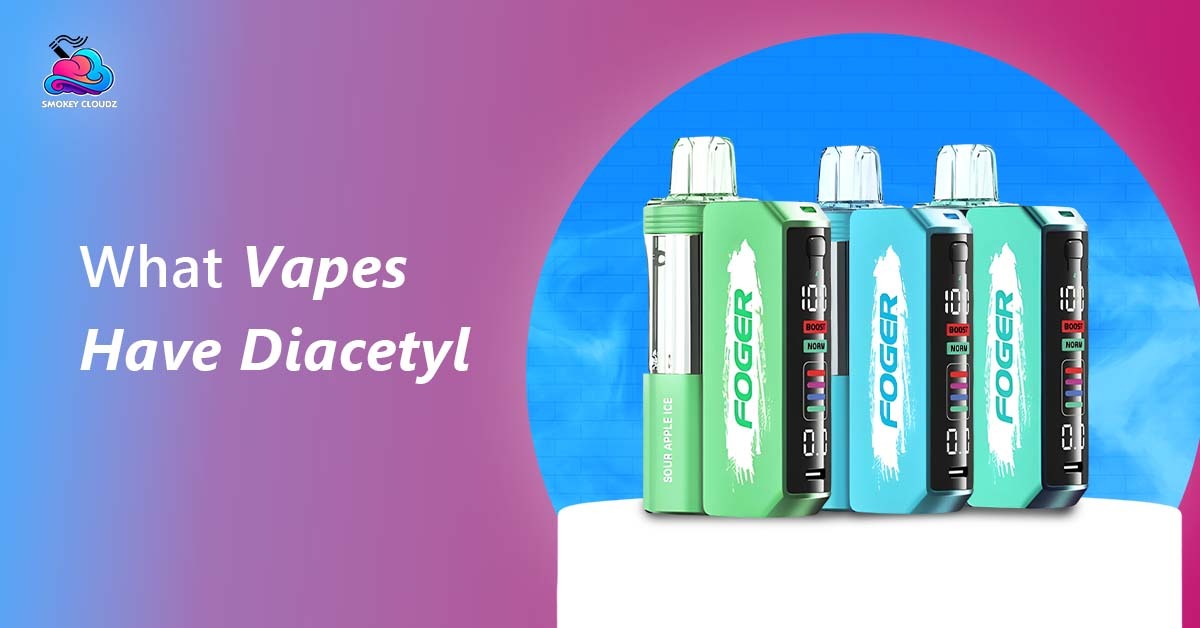
Many adult buyers ask what vapes have diacetyl because this chemical has been linked with serious lung disease after workplace inhalation. Someone browsing the RAZ vape collection may see fruit, ice, sweet, or drink style names, but a flavor name alone cannot confirm whether diacetyl is present.
There is no reliable public list covering every vape currently sold in the United States. Product formulas can change, packages may not show every flavor chemical, and many devices have no public product specific laboratory report.
The most honest answer is this: diacetyl has been detected in some flavored electronic cigarette products in past research, but you cannot state that a current brand or flavor contains it without current testing for that exact product.
Federal flavor limits also do not work as a direct diacetyl ban. The Food and Drug Administration reviews vape products individually through its tobacco product authorization system. As of May 2026, the FDA listed 45 authorized electronic cigarette products and stated that these were the products that could be lawfully marketed in the United States at the federal level.
This article is for adults aged 21 and over. Vaping is not risk free, and people who do not already smoke or vape should not start.
What Is Diacetyl?
Diacetyl is a flavoring chemical also called 2,3 butanedione. It has been used to create buttery, creamy, dairy style, and other rich flavor notes in food production.
Eating a flavoring chemical is not the same as inhaling it. The lungs process substances differently from the stomach and digestive system.
Workplace exposure to airborne diacetyl has been associated with severe breathing damage and obliterative bronchiolitis. This rare condition is often called popcorn lung because serious cases were reported among workers in microwave popcorn and flavoring plants.
The condition can scar and narrow the smallest airways inside the lungs. The damage may cause coughing, wheezing, shortness of breath, and difficulty during physical activity.
This occupational evidence does not prove that every person who takes a puff from a flavored vape will develop popcorn lung. It does show that breathing diacetyl is a real concern and should not be treated like ordinary food exposure.
Which Vapes May Contain Diacetyl?
Any current product claim needs evidence from the exact device, pod, or e liquid being discussed.
Past studies detected diacetyl in several flavored electronic cigarette categories. These included products with sweet, fruit, candy, and other flavor profiles. This means the concern cannot be limited only to obvious butter or custard names.
A widely cited study tested 51 flavored electronic cigarette products purchased in 2015. Diacetyl was detected above the laboratory detection limit in 39 of them. At least 1 of 3 flavoring chemicals, diacetyl, 2,3 pentanedione, or acetoin, was detected in 47 products.
That study is useful for showing that flavor chemicals were present in the market at that time. It is not a current brand list. The tested products may have been changed, removed, renamed, or replaced since then.
You should not use that research to claim that a current Geek Bar, RAZ, Foger, or another named product contains diacetyl. Current product specific evidence would be needed.
Are Creamy and Dessert Flavors More Concerning?
Cream, butter, custard, caramel, pastry, milk, and dessert style profiles deserve careful checking because diacetyl has traditionally been valued for its buttery and rich taste.
Still, the flavor title is only a clue. It is not proof.
A product called vanilla custard may use diacetyl, another diketone, a different flavor blend, or no buttery chemical at all. A fruit product may also contain creamy background ingredients that are not clear from the main name.
Past research on sweet flavored e liquids also reported diacetyl and acetyl propionyl in some tested samples. Formulas differed widely between products.
Adults viewing Geek Bar flavor options should check the information for the exact item rather than treating the full brand as having 1 shared ingredient formula.
The following flavor words may give you a reason to request more information:
-
Butter
-
Custard
-
Cream
-
Milk
-
Caramel
-
Cheesecake
-
Pastry
-
Donut
-
Cookie
-
Sweet tobacco
These words do not confirm diacetyl. They only show that checking a laboratory report may be especially important.
Can Fruit or Ice Vapes Contain Diacetyl?
Yes, it is possible.
The 2015 study did not detect diacetyl only in butter style products. It tested many flavor types and reported the chemical across a broad selection of flavored electronic cigarettes.
A fruit vape may contain more than a single fruit ingredient. Flavor formulas can combine sweetener notes, cream notes, cooling agents, acids, and many other chemicals.
An ice label normally tells you the product creates a cooling feeling. It does not provide the full flavor chemical list.
A colorful flavor name such as blue razz ice, strawberry cream, or tropical candy cannot confirm:
-
The full ingredient mixture
-
The amount of each flavor chemical
-
Whether diacetyl is present
-
Whether a substitute is used
-
The chemicals created during heating
For wider ingredient context, readers can review how many chemicals may be present in vapes.
Can Tobacco Flavored Vapes Contain Diacetyl?
A tobacco flavor name does not guarantee that a product is free from diacetyl.
Tobacco style formulas may include sweet, nutty, caramel, vanilla, cocoa, or creamy notes. These background flavors can be present even when the main package says tobacco.
Current US authorization status also should not be confused with an ingredient free claim. FDA review is product specific, and authorization means the agency determined that marketing the exact product met the legal public health standard. It does not mean the product is harmless.
Ask for information covering the exact product name, flavor, nicotine strength, and batch when possible.
Is Diacetyl Banned From Every US Vape?
There is no broad federal rule stating that every vape containing diacetyl is automatically banned only because that chemical is present.
US vape regulation focuses heavily on whether a tobacco product has the required FDA marketing authorization. The FDA has also taken enforcement action against unauthorized flavored disposable products, including products sold under several popular brand names.
This means 2 separate questions must be asked:
-
Is the product authorized for legal federal marketing?
-
Has the exact product been tested for diacetyl?
A product being unauthorized does not prove that it contains diacetyl. A product being labeled diacetyl free does not prove that it has FDA marketing authorization.
State and local flavor restrictions add another layer. Some states and cities limit mint, menthol, fruit, candy, or other flavored products. Those rules normally deal with flavor sales, not only diacetyl.
Did US Flavor Limits Remove Diacetyl From the Market?
No rule change can guarantee that every product on a store shelf is free from diacetyl.
Federal enforcement has targeted unauthorized electronic cigarettes, including many flavored disposable products. Yet unauthorized products may still appear through retailers, online sellers, imports, or changing brand names. The FDA reported enforcement actions against retailers selling unauthorized flavored devices under brands including Geek Bar and Lost Mary.
Flavor limits also do not force every legal flavor formula to use the same ingredients.
In May 2026, the FDA announced authorization for additional pod products, including some non tobacco and non menthol flavors. This shows that federal status is based on review of each submitted product rather than a permanent nationwide ban on every non tobacco flavor.
The buyer still needs current information about:
-
FDA authorization
-
State and local sale rules
-
Product ingredients
-
Product specific test results
-
Seller reliability
-
Package condition
Can Product Labels Confirm Diacetyl?
Sometimes a label may state “diacetyl free,” but that statement should be supported by more detail.
A strong product record may include:
-
The exact product name
-
The exact flavor
-
Nicotine strength
-
Batch number
-
Test date
-
Laboratory name
-
Test method
-
Detection limit
-
Results for diacetyl
-
Results for 2,3 pentanedione and acetoin
A general sentence saying “made with safe ingredients” is not a laboratory result.
The same issue applies to replacement products. Someone checking Foger Switch Pro pods should review each pod flavor and specification separately. A pod system can use several formulas across its range.
A report from several years ago may no longer match a current batch. Manufacturers can change suppliers, flavors, nicotine formulas, or production locations.
Which Lab Report Details Matter Most?
A test result should clearly connect to the product you plan to use.
Look for these details:
Matching Product Information
The report should name the brand, flavor, nicotine level, and product type. A report for a bottled e liquid should not automatically be applied to a disposable device with the same flavor name.
A Recent Test Date
An older report may describe a formula that is no longer sold.
A Named Laboratory
The report should identify the laboratory that performed the analysis. Anonymous charts and social media pictures provide very little confidence.
Clear Results
The result should state whether diacetyl was detected and show the reporting limit. “Not detected” normally means the chemical was below the method’s detection level. It does not always mean absolute zero.
Related Flavor Chemicals
A fuller test may include 2,3 pentanedione and acetoin. NIOSH also identifies 2,3 pentanedione as a flavoring chemical linked with flavoring related lung concerns.
Batch Connection
A batch or lot number gives the report more value because it connects the test to a specific production run.
Can a Seller Promise That Every Product Is Diacetyl Free?
A seller should not make a broad promise without current evidence covering every product.
Retailers often carry products made by several companies. They may not control the liquid formula, manufacturing process, or future ingredient changes.
A careful seller can provide package information, manufacturer statements, or available testing. They should not invent an answer when documents are missing.
Be cautious when a seller says:
-
All modern vapes are diacetyl free
-
US law bans diacetyl in every device
-
Fruit flavors never contain it
-
Only custard vapes contain it
-
Nicotine free means chemical free
-
A trusted brand never needs testing
-
FDA registration proves product safety
These statements are too broad.
Can Diacetyl Free Mean Risk Free?
No. Removing diacetyl does not make vape aerosol harmless.
Electronic cigarette aerosol may contain nicotine, volatile organic compounds, metals, tiny particles, and other flavor chemicals. Some chemicals are already present in the liquid, while others may form during heating. CDC includes diacetyl among several possible harmful substances in electronic cigarette aerosol.
A product free from diacetyl may still contain:
-
Acetoin
-
2,3 pentanedione
-
Cooling agents
-
Sweetening ingredients
-
Nicotine
-
Metals from device parts
-
Compounds formed by excess heat
The lowest risk option is not to vape. Adults who already smoke should speak with a medical professional about smoking cessation options rather than treating a flavor claim as a full safety statement.
Can Vape Aerosol Affect Other People?
Vape aerosol can remain in indoor air for a period after use. The time depends on ventilation, room size, product type, number of puffs, and other conditions.
Diacetyl exposure is not only a concern for the person holding the device when a product contains it. Other people in a small room may also breathe part of the released aerosol.
Readers concerned about indoor exposure can review how long vape aerosol may remain in the air.
Avoid vaping around:
-
Children
-
Pregnant people
-
People with asthma
-
People using oxygen
-
People with lung disease
-
Anyone who has not agreed to the exposure
Opening a window does not make aerosol exposure zero.
A Real Product Checking Situation
Imagine an adult sees a vanilla cream disposable at a local shop. The box says premium flavor but gives no full ingredient list.
The customer asks whether it contains diacetyl. The shop worker says all new vapes are free from it because flavor laws changed.
The answer sounds confident, but no report is shown. The customer checks the maker’s page and still sees no test connected to that exact flavor or batch.
The safest conclusion is not that the vape definitely contains diacetyl. It is also not that the vape is confirmed free from it.
The product status is unknown.
A better response is to avoid making a health claim without evidence and request current product specific testing.
Can Diacetyl Exposure Cause Popcorn Lung?
Diacetyl inhalation has been linked with obliterative bronchiolitis, often called popcorn lung. This is a rare but serious disease that scars and narrows the smallest airways in the lungs.
The strongest evidence comes from workers who repeatedly breathed flavoring chemicals in food and flavor production facilities. NIOSH states that diacetyl and its substitute, 2,3 pentanedione, are linked with flavoring related lung disease.
This does not mean every person who uses a flavored vape will develop popcorn lung. The exposure amount, frequency, product formula, device temperature, and personal health can all affect risk.
It also does not mean diacetyl should be ignored. A chemical linked with severe lung damage after inhalation should not be treated as safe just because it can be used in food.
Are Early Symptoms Easy to Miss?
Yes. Early breathing problems may look like asthma, a chest infection, smoking related coughing, or poor fitness.
NIOSH lists common symptoms of flavoring related disease as:
-
Dry coughing
-
Wheezing
-
Shortness of breath
-
Trouble breathing during physical activity
-
Reduced lung function
Symptoms may begin slowly and become worse over weeks or months. They may not improve after the person moves away from the exposure.
A cough after 1 vaping session does not prove popcorn lung. Many other conditions can cause coughing or wheezing. Still, continuing symptoms need proper medical attention.
Should Medical Care Be Considered?
Speak with a medical professional when coughing, wheezing, chest tightness, or shortness of breath continues.
Tell the clinician:
-
Which product you used
-
The flavor name
-
Nicotine strength
-
Device type
-
Amount used each day
-
Length of use
-
Whether the product contained THC or CBD
-
When the symptoms began
-
Whether symptoms are becoming worse
Bring the package or a clear photo when possible. This may give the clinician more product details.
Urgent care is needed for severe breathing trouble, blue or grey lips, fainting, confusion, strong chest pain, or symptoms that become worse very quickly.
Can a Burnt Coil Create Diacetyl?
A burnt coil does not automatically mean that diacetyl has been created.
Diacetyl may already be part of a flavor formula, or it may appear in aerosol testing under certain conditions. A burnt or overheated coil can also raise other chemical concerns, including formaldehyde, acetaldehyde, and acrolein.
These chemicals are not all the same. It is not accurate to call every harsh or burnt puff a diacetyl exposure.
A burnt taste still means you should stop. Readers dealing with this issue can review whether a burnt vape can cause immediate danger.
Never continue taking puffs to test a burnt coil. Replace the coil or pod when possible. Stop using a sealed disposable when the burnt taste remains.
Are Nicotine Free Vapes Automatically Diacetyl Free?
No. Nicotine and diacetyl are different ingredients.
A product can contain no nicotine while still using flavoring chemicals. A zero nicotine label only gives information about the stated nicotine amount. It does not prove the aerosol is free from diacetyl, acetoin, 2,3 pentanedione, metals, or other substances.
FDA lists diacetyl as a respiratory toxicant that may occur in tobacco products or their aerosol. FDA also states that some electronic cigarette aerosols may contain flavorings such as diacetyl and acetoin.
Before using a zero nicotine product, check the same information you would check for a nicotine vape:
-
Full product name
-
Flavor
-
Ingredient statement
-
Maker details
-
Current laboratory report
-
Batch number
-
Package seal
-
Seller information
Nicotine free does not mean chemical free or risk free.
Can THC Vapes Contain Flavoring Chemicals?
Yes. THC cartridges and disposable cannabis vapes may contain terpenes, flavor ingredients, thinning agents, or other additives.
The rules and formulas for THC products can differ from nicotine products. A laboratory report for a nicotine vape should not be applied to a THC cartridge.
A zero nicotine statement also does not mean zero THC. These are separate substances.
Readers concerned about testing can review THC vape detection in saliva, but detection time does not confirm the chemical safety of a cartridge.
Avoid damaged, leaking, refilled, or unverified THC devices. Never use THC before driving or operating machinery.
Can Brand Names Confirm Ingredient Safety?
No. A brand may sell many products with different liquids, flavors, factories, and production dates.
A report covering 1 flavor should not be applied to every product made by that company. The same flavor may also be changed over time.
Someone viewing RAZ vape flavor options should check each item separately. Fruit, sweet, mint, ice, and drink names do not reveal every chemical inside the formula.
The same point applies to a product such as the Geek Bar Pulse 15000. Puff count, screen features, battery size, and flavor name cannot confirm whether diacetyl was detected.
Only current product specific information can provide a useful answer.
A Better Product Check Before Buying
Use this process before buying a flavored vape.
Step 1: Record the Exact Product
Write down the full brand, model, flavor, nicotine level, and package size.
A brand name alone is not enough.
Step 2: Read the Package
Check the ingredient statement, warning labels, maker name, batch number, and manufacturing information.
Avoid products with missing labels or broken seals.
Step 3: Check Federal Status
Review whether the exact product has current FDA marketing authorization.
Do not treat phrases such as registered, approved facility, premium, or tested as proof of authorization.
Step 4: Request Current Testing
Ask for a report connected to the exact product and flavor.
The report should test for:
-
Diacetyl
-
2,3 pentanedione
-
Acetoin
-
Heavy metals when available
-
Other stated aerosol chemicals
Step 5: Match the Report
Make sure the report matches the flavor, nicotine strength, device type, and batch.
A test for bottled liquid may not represent aerosol from a disposable device.
Step 6: Check the Date
A report from several years ago may not match the current formula.
Step 7: Read the Detection Limit
“Not detected” normally means the result was below the test method’s detection level. It does not always mean that the substance was absolutely absent.
Step 8: Walk Away From Unclear Claims
Do not rely on verbal promises when the seller or maker cannot provide supporting information.
An unknown result should be treated as unknown, not automatically safe.
Buying Habits That Create False Confidence
Trusting a Diacetyl Free Sticker
A sticker can be printed by anyone. Ask for evidence connected with the exact product.
Assuming Flavor Limits Removed Every Risk
Flavor restrictions may limit retail sales, but they do not prove that every remaining product is free from every concerning chemical.
Believing Only Custard Flavors Need Testing
Past research detected diacetyl across several flavor categories. Fruit and candy names should not be treated as automatic proof of absence.
Using an Old Laboratory Report
A manufacturer may change the formula, supplier, factory, or production method.
Applying 1 Result to a Full Brand
Each device, flavor, strength, and batch may be different.
Trusting Very Low Prices
A low price does not prove that a product is unsafe, but missing packaging, unclear sourcing, and no testing should raise concern.
Treating FDA Authorization as a Harmless Product Claim
Authorization does not mean risk free. It means the exact product met the legal standard for marketing after FDA review.
A Real Product Comparison
Imagine an adult buyer is comparing 2 cream flavored disposable vapes.
Product A has a bright package and a large diacetyl free statement. The seller cannot provide a laboratory report or batch information.
Product B has a less dramatic package. Its maker provides a recent report naming the exact flavor, nicotine level, batch, laboratory, test date, and detection limits.
Product B gives more evidence, but it should still not be called harmless. The report only addresses the chemicals included in that test.
The careful buyer does not depend on packaging design or brand popularity. They compare the evidence attached to the exact product.
Practical Tips for Adults Who Still Vape
No product check can remove every vaping risk. These habits may reduce avoidable uncertainty:
-
Buy sealed products from sellers that provide clear product details.
-
Avoid liquids with no maker name or ingredient statement.
-
Keep the package and receipt.
-
Stop using a device that tastes burnt or chemically unusual.
-
Do not mix liquids at home.
-
Do not refill sealed disposables.
-
Keep devices away from heat and direct sunlight.
-
Avoid vaping around children or people with lung conditions.
-
Do not start vaping if you do not already smoke or vape.
-
Speak with a medical professional about stopping tobacco use.
Avoid claims such as natural flavor, clean vapor, or premium ingredients when no evidence supports them.
This Topic Inside the Complete Vape Chemical Guide
The question what vapes have diacetyl is part of a wider ingredient and aerosol topic.
A complete vape chemical guide should cover:
-
Diacetyl
-
Acetoin
-
2,3 pentanedione
-
Formaldehyde
-
Acrolein
-
Metals
-
Nicotine
-
Cooling chemicals
-
Chemicals formed during heating
-
Product testing limits
Flavor names can give clues about the expected taste, but they cannot provide a full chemical profile.
The exact phrase complete vape chemical guide should link to the main pillar article when its URL is supplied.
A Separate Note on Formaldehyde
The external source supplied for this article covers formaldehyde rather than diacetyl.
The CDC NIOSH formaldehyde information discusses eye, nose, throat, and breathing irritation from formaldehyde exposure. It should not be used as proof that a current vape contains diacetyl.
Formaldehyde and diacetyl are separate chemicals with different exposure concerns. Both may be discussed in a wider vape chemical article, but the evidence for 1 should not be presented as evidence for the other.
This difference matters because inaccurate source use can make health content sound stronger than the research supports.
Final Thoughts
So, what vapes have diacetyl after strict US flavor limits?
There is no reliable current list covering every vape sold in the country. Past laboratory studies detected diacetyl in several flavored electronic cigarette products, including fruit, candy, cocktail, and sweet flavor categories. Those results cannot confirm the formula of a current product without newer product specific testing.
Cream, custard, caramel, butter, milk, pastry, fruit, ice, and tobacco names may all require closer checking. None of these words prove that diacetyl is present or absent.
Check the exact product, flavor, nicotine strength, batch, laboratory report, test date, and detection limit. Do not rely only on a brand claim, shop worker, old study, or flavor name.
Vaping is not risk free, even when diacetyl is not detected. Adults concerned about coughing, wheezing, or breathing trouble should stop using the product and speak with a medical professional.
FAQs
Which vape flavors are more likely to need diacetyl testing?
Cream, custard, butter, caramel, pastry, sweet, fruit, and tobacco blends may need checking. A flavor name cannot confirm the result.
Can a vape say diacetyl free without laboratory testing?
A company can print the claim, but a current product specific laboratory report gives stronger support.
Can nicotine free vapes contain diacetyl?
Yes. A zero nicotine label does not confirm that the product is free from flavoring chemicals.
Is popcorn lung common among vape users?
Popcorn lung is rare. Diacetyl inhalation is linked with serious occupational lung disease, but coughing alone cannot diagnose it.
Can a burnt coil produce diacetyl?
A burnt coil does not automatically create diacetyl. Overheating may raise other harmful emissions, so stop using a device that tastes burnt.

Leave a comment
This site is protected by hCaptcha and the hCaptcha Privacy Policy and Terms of Service apply.