
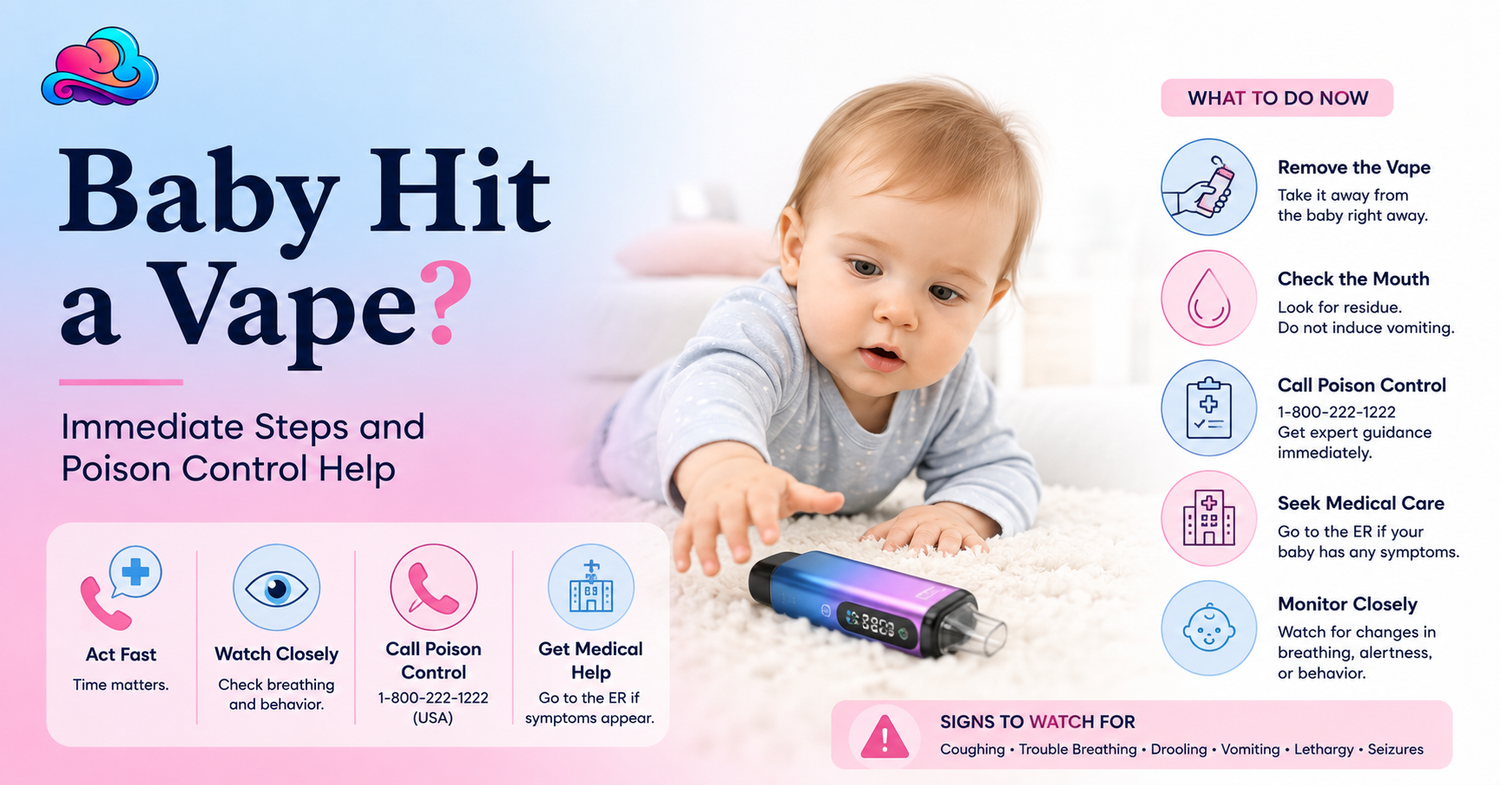
If this is happening now, remove the vape, move the baby to fresh air, and call Poison Control or your local poison center immediately. In the United States, call 1 800 222 1222. Call emergency services at once if the baby has trouble breathing, has a seizure, collapses, turns blue, or cannot be awakened. Do not wait for symptoms to appear.
A baby placing a vape in the mouth can make a parent panic. That reaction is normal. Parents who type what do if my 9 month old hits a vape need a direct answer, not blame or a long delay. A baby inhaled vape event may involve aerosol, liquid on the mouthpiece, liquid swallowed from a leak, or liquid absorbed through the skin. Any infant nicotine exposure deserves immediate advice from a poison specialist because the amount and nicotine strength may be unclear.
Even a device that looks closed can hold concentrated nicotine liquid. Young children can be poisoned by swallowing vape liquid, breathing it, or absorbing it through the skin or eyes. More than 80% of calls to United States poison centers involving electronic cigarettes concern children younger than 5.
Do not test the device again to check whether it worked. Keep the vape and package nearby for identification, but place them out of the baby’s reach.
Immediate Answer
The safest answer to what do if my 9 month old hits a vape is to call Poison Control now, even when the baby looks normal. A child hit vape once event can be difficult to measure because the device may have delivered aerosol, leaked liquid, or left nicotine around the mouthpiece.
In the United States, Poison Control is available at 1 800 222 1222 at all hours. The service can review the child’s age, weight, product, route, amount, time, and symptoms. If the baby collapses, has a seizure, has trouble breathing, or cannot be awakened, call emergency services immediately.
Outside the United States, contact the local poison center or emergency medical service. Do not wait for vomiting, shaking, or breathing changes before making the call.
First 5 Minutes
Act calmly and in this order:
-
Take the vape away and stop any further contact.
-
Move the baby to fresh air.
-
Check breathing, skin color, alertness, and movement.
-
Look for liquid on the lips, tongue, hands, clothing, or floor.
-
Call Poison Control or the local poison center.
-
Keep the product, box, receipt, and label near the phone.
-
Follow the instructions given for that exact exposure.
-
Call emergency services if severe symptoms begin.
Do not induce vomiting. Do not give salt water, charcoal, medicine, or another home remedy. Ask the poison specialist before giving milk, water, or food.
If the baby has liquid on the skin or in the eyes, begin rinsing while another adult makes the call. A vape liquid poisoning baby concern should be handled by a poison specialist, while immediate rinsing can reduce continued exposure.
Should Poison Control Be Called After 1 Puff?
Yes. A child hit vape once situation still deserves a call because an infant is small and the actual dose cannot be judged from the light, screen, puff count, or remaining liquid display.
The phrase Poison Control vape may sound like a search topic, but this is a real poisoning question. A specialist can decide whether home observation is enough or whether the baby needs urgent medical assessment. Poison Control advises contacting them even after a minor or uncertain encounter.
If the vape did not activate but the mouthpiece touched the baby’s lips, call when nicotine liquid may have been present. A leaking mouthpiece can create mouth or skin exposure without a full puff.
Can 1 Hit Cause Nicotine Exposure?
Yes, although the amount can vary. A direct puff can expose the mouth and lungs to aerosol, while liquid around the mouthpiece can be absorbed through the mouth. A baby inhaled vape event may also include coughing or choking that is not caused by nicotine alone.
The risk becomes more serious when the device is cracked, leaking, open, chewed, or missing part of its liquid. Concentrated nicotine can act quickly, and Poison Control reports that severe effects after swallowing may begin within a short period.
Do not use the baby’s current appearance as the only guide. The poison specialist will consider the product strength, possible amount, route, age, weight, and time since contact.
Which Nicotine Poisoning Symptoms Need Emergency Care?
Possible nicotine poisoning symptoms include vomiting, nausea, unusual drooling, sweating, shaking, agitation, weakness, unusual sleepiness, and an abnormal heart rate. Serious exposure can cause trouble breathing, seizures, collapse, or inability to wake.
Call emergency services at once for:
-
Trouble breathing, slow breathing, or pauses in breathing
-
Blue or gray lips or skin
-
A seizure
-
Collapse or loss of consciousness
-
Severe weakness or limpness
-
Inability to wake the baby
-
Repeated vomiting with reduced alertness
-
Rapid worsening while waiting for advice
Keep watching the baby while speaking with Poison Control. Do not drive alone with a baby who is having severe symptoms. Use emergency transport when instructed or when breathing, consciousness, or seizure problems appear.
Can Vape Liquid Poison a Baby Through the Mouth or Skin?
Yes. Vape liquid poisoning baby concerns include swallowing, contact with the mouth, skin exposure, eye exposure, and inhalation. Liquid nicotine can pass through the moist lining of the mouth and through skin. The American Academy of Pediatrics warns that even small amounts can be dangerous to young children.
If liquid is visible in the mouth, gently wipe the lips and outer mouth with a clean damp cloth. Do not place fingers deep in the mouth and do not induce vomiting. Call Poison Control immediately for instructions based on the product and amount.
If liquid is on the skin, remove contaminated clothing and rinse the skin with plenty of room temperature running water for at least 15 minutes. Mild soap may be used for material that sticks.
If liquid reached the eyes, rinse with room temperature water for 15 to 20 minutes. Do not delay the rinse while searching for the package.
Poison Control Vape Call Details
The call moves faster when the caregiver has the right details ready. Keep the container or device near the phone, but away from the child.
Share these details:
-
The baby’s age and current weight
-
The product name and brand
-
Nicotine strength, when shown
-
The type of device or pod
-
The time of the event
-
Whether the device activated
-
The possible number of puffs
-
Whether liquid reached the mouth, skin, or eyes
-
Any coughing, vomiting, shaking, sleepiness, or breathing change
-
Any missing liquid, broken parts, or leaks
Poison Control bases advice on the substance, amount, age, weight, route, symptoms, and time since exposure.
A photo of the label can be useful if another adult is calling from a different room. Do not delay the call to take perfect pictures.
Product Identity Matters
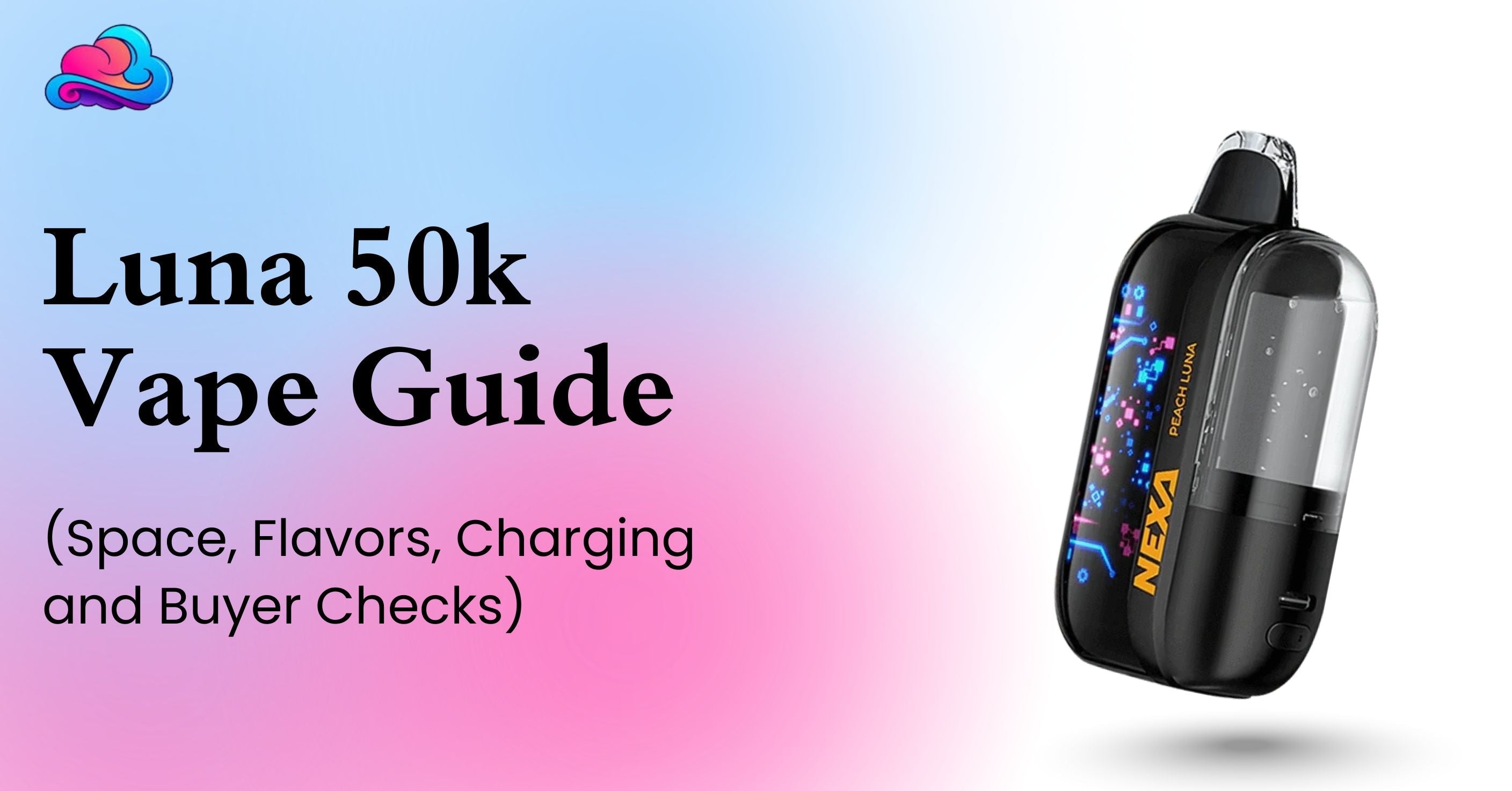
Different products can contain different nicotine strengths, liquid volumes, batteries, and removable parts. The Luna 50K product identity and specification guide shows why the exact maker, model, package, and label matter when a product name is uncertain.
Bring the actual product or clear package photos to the phone or emergency department. Do not guess the strength from the device size or puff number.
If the liquid type is unknown, say that clearly. Tell the specialist if the product may contain nicotine, cannabis, CBD, or another substance.
A Real Parent Example
A parent sees a 9 month old holding a disposable vape. The screen lights once, the baby coughs, and there is a small wet mark near the lips. The parent searches what do if my 9 month old hits a vape and considers waiting because the baby soon looks calm.
Instead, the parent removes the vape, moves the baby to fresh air, wipes visible liquid from the lips, and calls Poison Control. During the Poison Control vape call, the parent reports the baby’s weight, product name, nicotine strength, time, cough, and possible liquid contact.
The specialist gives case specific instructions and tells the parent which nicotine poisoning symptoms require emergency care. The parent keeps the device and package for identification but locks them away from the child.
This example shows why a child hit vape once event should not be handled through guesswork. The correct action depends on the exact product and exposure.
Hospital Care and Product Information
A hospital may monitor breathing, heart rate, alertness, vomiting, and other signs based on the poison specialist’s advice and the baby’s condition. Bring the device, package, nicotine label, and any photos of leaked liquid.
The hospital vaping rules and safety limits are separate from emergency treatment, but one rule remains clear: do not activate, charge, or test the vape inside a patient area.
Tell hospital staff exactly what happened, including any uncertainty. Do not clean the device so thoroughly that the product name or strength can no longer be read.
Errors That Delay Safe Action
The first error is waiting for symptoms. Nicotine can act quickly, and an infant cannot clearly describe nausea, dizziness, or a racing heart.
The second error is assuming that 1 puff is too small to matter. A baby inhaled vape event can also include liquid from the mouthpiece, so the exposure may be larger than it appears.
Another error is inducing vomiting. This can create choking or aspiration risk and is not recommended by Poison Control.
The last error is throwing away the device before the call. The package, label, and remaining liquid can provide important product information.
Better Storage Around Babies
Vapes, pods, liquid bottles, chargers, and used devices should be locked in a high cabinet that a child cannot reach. A shelf, purse, nightstand, sofa pocket, cup holder, or diaper bag is not secure storage.
A modular product such as the Geek Bar Clio Platinum kit has a battery base and a prefilled nicotine pod. Both pieces need locked storage, even when separated. The current product page states that the pod contains 5% nicotine salt and that the product must be kept away from children.
Keep products in their original packaging. Do not move vape liquid into drink, medicine, or food containers. Used products may still hold nicotine residue, so they should not be left in open trash.
Spare Pods Still Need Locked Storage
A replacement pod is not safe merely because it is not attached to a large battery. The RAZ Vue 50K replacement pod is sold as a sealed prefilled nicotine pod, so spare units must remain locked away before and after use.
The same applies to Foger Switch Pro replacement pods, which are also listed as sealed prefilled nicotine pods. A used pod can still contain liquid around its coil, mouthpiece, or inner chamber.
Place used pods in a closed container that a baby cannot open. Follow local battery and nicotine product disposal rules.
Flavor Names Do Not Lower the Risk
Fruit, candy, mint, ice, and dessert names can make vape products look less dangerous than they are. The Cactus Jack RAZ flavor profile discusses adult taste descriptions, but a flavor name never changes the need for locked storage.
Bright packaging and sweet smells may attract a baby or toddler. Do not leave a product on a low table even for a moment.
A vape liquid poisoning baby emergency can begin with a device that looked closed, colorful, or empty. Treat every nicotine device and pod as containing poison unless its contents are confirmed otherwise.
Connection With the Wider Child Safety Strategy
The search phrase what do if my 9 month old hits a vape belongs inside a complete vape storage and child poisoning response guide. The larger resource should cover immediate action, inhalation, mouth contact, skin exposure, eye exposure, symptoms, Poison Control, emergency transport, storage, and disposal.
This article supports that pillar by separating a direct puff from liquid contact and by giving a clear order of action. It also explains why infant nicotine exposure cannot be judged from puff count alone.
The wider guide should be placed near adult product care pages so safe storage is treated as part of ownership, not an optional extra.
When Medical or Poison Support Is Needed
Call Poison Control after any suspected infant nicotine exposure, including 1 possible puff, liquid on the mouth, liquid on the skin, or an uncertain event. A poison specialist can tell you whether observation at home is acceptable or whether the baby needs medical care.
Call emergency services immediately when the baby has trouble breathing, a seizure, collapse, blue color, severe weakness, or cannot be awakened.
Contact the pediatrician after the immediate poison advice when follow up is recommended. The pediatrician should not replace the first poison call during an active exposure.
Poison Centers Support Case Specific Decisions
Poison centers assess the substance, likely severity, symptoms, and need for home observation or medical referral. They can also provide follow up and share toxicology information with a health facility when referral is needed. The supplied NCBI overview of poison control center activities describes this assessment and referral role.
Conclusion
The answer to what do if my 9 month old hits a vape is to act now. Remove the vape, move the baby to fresh air, check breathing and alertness, and call Poison Control or the local poison center.
Do not wait for nicotine poisoning symptoms and do not induce vomiting. Rinse liquid from skin or eyes, keep the package available, and report the exact product, nicotine strength, route, time, and possible amount.
Every infant nicotine exposure needs case specific advice. Locked storage of devices, batteries, and spare pods is the best way to prevent another event.
FAQs
Should I Call Poison Control After 1 Vape Puff?
Yes. Call after a possible puff because the dose and liquid contact may be uncertain, especially in a 9 month old baby.
Which Symptoms Require Emergency Care?
Trouble breathing, seizures, collapse, blue color, severe weakness, or inability to wake require emergency services immediately.
Which Details Should I Give the Poison Specialist?
Give the baby’s age, weight, product name, nicotine strength, time, possible amount, route, and current symptoms.
Is Vomiting a Nicotine Poisoning Sign?
Yes. Vomiting can occur with nicotine poisoning. Report it immediately and follow the poison specialist’s instructions.
Can Vape Liquid Be Absorbed Through Skin?
Yes. Remove contaminated clothing and rinse the skin with room temperature running water for at least 15 minutes.
Should I Make the Baby Vomit?
No. Do not induce vomiting. Call Poison Control for instructions based on the exact product and exposure.
Can 1 Puff Be Safe Because the Baby Looks Normal?
A normal appearance does not confirm safety. Call the poison center and let the specialist assess the risk.
Should I Bring the Vape to the Hospital?
Bring the device or clear package photos when it can be transported safely. Keep it sealed and away from the baby.
Which Storage Method Is Safest Around Children?
Use a locked high cabinet. Store devices, pods, liquid, chargers, and used products in child resistant original packaging.

Leave a comment
This site is protected by hCaptcha and the hCaptcha Privacy Policy and Terms of Service apply.