
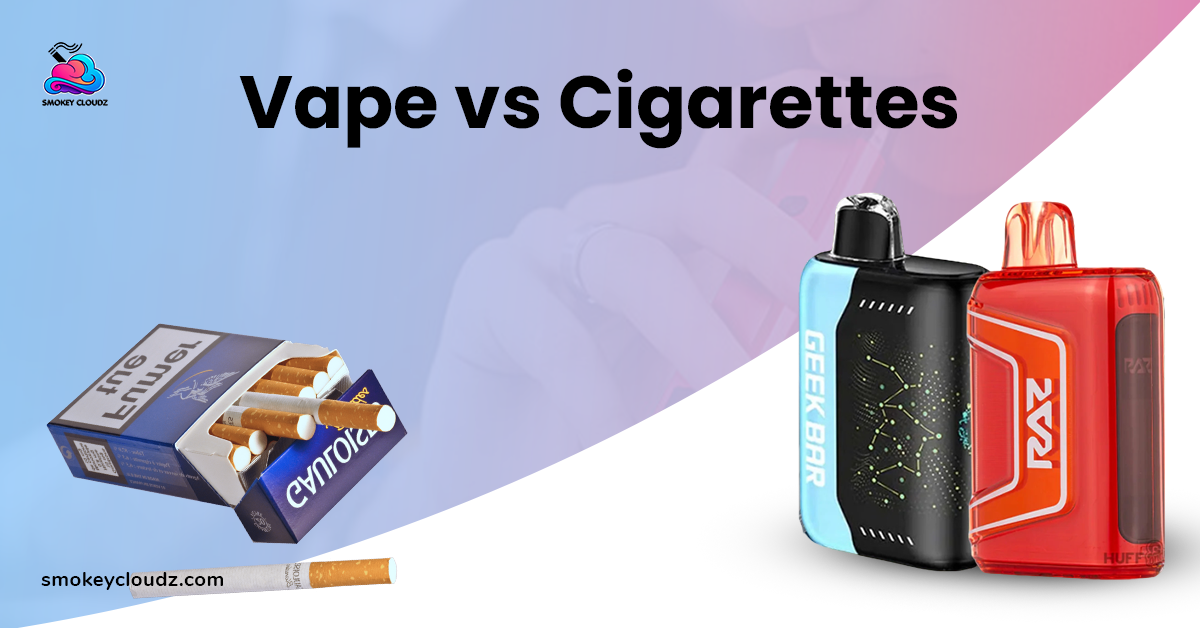
Many adults compare vape vs cigarettes when thinking about their current smoking habits or looking into different nicotine products. The decision can feel confusing because both products involve nicotine, but they work in different ways and have different usage experiences.
Some people focus on smell, cost, convenience, or daily routine. Others think about ingredients, product design, and long term habits. Understanding the differences can help adults make more informed decisions based on accurate information.
This guide explains the main differences between vaping and cigarettes, including how they work, what users should consider, and common mistakes people make when comparing both options.
Vape vs Cigarettes: The Basic Difference
The main difference between cigarettes and vapes is the way they deliver nicotine.
Cigarettes burn tobacco to create smoke. This burning process produces smoke containing many chemicals. Vapes use an electronic system that heats a liquid or material to create an aerosol that users inhale.
When comparing vape vs cigarettes, the experience can feel different because cigarettes involve combustion, while vaping devices use electronic heating systems.
Adults researching different vape products may also compare device types, flavors, and formats. For example, some users look into options like the Geek Bar Pulse X comparison guide to understand differences between popular disposable devices.
Why Are People Comparing Vapes and Cigarettes?
Many adults compare these products because they want to understand differences in daily use.
Cigarettes have been used for many years and follow a familiar routine. A cigarette is lit, smoked, and finished. Vape devices can offer different designs, rechargeable options, and flavor choices.
The decision around vape vs cigarettes often comes from personal reasons such as:
• wanting to understand product differences
• changing a previous smoking routine
• comparing convenience
• checking available product options
The CDC provides general information about tobacco products, nicotine, and health considerations through its tobacco resources.
How Cigarettes Work
Cigarettes contain tobacco that burns when lit. The smoke created from burning tobacco carries nicotine along with many other substances.
The burning process is the main reason cigarettes create smoke. This smoke is different from the aerosol created by electronic vaping devices.
Cigarette use also creates a strong smell that can remain on clothing, furniture, and surroundings. Many users mention this as one reason they compare cigarettes with vaping products.
How Vape Devices Work
Vape devices use electronic components instead of burning tobacco.
Most devices include parts such as:
• a battery
• a heating element
• a tank, pod, or cartridge system
• vape liquid
The battery powers the heating element, which warms the material inside the device.
Different vape products have different designs. Some adults compare disposable devices, pods, and refillable systems based on size, usage style, and features.
For example, products like the Foger Switch Pro Pods show how pod based systems are designed around replaceable components.
Vape vs Cigarettes: Differences in Daily Experience
The daily experience can be different between smoking and vaping.
Cigarettes usually involve buying packs and carrying a lighter. Vape devices may involve charging, replacing pods, or maintaining the device depending on the product type.
Flavor is another major difference. Cigarettes are commonly associated with tobacco flavors, while vape products are available in many flavor categories.
Some adults compare options like Geek Vape menthol flavor choices because flavor preference can influence product selection.
Cost Comparison Between Vaping and Smoking
Cost depends on how frequently someone uses a product and which type of device they select.
Cigarette costs can add up because users often purchase new packs regularly.
Vaping costs vary depending on the device, replacement parts, pods, cartridges, and usage patterns.
A disposable vape may have a different cost structure compared with a refillable device. Some users compare products like the Vue 50K Kit because device format and replacement needs can affect spending.
There is no single cost answer because every person's usage pattern is different.
Flavor Options and Product Variety
One noticeable difference in vape vs cigarettes is the variety of available flavors.
Traditional cigarettes usually have limited flavor options. Vape products often come in fruit, menthol, tobacco, and other flavor categories.
Some adults researching vape choices compare flavor combinations before selecting a product. Guides covering Foger vape flavor combinations show how different users may prefer different taste profiles.
However, flavor preference is personal. A flavor that works well for one person may not be suitable for another.
Health Questions Around Vape vs Cigarettes
Health questions are often the biggest reason adults compare these products.
Cigarette smoking is linked with serious health risks because tobacco burning creates smoke containing harmful substances.
Vaping is not risk free. Vape products contain nicotine in many cases, and nicotine is addictive.
The CDC provides public health information about tobacco products and nicotine use to help people understand these products better.
Adults should consider their own health situation and speak with healthcare professionals when they need personal medical advice.
Real Life Example: Switching Product Types
Imagine an adult smoker who has used cigarettes for years and starts comparing vaping options.
They may look at:
• product cost
• daily routine
• device maintenance
• nicotine preferences
• flavor choices
Instead of making a quick decision, they review product information and understand how each option works.
For example, someone comparing disposable devices may review differences between products like Foger Switch Pro 30K editions before deciding what type of device fits their preferences.
Issues People Often Face When Comparing Vape and Cigarettes
Many adults feel confused when comparing vape vs cigarettes because online information can sometimes be unclear or exaggerated. Some sources present only benefits, while others only focus on risks. A balanced view is important.
One common issue is assuming that every vape device works the same way. Disposable vapes, pod systems, and refillable devices can have very different designs and usage methods.
Another problem is choosing a product only because it looks popular. Device features, product details, and personal preferences should be reviewed before making any decision.
Some adults also compare devices based only on flavor. While flavor matters to many users, it is only one part of understanding a vaping product.
Common Mistakes Adults Make When Comparing Options
When researching vape vs cigarettes, people can make a few common mistakes that create confusion.
One mistake is believing that vaping and smoking are exactly the same. They are different product types with different systems.
Another mistake is ignoring nicotine information. Nicotine levels and product labels should always be reviewed carefully.
Some users also overlook device maintenance. Certain vape products need charging, cleaning, or replacement parts depending on the design.
Another issue is buying from unreliable sellers. Checking product details and retailer information helps reduce the chance of purchasing unclear or inaccurate products.
For adults comparing devices, resources like the Foger Switch Pro 30K performance comparison can provide more context about different device styles.
Expert Tips for Comparing Vape Products and Cigarettes
A few practical habits can make product research easier.
Review Product Information Carefully
Always check the product description, device type, and included components before buying.
A disposable device works differently from a pod system. A replacement pod is also different from a complete vape device.
Understand Your Reason for Comparing
Ask yourself what information you actually need.
Are you comparing:
• cost
• device style
• flavor options
• convenience
• product features
Knowing the reason behind the comparison keeps the research focused.
Avoid Making Decisions Based Only on Trends
Popular products can receive a lot of attention online, but popularity does not mean every product matches every adult user's preference.
For example, comparisons like Off Stamp X Cube 25K vs Foger Switch Pro 30K show that different devices can have different designs and features.
How Vape vs Cigarettes Connects to a Bigger Product Strategy
Understanding vape vs cigarettes is only the beginning of understanding vaping products.
A complete buying decision can include several areas:
• device type
• battery system
• pod or cartridge design
• flavor profile
• product authenticity
• retailer reliability
Many adults first compare cigarettes and vapes, then move into comparing different vape devices.
For example, someone interested in longer use may compare product formats through guides about Foger Switch Pro 30K flavor profiles.
This creates a better understanding of how different products are designed and what features they include.
When Professional Guidance Can Be Useful
Some product questions are easier to answer with proper guidance.
Adults may need extra assistance when they are unsure about:
• product specifications
• device compatibility
• nicotine information
• authentic product sources
Reliable retailers should provide clear product details and answer customer questions about available items.
Smokey Cloudz provides product information to help adult customers understand different vaping products and accessories before purchasing.
Understanding Product Safety and Responsible Use
Regardless of the product type, responsible use matters.
Vape devices contain electronic components and batteries that require proper handling.
Users should follow the product instructions, use the correct charging equipment, and avoid damaged devices.
The CDC provides general tobacco and nicotine information through its official tobacco resources for adults who want broader background information.
Safety information should always come from reliable sources and product manufacturers.
Final Comparison: Vape vs Cigarettes
The comparison between vape vs cigarettes depends on many personal factors, including product type, usage habits, cost, and individual preferences.
Cigarettes involve burning tobacco, while vape devices use electronic heating systems. Both involve nicotine products that require careful consideration.
Vaping products also come in many formats, including disposables, pods, and refillable systems. Understanding these differences helps adults make more informed choices.
A good comparison is not about looking only at trends or advertisements. It is about understanding how each product works and reviewing accurate information.
Conclusion
The vape vs cigarettes discussion includes differences in design, usage style, cost, flavors, and product experience.
Cigarettes and vape devices are not identical products. Each has its own characteristics that adults should understand before making decisions.
Taking time to review product information, understand device types, and purchase from reliable sources can create a clearer buying experience.
For adults researching vaping products, understanding the basics is the first step toward making informed decisions based on personal needs and available information.
FAQs
Are vapes safer than cigarettes?
Vapes and cigarettes are different products with different risks.
Adults should review reliable health information before making decisions.
What is the main difference between vaping and smoking?
Cigarettes burn tobacco, while vape devices use electronic heating systems.
The method of use and product design are different.
Do vape products contain nicotine?
Many vape products contain nicotine, but product contents vary.
Always check the label and product details.
Why do people compare vape vs cigarettes?
People compare them because they want information about cost, use, flavors, and product differences.
The comparison helps adults understand available options.
Are all vape devices the same?
No, vape devices have different designs and features.
Disposable devices, pods, and refillable systems work differently.
Can vaping products have different flavors?
Yes, many vape products are available in different flavor categories.
Flavor options depend on the specific product.
How can someone verify a vape product?
Check product details, seller information, and packaging information.
Reliable retailers should provide clear product descriptions.
Are cigarettes and vapes used the same way?
No, cigarettes are smoked by burning tobacco, while vapes use electronic heating.
Their usage methods are different.

Leave a comment
This site is protected by hCaptcha and the hCaptcha Privacy Policy and Terms of Service apply.