
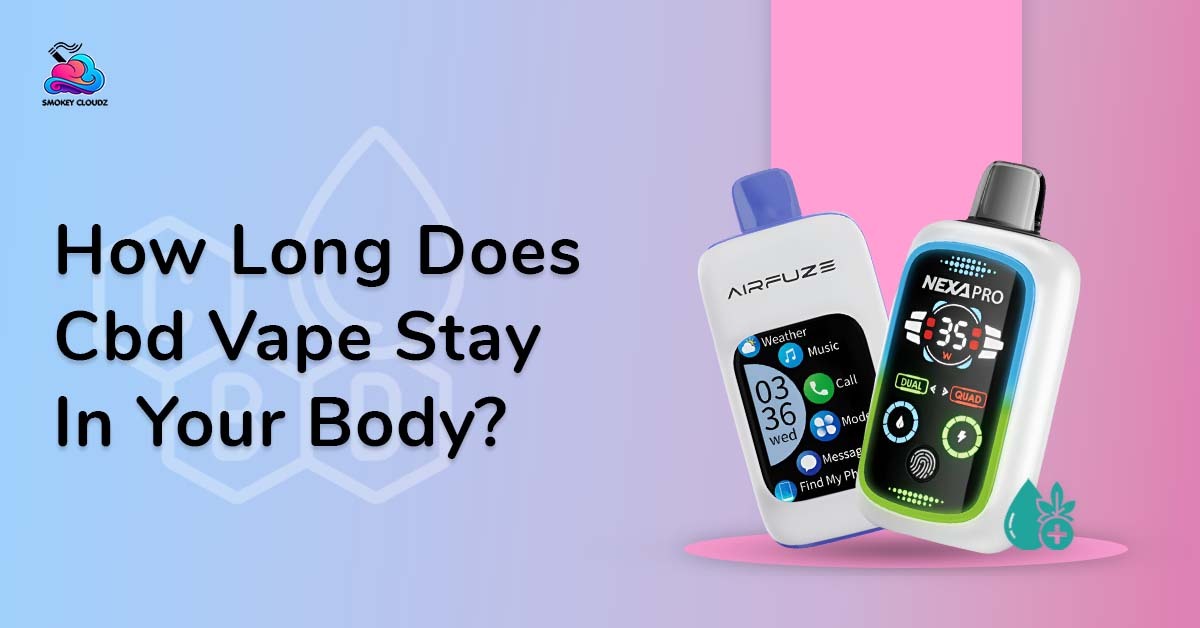
CBD from a vape can enter the blood within minutes, but there is no exact number of hours or days that fits every person. Adults viewing products in the RAZ vape collection should also keep in mind that nicotine devices and CBD vapes are different products, even when their shape looks alike. The amount used, product contents, body response, and type of test can all change the timeline.
Many people ask how long does CBD vape stay in your body because they have a workplace test, medical appointment, sports screening, or personal concern. The confusing part is that the effects, body clearance, and drug test result are 3 separate things.
You may stop feeling CBD after a few hours while small amounts remain in blood, urine, or body tissue for longer. A standard drug screen may still ignore CBD completely because most cannabis tests are looking for THC metabolites instead.
This content is for adults who meet the legal age in their area. CBD may interact with medicine, and product quality is not equal across every seller.
The Direct Answer
CBD taken through inhalation begins entering the bloodstream quickly. Its noticeable effects may fade within a few hours, but the body can keep processing CBD and its metabolites after that point.
A research review reported an estimated CBD half life of around 31 hours after smoking. A half life is the time needed for the measured amount in the body to fall by about half. It is not the same as the time needed for every trace to disappear.
Research on vaporized CBD has also measured CBD and its metabolites in urine for more than 1 day after a single controlled dose. This does not create a guaranteed detection window for normal retail products or every person.
The most honest answer is that CBD may remain in the body for several days, especially after repeated use. The exact time cannot be predicted from the puff count alone.
CBD After Inhalation
A CBD vape heats a liquid or cannabis material so the user can inhale an aerosol. CBD then moves from the lungs into the bloodstream without first passing through digestion.
This route normally gives a faster rise in blood CBD than gummies or capsules. The level may also fall sooner than it would after some oral products because the absorption pattern is different.
The guide comparing CBD gummies with vape products covers product format and cost, but price does not tell you how long CBD will stay in the body.
Dose, inhalation style, product strength, and the real CBD amount inside the liquid matter much more than the device price.
Effects and Detection Are Separate
Feeling calm, sleepy, relaxed, or unchanged does not tell you whether CBD is still present in your system. A person may feel no effect while their body is still breaking the substance down.
A laboratory may use equipment that can measure very small amounts. A workplace test may use a cutoff that reports only a result above a set level.
This is the reason detection times can sound very different across articles. Some sources discuss felt effects, while others discuss blood concentration, urine metabolites, or THC screening.
When checking the wider time a vape may remain in your system, always check which substance and test type the timeline is about.
CBD Is Not the Usual Drug Test Target
Most standard cannabis drug tests are designed to detect THC or a THC metabolite. They are not normally designed to report whether a person used pure CBD.
In a controlled study, acute use of pure CBD did not produce confirmed positive urine results under current United States federal workplace cannabis testing cutoffs. The result changed when participants used CBD dominant cannabis that also contained THC.
This difference is important. A product called CBD may be pure CBD, broad spectrum CBD, full spectrum CBD, or cannabis containing both CBD and THC.
The front label cannot always tell the full story. Read the ingredient details and any available product test report before use.
THC Creates the Bigger Testing Concern
A full spectrum CBD product may contain a small amount of THC. Repeated use can raise the chance that THC metabolites reach a test cutoff.
A controlled study using vaporized CBD dominant cannabis containing 100 mg CBD and 3.7 mg THC detected THC metabolites in all 18 participants, and some urine samples reached the confirmatory level used in drug testing.
This does not mean every full spectrum product will produce a positive result. It means the risk cannot be ruled out when THC is present.
The article on the time THC vape may stay in the body is more relevant when the CBD product contains THC or the contents are uncertain.
Blood Timing
CBD reaches the blood quickly after inhalation. Research involving vaporized CBD has reported peak blood levels much earlier than oral use because absorption begins through the lungs.
Blood concentration then falls as CBD moves into body tissues and is processed. The fall is not equal for every person, and low levels may remain after the strongest effects have ended.
Blood testing for CBD is not the normal method used in most workplace cannabis screenings. It may appear in research, medical work, or a test designed for a specific cannabinoid.
A blood result also depends on the dose, sample timing, test sensitivity, and whether THC was present in the product.
Urine Timing
Urine can contain CBD and CBD metabolites after the blood level has started falling. Research has collected measurable urine data for up to 58 hours after a controlled vaporized CBD dose.
That study used a known 100 mg dose under controlled conditions. A retail CBD vape can have a different strength, delivery rate, formula, and label accuracy.
Urine drug screens usually focus on a THC metabolite rather than CBD itself. A CBD only product and a CBD product with THC may therefore give very different results.
Water intake may change how concentrated a urine sample is, but drinking large amounts cannot guarantee a negative result or remove CBD instantly.
Saliva Timing
CBD may remain in the mouth for a period after vaping because aerosol touches the lips, tongue, teeth, and inner cheeks. This can make oral fluid timing different from blood timing.
Standard roadside or workplace saliva tests are more likely to target THC than CBD. Research on oral CBD suggests pure CBD is unlikely to create a false THC result on certain oral testing devices, but inhaled products containing THC are a separate concern.
The guide covering THC vape detection in saliva applies when THC is present or may be present.
Brushing teeth or using mouthwash cannot promise a clear test. The testing method and actual product contents remain more important.
Hair Testing
Hair tests can sometimes show a longer history of substance exposure than blood, urine, or saliva tests. CBD itself is not a normal target in standard hair drug panels.
The common 90 day hair claim mainly comes from general drug testing discussions. It should not be treated as a proven CBD vape window for every person.
External contamination can also make hair testing more difficult to interpret. Laboratories use their own washing, confirmation, and reporting steps.
When a hair test is planned, ask which cannabinoids are included. Do not assume that the word cannabis means CBD is being measured.
Dose Amount Changes the Timeline
A person taking 1 small puff is not receiving the same dose as someone using a high strength device through a long session. More CBD gives the body more material to process.
Product labels may show CBD as milligrams in the full container, milligrams per milliliter, or a percentage. These formats need to be read carefully.
A high dose may raise blood and urine concentrations and may extend the time that sensitive equipment can measure CBD or its metabolites.
Puff count alone is not enough. Device output and the amount inhaled during each puff can also vary.
Repeated Use Can Cause Buildup
A person using CBD once may clear it differently from someone vaping every day. Repeated doses can overlap before the earlier amount has fully left the body.
CBD is fat soluble, so it can move into fatty tissue and later return to the bloodstream in small amounts. This is 1 reason regular use may create a longer clearance period.
The gap between sessions matters too. Taking several doses across each day gives the body less time without new CBD entering.
A person facing a strict drug screening should not depend on a short online estimate. Product THC content and repeated use can change the result.
Metabolism Is Different for Each Person
Metabolism affects the speed at which the liver and other body systems process CBD. Age, genetics, liver condition, medicine use, and overall health may all play a role.
A fast metabolism does not give a guaranteed number of hours. A slower metabolism does not mean CBD will remain forever.
CBD can also affect the way certain medicines are processed. Anyone taking prescription medicine should speak with a medical professional before using CBD regularly.
The FDA has warned that CBD can interact with other drugs and may carry liver related risks, especially when use is not medically monitored.
Body Composition May Play a Part
CBD is attracted to fat, which means body composition may affect distribution and release. This does not allow a person to calculate an exact personal test window.
Exercise, diet, and body fat are only parts of a much wider picture. Dose and frequency may have a stronger effect for many users.
Hard exercise just before testing is not a proven way to clear CBD. It may also affect the body in other ways and does not remove THC metabolites on demand.
No body type can promise a negative drug test after using a product containing THC.
Product Type Matters
CBD isolate is intended to contain CBD without other cannabinoids. Broad spectrum products may contain several cannabis compounds but are normally made without THC.
Full spectrum products can contain CBD, THC, terpenes, and other cannabinoids. The THC level may be small, yet regular use can still create a testing concern.
CBD dominant cannabis flower is different from a pure CBD vape liquid. The flower may naturally contain measurable THC even when CBD is the main cannabinoid.
The article about CBD and synthetic cannabis vape contents explains why synthetic cannabinoids should not be treated as normal CBD.
Label Accuracy Can Change the Risk
A product may contain more or less CBD than stated. It may also contain THC when the buyer did not expect it.
The FDA has reported concerns about CBD products with inaccurate strength claims and possible contaminants, including THC, pesticides, and heavy metals.
This means a person can follow a CBD timing estimate and still face an unexpected test result because the product contents were different from the label.
An independent batch report may reduce uncertainty, but it cannot predict the exact clearance time inside your body.
Nicotine Tests Are a Different Matter
A nicotine test looks for nicotine or cotinine. Pure CBD should not create nicotine or cotinine unless the product also contains nicotine or the same device has been used with nicotine liquid.
The guide about nicotine testing after vape use relates to nicotine exposure, not CBD clearance.
Tell the testing provider which product was used. A CBD vape, nicotine vape, THC cartridge, and mixed cannabinoid product should not be reported as the same thing.
Trying to hide the substance can make a medical or testing result harder to read correctly.
A Real Testing Example
Imagine an adult uses a product marked full spectrum CBD each evening for 3 weeks. They stop 2 days before a workplace urine test because they think CBD always clears within 48 hours.
The test does not target CBD. It targets a THC metabolite, and the full spectrum product contained a small amount of THC.
The user may still receive a positive result even though they did not feel high and had stopped using the vape. The problem was the THC content and repeated use, not CBD creating a false THC result.
Another adult using verified pure CBD once may have a very different outcome. The 2 cases cannot share the same detection estimate.
No Instant Clearance Method
There is no drink, meal, workout, or home routine that can remove CBD or THC from the body immediately. The body needs time to process and remove the substances naturally.
Normal hydration supports the body, but forcing large amounts of water can be unsafe. It can also create a diluted test that the laboratory may reject.
Exercise supports general health, yet it cannot promise faster test clearance. Supplements and detox products cannot guarantee a specific result either.
The safest approach is honest product checking, enough time without use, and direct information from the organization running the test.
Drug Test Preparation Needs More Than a Time Guess
A drug test result depends on the substance being tested, the cutoff level, the sample type, and the contents of the CBD product. Counting hours from the last puff cannot answer every case.
Standard cannabis screens usually focus on THC metabolites rather than CBD. The greater concern is often hidden or expected THC inside a full spectrum product.
Keep the bottle, cartridge box, receipt, and any batch report when testing matters. These records may show whether the product was marked as CBD isolate, broad spectrum, or full spectrum.
Never assume that a fruit flavor, pale oil color, or mild effect proves a cartridge contains no THC.
Steps Before a Planned Screening
Preparation should begin by reading the testing notice. Check whether the sample will be urine, saliva, blood, or hair and whether cannabis is included in the panel.
Next, review the CBD product label. Look for the total CBD amount, THC statement, product type, batch number, and any available laboratory report.
Stop using the product when a negative THC result is important. There is no guaranteed waiting period, so allow as much time as the situation permits.
Tell a medical testing provider about CBD use when they ask about medicines, supplements, cannabis, or vaping. Accurate details give them the right context.
Step 1: Identify the Product Category
CBD isolate is intended to contain cannabidiol without other cannabinoids. Broad spectrum products may contain several cannabis compounds while being made without THC.
Full spectrum CBD can include a small amount of THC. CBD dominant flower may contain more THC than a person expects from the word CBD on the package.
Unmarked cartridges carry the most uncertainty. There is no reliable way to judge their contents from smell, taste, color, or effect.
Step 2: Read the Batch Report
A batch report may show CBD, THC, and other cannabinoid levels. Match the batch number on the report with the number printed on the product.
Check whether the report covers the finished product rather than only the raw CBD ingredient. The final liquid may contain additional materials.
A report lowers some uncertainty, but it cannot promise a negative drug test. Testing cutoffs, repeated use, body response, and timing still matter.
Step 3: Keep an Honest Use Record
Write down the date, time, and rough amount used. Note whether the product was isolate, broad spectrum, full spectrum, or cannabis flower.
A use record may be useful when a doctor needs to review symptoms, medicine interactions, or an unexpected test result.
Do not change the dates to make the record look better. Honest information is far more valuable than a neat but inaccurate timeline.
Step 4: Check the Actual Test Target
Ask whether the screening checks for THC, nicotine, CBD, or a wider drug panel. These substances are not measured in the same way.
A nicotine test is not a CBD test. A cannabis urine screen may target a THC metabolite without measuring CBD at all.
A test administrator may not be able to predict your result, but they can often confirm which substances are included in the panel.
Errors That Often Cause Testing Problems
The biggest issue is treating every CBD product as pure CBD. Product type and THC content can matter more than the number of hours since the last puff.
Another error is using a general online timeline as a promise. Research conditions rarely match every retail product, dose, device, and user.
Some people also try several last minute detox methods. These methods cannot guarantee that CBD or THC metabolites have left the body.
Assuming CBD Can Never Affect a Drug Test
CBD itself is not the usual target in a standard cannabis screen. Still, a CBD product containing THC may lead to a positive THC result.
Full spectrum products and CBD dominant cannabis flower need extra attention. Repeated use may increase exposure to the small amount of THC present.
The result is not necessarily a false positive. The test may be detecting real THC exposure from the product.
Trusting the Front Label Alone
The front label is often designed to show the product name and flavor. It may not display every cannabinoid detail in a clear way.
Read the side or back panel and check the batch report when one is available. Look for THC wording, not only the total CBD amount.
A product described as hemp based can still require closer review when drug testing is important.
Counting Only the Felt Effects
CBD effects may fade before the body has finished processing it. Feeling normal does not prove every trace has gone.
The same issue applies to THC. A person may no longer feel impaired while THC metabolites remain detectable.
Base your preparation on product contents and testing rules, not on whether the last session still feels active.
Drinking Too Much Water
Normal hydration supports the body, but large amounts of water cannot remove cannabinoids instantly. Excess water can also be unsafe.
A very diluted urine sample may be reported as diluted or may need to be collected again. This can create more stress rather than solving the concern.
Drink a normal amount based on your needs and any medical instructions.
Using Detox Drinks as a Guarantee
Detox products often promise fast clearance, but no drink can promise a negative test for every person. The body still needs time to process substances.
Some products may also contain ingredients that are not suitable with medicines or medical conditions.
Avoid relying on marketing claims when employment, treatment, sport, or legal testing is involved.
Vape Detectors and Body Tests Are Different
A vape detector checks the surrounding area for particles or changes in air quality. It does not test CBD inside a person’s blood, urine, saliva, or hair.
The article covering vape detector triggers and accuracy explains the difference between room monitoring and body testing.
A detector alert cannot state the exact CBD dose someone inhaled. It may only show that an event in the air matched the system’s alert settings.
Property rules still matter. CBD or cannabis vaping may be banned even in locations where possession is legal.
Age and Local Sale Rules
CBD vape laws and legal buying ages differ across regions. A product sold online may not be lawful for every buyer or delivery address.
The discussion about buying a vape at age 18 gives broader context about age restrictions. CBD, nicotine, and cannabis products may not all follow the same rules.
Adults should check the law that applies to their exact location. Travel can create another issue because rules may change across state or national borders.
Never buy a CBD vape for a minor or leave the device within reach of children.
Medicine Interactions Need Medical Advice
CBD may affect the way the body processes certain medicines. This makes regular use important to mention during medical appointments.
Tell your doctor about the product type, daily amount, and use frequency. Bring the package when the ingredient list is hard to explain.
Seek medical advice when CBD use is linked with strong sleepiness, stomach problems, confusion, or another worrying reaction.
Do not stop prescribed medicine or replace it with CBD without medical direction.
Product Problems That Need Attention
Stop using a cartridge that leaks, cracks, becomes unusually hot, or produces a burnt electrical smell. A damaged battery or heating part is a separate concern from CBD clearance.
Unknown oil color changes, separation, or damaged packaging also deserve attention. Do not keep testing a product that seems unsafe.
Store cartridges upright and away from heat, sunlight, children, and pets. Follow the storage information printed on the package.
A retailer may assist with a faulty product, but medical symptoms need a health professional.
A Real Workplace Testing Example
Imagine an adult uses a full spectrum CBD vape most evenings. The person has a workplace urine test in 5 days and believes CBD cannot affect the result.
They check the package and notice that the product contains a small amount of THC. Regular evening use means there has been repeated THC exposure, even though the product did not create a clear high.
The person stops using it and keeps the packaging. They also check the workplace testing policy rather than depending on a fixed online timeline.
The final result still cannot be promised. Yet this approach gives a much clearer view of the actual risk.
A Real Medical Testing Example
Another adult uses a verified CBD isolate vape once during the weekend. They have a medical blood test later that week.
The doctor is not testing for cannabis, but the person still reports CBD use because they take prescription medicine. This detail may matter more for medicine review than for the laboratory panel.
The person brings the product label and gives the last use time. The medical team can then decide whether any action is needed.
This is a good example of why the purpose of the test matters as much as the CBD timeline.
The Wider Vape System Topic
The focus keyword how long does CBD vape stay in your body covers only 1 substance. Vape products may contain nicotine, THC, CBD, synthetic cannabinoids, or a mixture.
The pillar resource linked through the wider time a vape may remain in your system gives broader context across different vape substances and sample types.
This page adds CBD specific concerns, including full spectrum products, THC exposure, product reports, and drug screening uncertainty.
Both pages work together without treating nicotine, CBD, and THC as if they share the same detection window.
Flavor Cannot Show Body Clearance
A pleasant taste, light smell, or mild throat feeling cannot show the amount of CBD in the blood. Sensory experience and laboratory measurement are entirely different.
The supplied research on smelling and vaping e liquid flavors reported that ratings for flavor liking, intensity, familiarity, and irritation varied across people and flavors. The study examined sensory perception, not CBD clearance or drug test timing. It therefore cannot be used to set a CBD detection window.
This distinction matters because a product that feels mild may still contain a strong CBD amount or some THC. Flavor intensity is not a dose meter.
Times Professional Support Makes Sense
Speak with a doctor or pharmacist before regular CBD use when you take prescription medicine. Pregnancy, breastfeeding, liver concerns, and ongoing health conditions also need direct medical advice.
Contact the testing organization when a drug screen has serious employment, sport, treatment, or legal consequences. Ask which substance and sample type are involved.
A retailer can explain product labels and device use. Retail staff cannot guarantee body clearance, a negative drug test, or medical safety.
Seek urgent medical care after severe breathing trouble, collapse, seizure, or another emergency reaction.
Conclusion
How long does CBD vape stay in your body? The felt effects may fade within hours, while CBD and its metabolites can remain for longer. Research does not provide 1 exact timeline that applies to every user.
Dose, repeated use, metabolism, body composition, product type, and test sensitivity can all change the result. Blood, urine, saliva, and hair testing also serve different purposes.
Most standard cannabis tests target THC rather than CBD. The main testing concern is often THC inside full spectrum CBD, CBD dominant flower, or a product with unclear contents.
There is no instant clearance method. Check the product report, allow enough time, avoid unsupported detox promises, and speak honestly with the medical or testing provider.
Frequently Asked Questions
How Long Does CBD Vape Stay in Your Body?
CBD may remain after its noticeable effects have faded. The exact period changes with dose, use frequency, product type, body response, and test sensitivity.
Can CBD Vape Cause a Positive Drug Test?
Pure CBD is not the usual drug test target. A product containing THC may cause a positive cannabis result, especially after repeated use.
Is CBD Detectable in Urine?
CBD and its metabolites can be measured in urine by tests designed for them. Standard workplace cannabis screens usually target a THC metabolite instead.
Is CBD Detectable in Blood?
CBD can be measured in blood after inhalation. The result depends on dose, timing, test sensitivity, and repeated use.
Is CBD Detectable in Saliva?
CBD may remain in oral fluid after vaping, but standard saliva drug screens more often target THC. Product contents are important.
Can CBD Stay in Hair for 90 Days?
The common 90 day claim relates broadly to hair drug testing. It is not a guaranteed CBD vape detection window for every person.
Can Full Spectrum CBD Fail a Drug Test?
It can create a risk because full spectrum CBD may contain THC. Daily or repeated use can increase total THC exposure.
Can Water Clear CBD Faster?
Normal hydration supports the body, but water cannot remove CBD or THC instantly. Excess water can be unsafe and may dilute a urine sample.
Can a Detox Drink Remove CBD?
No detox drink can guarantee rapid clearance or a negative result. Time, product contents, use frequency, and test type remain important.

Leave a comment
This site is protected by hCaptcha and the hCaptcha Privacy Policy and Terms of Service apply.