

If you vape, sell vape products, travel with a vape, or are just trying to understand the rules, you may feel confused right now.
You may hear 1 person say, “Vapes are banned in America.”
Then another person says, “No, you can still buy them at stores.”
Then you walk into a gas station and see vape products on the shelf.
So what is actually true?
The clear answer is this: vapes are not completely banned across the United States, but many vape products are restricted, controlled, or banned in certain places. The rules depend on the product, the state, the city, the store, the age of the buyer, and sometimes even the flavor.
That is why the question are vapes being banned in the US needs a careful answer.
This topic matters because many users do not want to break the law by accident. Some people worry about losing access to their usual products. Others are confused about travel rules, online orders, airport policies, and gas station sales.
This guide explains the situation in simple words.
You will understand what is banned, what is still allowed, why the rules exist, and what users should do before buying or carrying vape products.
Are vapes being banned in the US?
Short answer: vapes are not fully banned in the US, but the market is heavily regulated.
The US government does not allow every vape product to be sold legally. The FDA says only certain authorized vape products may be lawfully sold in the United States. As of May 2026, the FDA listed 45 authorized vape products, while also stating that authorized products are not the same as safe products or FDA approved products.
This means the issue is not as simple as “all vapes are legal” or “all vapes are banned.”
A better way to understand it is this:
Some products are allowed.
Some products are not authorized.
Some products may face enforcement.
Some states or cities have stronger flavor rules.
Some places do not allow vaping indoors.
Some travel settings allow you to carry a vape but not use it.
This is why users feel stuck. The rules can change from one place to another.
Why are vape rules changing?
Vape rules are changing because regulators are trying to balance 3 concerns.
The first concern is youth access. Many rules are designed to stop minors from buying or using nicotine products.
The second concern is product safety. Some illegal or counterfeit products may not follow quality standards.
The third concern is public use. Many states treat vaping in public places the same way they treat smoking.
The FDA also announced in May 2026 that it continues to focus enforcement on illicit tobacco products, illegal imports, counterfeit products, and products that may appeal to underage users. The FDA said it may not prioritize enforcement against certain products with pending applications, but that does not mean those products are guaranteed future authorization.
For a normal adult user, this can feel frustrating.
You may only want to buy your usual device and move on with your day. But the rules around products, flavors, and sales channels can make the buying process feel less clear.
That is why checking reliable product details matters.
What vape products are affected most?
The products most affected by US vape rules are usually:
Flavored vape products
Disposable vapes
Products without FDA authorization
Products that appear designed for young people
Counterfeit vape products
Imported products that do not follow US rules
This does not mean every flavored product or disposable device is automatically banned everywhere. It means these categories often receive closer attention from regulators.
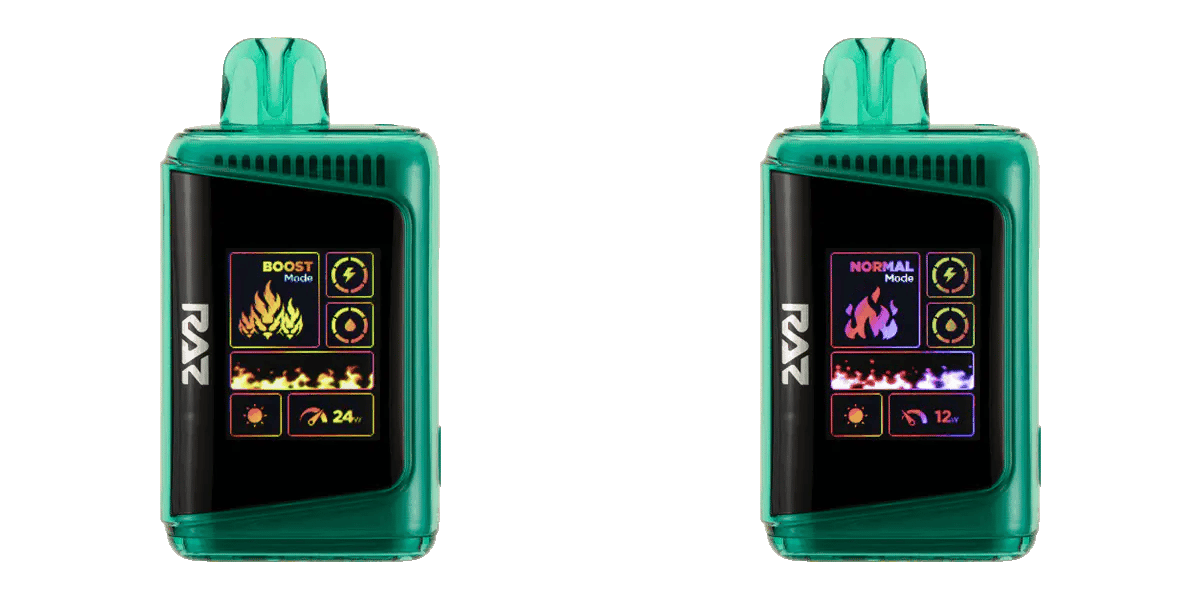
Disposable products are especially common among users because they are easy to carry and do not require refilling. Many people prefer them because they are quick, compact, and low effort. You can view available disposable vapes to compare options, but users should still check local rules before buying.
Can adults still buy vapes in the US?
Yes, adults can still buy vape products in many parts of the United States, but there are important limits.
Federal law says retailers cannot sell tobacco products, including vape products and e liquids, to anyone under 21. The FDA also says retailers must check photo ID for anyone under 30 who tries to buy covered tobacco products.
So even if a store sells vapes, the buyer must meet the legal age rule.
This applies to:
Physical vape shops
Gas stations
Convenience stores
Online sellers
Delivery sales
Retailers also have to follow federal, state, and local rules. Some areas may restrict flavors. Some areas may limit where products can be sold. Some cities may have stronger rules than nearby towns.
Do gas stations sell vapes?
Yes, many gas stations in the US do sell vapes, but not every gas station can sell every vape product.
The related question do gas stations sell vapes has a practical answer.
Many gas stations carry vape products because they also sell other age restricted tobacco or nicotine products. But they must follow age verification rules. They may also be limited by state laws, city rules, product authorization rules, and store policy.
For example, 1 gas station may sell tobacco flavored pods only.
Another may sell disposable vapes.
Another may stop selling certain flavors because of local restrictions.
Another may not sell vapes at all because the company chooses not to carry them.
So if you are looking for a vape at a gas station, do not assume every location will have the same options.
Can you vape in an airport?
The related question can you vape in an airport is also common.
The answer depends on the airport.
In most airports, you cannot vape inside general indoor areas unless there is a clearly marked smoking or vaping area. Some airports have designated outdoor smoking zones. Some have indoor smoking rooms. Some do not allow vaping anywhere inside the terminal.
When flying, you can usually carry vape devices in your carry on bag, but not in checked luggage. TSA says electronic smoking devices are allowed only in carry on baggage, not checked bags. The FAA also says these devices must be carried on your person or in carry on baggage, and passengers must take steps to prevent accidental activation.
This means you can travel with a vape device in many cases, but you cannot use it on the plane.
You also should not charge it during the flight.
The safest approach is simple:
Keep the device in your carry on.
Turn it off if possible.
Protect it from accidental activation.
Keep e liquid packed according to liquid rules.
Check the airport and airline rules before travel.
What does a vape ban really mean?
A vape ban can mean different things.
Some people use the word “ban” for any restriction, but the legal meaning can be more specific.
A vape ban may mean:
A ban on all vape sales in a certain area
A ban on flavored vape sales
A ban on online shipping
A ban on public indoor vaping
A ban on certain products without authorization
A ban on sales to people under 21
A travel ban in checked luggage
These are very different rules.
For example, a city may allow adult vape sales but ban vaping inside restaurants. Another state may allow vape shops but restrict flavored products. An airline may let you carry a vape but ban using it onboard.
That is why users should ask a more specific question.
Instead of only asking are vapes being banned in the US, ask:
Is this product legal in my state?
Can this store sell it?
Can I use it in this building?
Can I carry it through airport security?
Can I ship it to my address?
This gives you a clearer answer.
Step by step guide for users
Here is a simple process to follow before buying or traveling with vape products.
Step 1: Check your age
You must be 21 or older to buy vape products in the US. This applies to nicotine products from any source. If you are under 21, retailers cannot legally sell these products to you.
Step 2: Check your state rules
Each state can have different vape laws. Some states may restrict flavors. Some may have taxes. Some may have indoor use restrictions.
A useful starting point for general state level background is this list of vaping bans in the United States, but always confirm with official state or local sources before making a decision.
Step 3: Check local city rules
City and county rules can be stricter than state rules. This is where many users get confused.
A product may be available in 1 town but not sold in another nearby area.
Step 4: Buy from a responsible seller
Do not buy from unknown sellers, social media pages, or random marketplaces.
Look for clear product information, age checks, packaging details, and customer support. This helps reduce the risk of buying counterfeit or poorly labeled products.
Step 5: Read the product details
Check the flavor, nicotine level, device type, battery information, and usage instructions.
Many user problems happen because people buy a product without understanding how it works.
Step 6: Know where you can use it
Do not assume vaping is allowed just because smoking is not visible.
Many workplaces, restaurants, hotels, airports, schools, and public buildings restrict vaping.
Step 7: Travel carefully
If you travel by plane, keep vape devices in your carry on bag. Do not place them in checked luggage. Do not use or charge them on the plane.
Real life example
Imagine this situation.
A customer named Daniel is flying from Texas to New York for a weekend trip. He uses a disposable vape and keeps it in his backpack. Before leaving, he searches online and sees people arguing about whether vapes are banned.
He feels unsure.
At the airport, he keeps the vape in his carry on bag. That part is usually allowed. But he also thinks he can use it in the airport bathroom because he does not see a sign nearby.
That is where the problem starts.
Even if he can carry the device through security, using it inside the airport may still be against airport policy. If he uses it on the plane, that is even more serious.
Now imagine Daniel arrives in a city with stricter local rules around flavored vape products. A store near his hotel may not carry the same product he buys at home.
This example shows why there is so much confusion.
The device may be legal to carry.
The product may be sold in 1 place.
The same product may be restricted in another place.
Using the device may be banned in certain indoor areas.
These are all separate rules.
Common mistakes users make
Mistake 1: Thinking all vapes are banned
This is one of the biggest misunderstandings.
Vapes are not completely banned across the US. The rules are more detailed than that. Some products can be sold legally. Others may not be authorized or may face restrictions.
Mistake 2: Thinking gas station products are always legal everywhere
Just because a product is on a shelf does not always mean the full legal situation is simple.
Retailers must follow rules, but users should still be careful. Buy from trusted sellers and check local laws.
Mistake 3: Packing a vape in checked luggage
This is a common travel mistake.
Vape devices should not go in checked bags because of battery safety rules. Keep them in your carry on bag.
Mistake 4: Vaping in airports or airplanes
Many people think carrying a vape means they can use it anywhere.
That is not true.
You may be allowed to carry the device, but using it inside an airport or airplane is usually restricted.
Mistake 5: Ignoring flavor restrictions
Some users only check federal rules and forget local flavor laws.
This can cause confusion when traveling between states or cities.
Mistake 6: Buying from unknown sellers
Cheap products from unknown sources may look tempting, but they can create bigger risks.
The label may be unclear.
The product may be counterfeit.
The device may not match what was advertised.
Mistake 7: Not understanding device signals
Sometimes users think a vape is banned or broken when the device is actually giving a normal signal. For example, blinking lights can mean low battery, poor connection, empty liquid, or a safety lock. For more detail, read this guide on why your vape is flashing and not working.
Pain points users experience
Vape users often feel frustrated because the rules are not easy to follow.
You may feel confused when different stores give different answers.
You may feel worried before traveling because you do not want airport security issues.
You may feel annoyed when your usual product is no longer available.
You may feel unsure about which brands or products are still allowed.
You may feel overwhelmed by words like authorization, enforcement, PMTA, flavor ban, and compliance.
That confusion is real.
Most people are not trying to study tobacco law. They just want a clear answer before buying or traveling.
That is why simple guidance matters.
Expert tips for safer and smarter decisions
Tip 1: Check rules before you buy
Do not wait until you are at the counter.
Check your state, city, and store rules first.
Tip 2: Keep receipts when traveling
If you are traveling with a vape product, keeping proof of purchase may help if questions come up.
It does not guarantee anything, but it can support your explanation.
Tip 3: Use original packaging when possible
Original packaging can show product details more clearly.
This is useful during travel and storage.
Tip 4: Avoid mystery products
If a product has no clear label, no proper packaging, or looks suspicious, avoid it.
Tip 5: Do not vape where smoking is banned
Many places treat vaping like smoking.
If smoking is banned indoors, assume vaping is also banned unless signs say otherwise.
Tip 6: Check airline rules before flying
TSA and FAA rules cover security and safety, but airlines can also have policies.
Check your airline before packing.
Tip 7: Store devices safely
Keep devices away from heat, keys, coins, and metal objects.
This helps prevent battery problems.
Tip 8: Follow age rules seriously
Vape products are only for adults 21 and older in the US.
Responsible sellers will verify age.
How this connects to the bigger vaping guide
Understanding bans and restrictions is only 1 part of being a careful vape user.
You also need to understand product types, battery behavior, nicotine levels, flavors, device signals, storage, travel rules, and buying safety.
That is why this topic works best as part of a larger guide.
A complete guide can help users compare products, understand common device problems, and avoid mistakes before they happen.
The bigger strategy is not just buying a vape.
It is knowing what you are buying, where you can use it, how to carry it, and how to stay within the rules.
When should you consider expert help?
You may want help if you are unsure about product choice, local availability, travel rules, or device issues.
For example, expert help can be useful when:
You are new to vaping products
You are unsure which device type fits your needs
You are confused about disposable and refillable options
You are traveling and need packing guidance
Your vape is flashing, leaking, or not working
You want to avoid buying the wrong item
A trusted store can explain product details in plain language. That support matters, especially when rules and product types feel confusing.
Smokey Cloudz focuses on making the browsing and buying process easier for adult customers by providing clear product information and a more organized shopping experience.
Final thoughts
So, are vapes being banned in the US?
Not completely.
But vape products are more regulated than before. Some products are allowed. Some are restricted. Some are not authorized. Some local areas have stronger rules. Airports and airlines also have separate safety rules.
The best thing users can do is stay informed before buying, traveling, or using a device in public.
Check your age eligibility.
Check your local rules.
Buy from responsible sellers.
Carry devices properly when flying.
Do not vape in restricted areas.
And when something feels unclear, slow down and verify it first.
That small step can save you stress, wasted money, and possible trouble.
FAQs
Are vapes being banned in the US?
No, vapes are not fully banned across the US. Some products are legal, while others may be restricted, unauthorized, or banned in certain states or cities.
Do gas stations sell vapes?
Yes, many gas stations sell vapes, but product availability depends on federal, state, local, and store rules. Buyers must be 21 or older.
Can you vape in an airport?
Usually, you cannot vape inside airport terminals unless there is a designated smoking or vaping area. Rules vary by airport.
Can I bring a vape on a plane?
Yes, vape devices are generally allowed in carry on bags, but not checked bags. You cannot use or charge them during the flight.
Why are some vape flavors restricted?
Flavor restrictions are often linked to concerns about youth use. Some states and cities limit flavored vape sales more strictly than others.

Leave a comment
This site is protected by hCaptcha and the hCaptcha Privacy Policy and Terms of Service apply.